Adil Raza Khan | April 21, 2026
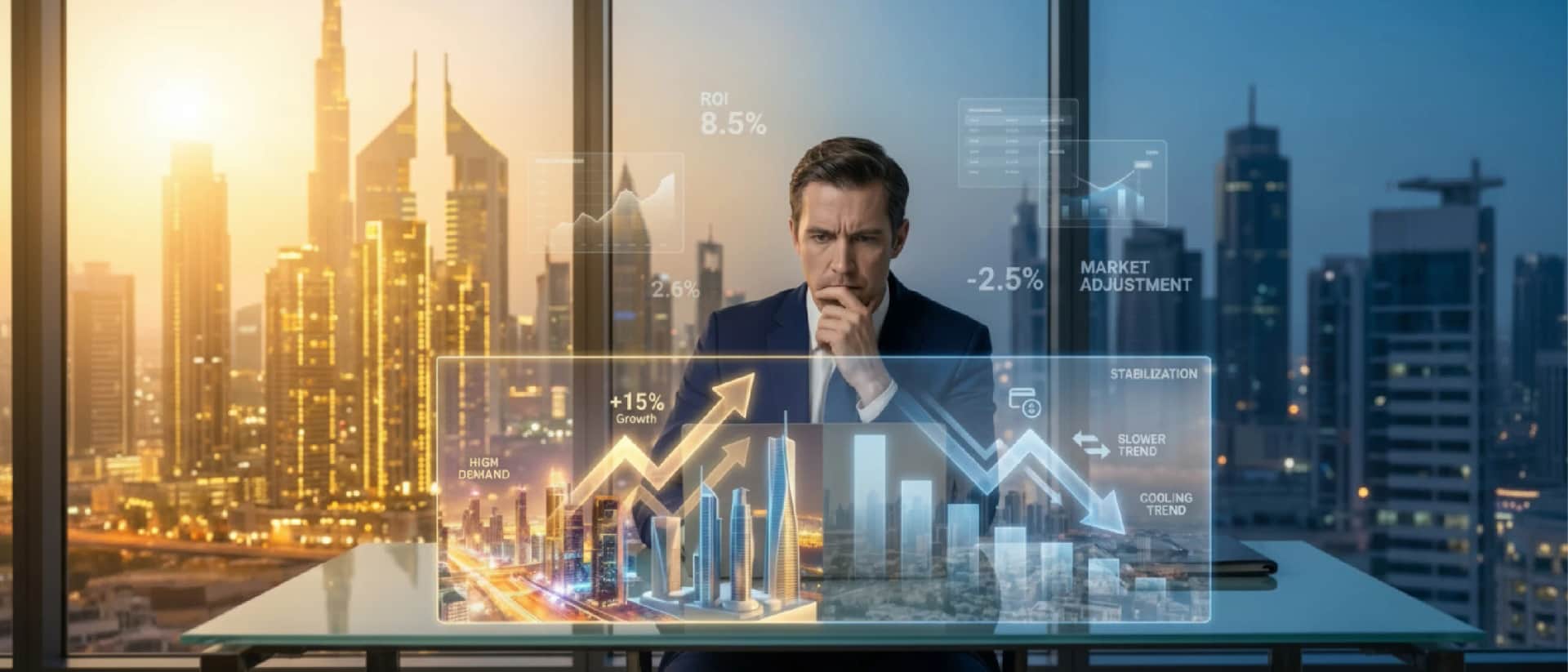
Dubai Real Estate Hype is not merely a market sentiment – it is an evidence-based investment cycle, conditioned by the highest transactions, inflow of foreign capital, and the long-term economic growth in the UAE property market.
By 2026, the market will show a shift in the fast boom development to more institutional, selective investment, where fundamentals take precedence over speculation. The current Dubai Real Estate Hype, in contrast to past cycles, is anchored on robust end-user demand, international investment involvement, and infrastructure-driven growth.
Curated Opportunities
Flexible buying options for smarter property decisions.
Handpicked properties sorted for the strongest value.
Investment-focused listings with return potential.
Browse Dubai communities with properties for sale.
High transaction volumes, inflow of foreign capital, and demand for housing by the population have been the main driving forces of the Dubai Real Estate Hype. The recent cycles registered around AED 600 to 680 billion in property transactions in one year in Dubai. It is one of the best periods of real estate performance in the history of this city.
The data of early 2026 indicates that there is a continuation of momentum, as the value of quarterly transactions has been more than AED 250 billion. This proves that the demand is not declining but growing at an institutional level. This demand is being driven by large proportions of international investors in India, Europe, and Asia, further cementing the real estate hub of Dubai.

The Dubai Real Estate Hype is now entering the more stable and mature growth stage. Whereas previous cycles saw price increases at 2-digit levels, current forecasts indicate that annual increases will be in the range of 4-7 percent in the mainstream residential sectors in 2026.
Meanwhile, rental yields are among the highest in the world, with 5%-8% in prime areas like Downtown Dubai, Marina, and JVC. This helps to sustain investor confidence in the long term. Such price stability and high rentals are indications that the market is sustainable but no longer speculative.
The Dubai real estate market is now highly segmented. Luxury estates are performing better because of the scarcity of supply and large net-worth migration, whereas the mid-market estates experience more balanced and steady growth.
Off-plan developments continue to dominate with an estimated 55-65 percent of overall residential deals being a result of the flexible payment schemes and the long-term capital growth prospects. This paradigm change is one of the reasons contributing to the current Dubai Real Estate Hype.
Dubai property market data and analysis reveals that the transaction volume and market value have been experiencing steady growth. In the last cycle, volumes have been rising to more than 260,000 units annually. This indicates continued investor involvement.
The rental market is also quite robust, especially in well-networked areas where yields have been stable at between 5 and 8 per cent. This implies that the market in Dubai is slowly moving away from speculative activity and towards income-based investment strategies.
Dubai property prices forecast indicates a tamer growth scenario. Prime residential properties will be projected to appreciate by 3-5 percent. Whereas the mid-market properties can appreciate by 1-4 percent annually. This depends on the location and absorption of the supply.
There is still growth in luxury real estate because there is wealth migration globally. Also, premium inventory is scarce. This alleviates Dubai as a safe haven market in the long term.
Tax-free returns, high rental rates, and incentives that come with residency have made Dubai to continue to be one of the most attractive global real estate investment destinations.
Perhaps the investment strategy has changed. Long-term holding, stability of cash flow, and credibility of the developer are now attractive to the investors instead of the short-term flipping profits. This shows a more developed and institutional investment environment.
Although fundamentals are strong, there are new risks in the Dubai Real Estate Hype. The expansion of the supply pipelines in the mid-market segments could cause short-term pricing, specifically between 2026 and 2028.
Market segmentation is increasingly becoming evident, as prime assets perform better, and secondary locations experience slower growth. Also, the investor sentiment is subject to temporary changes due to global macroeconomic circumstances and geopolitical changes.
Best Project Finder
Filter opportunities by budget, property type, bedroom mix, and strategy to uncover projects aligned with your investment goals.
Population growth is one of the greatest forces that has fuelled the Dubai Real Estate Hype. The population of Dubai has grown to over 3.6-3.7 million people through the inflows of expatriates, migration of businesses, and the long-term residency programs.
This population growth remains consistent to sustain residential demand in the rental and ownership market, assuring high absorption rates, even with escalating supply.
One of the fundamentals of the Dubai Real Estate Hype is off-plan developments. The ability to offer a flexible payment framework and early pricing remains appealing to international investors who are after capital appreciation.
This segment contributes largely to the formation of forward-looking demand cycles, with a high proportion of market activity being associated with off-plan sales. Nevertheless, the stability in pricing will be based on the project's delivery schedules and supply uptake in the future.
The Dubai Real Estate Hype is being affected by institutional capital more and more. Big players, REITs, and international investors are moving into the market, making the market more stable and less volatile than previous periods of speculation.
Institutional allocation is shifting towards branded residences, waterfront, and master-planned communities, which is an indication of structural improvement in the market profile.
It is projected that the Dubai Real Estate Hype's future will shift towards a more segmented and institutional investment cycle. Market forecasts indicate that the market will experience 150,000-200,000 new residential units in the market between 2026 and 2028. It will have a slow effect on supply and pricing behavior.
Areas like Palm Jumeirah, Downtown Dubai and Dubai Marina are likely to keep performing better with little supply and concentration of demand worldwide, and the mid-market segments stabilize.
By and large, Dubai real estate is transforming into a long-term structured investment ecosystem as opposed to a short-term boom cycle.
UAE real estate growth trend shows steady, data-driven growth with a high demand and inflow of foreign investments. In key regions such as Dubai and Abu Dhabi, the residential prices are projected to increase by about 4-7 percent per year in prime areas, and the luxury properties remain popular as a result of the low supply and demand worldwide.
Recent cycles saw the UAE registering hundreds of billions of dirhams of real estate transactions each year, with Dubai accounting for the largest portion of the activity. The UAE is one of the most robust property markets in the world in terms of returns on rent, which stands at about 5%-8%.
Population growth is another major factor, but the population of the UAE is more than 10 million. It can sustain the housing demand both in the rental and ownership markets. In the meantime, off-plan projects are a major part of transactions, with estimates up to 50 percent in major cycles indicating high investor interest in future-ready developments.
Overall, the UAE real estate growth trends indicate a stable but selective growth market, where performance is increasingly driven by location, asset quality, and institutional investment rather than speculative spikes.
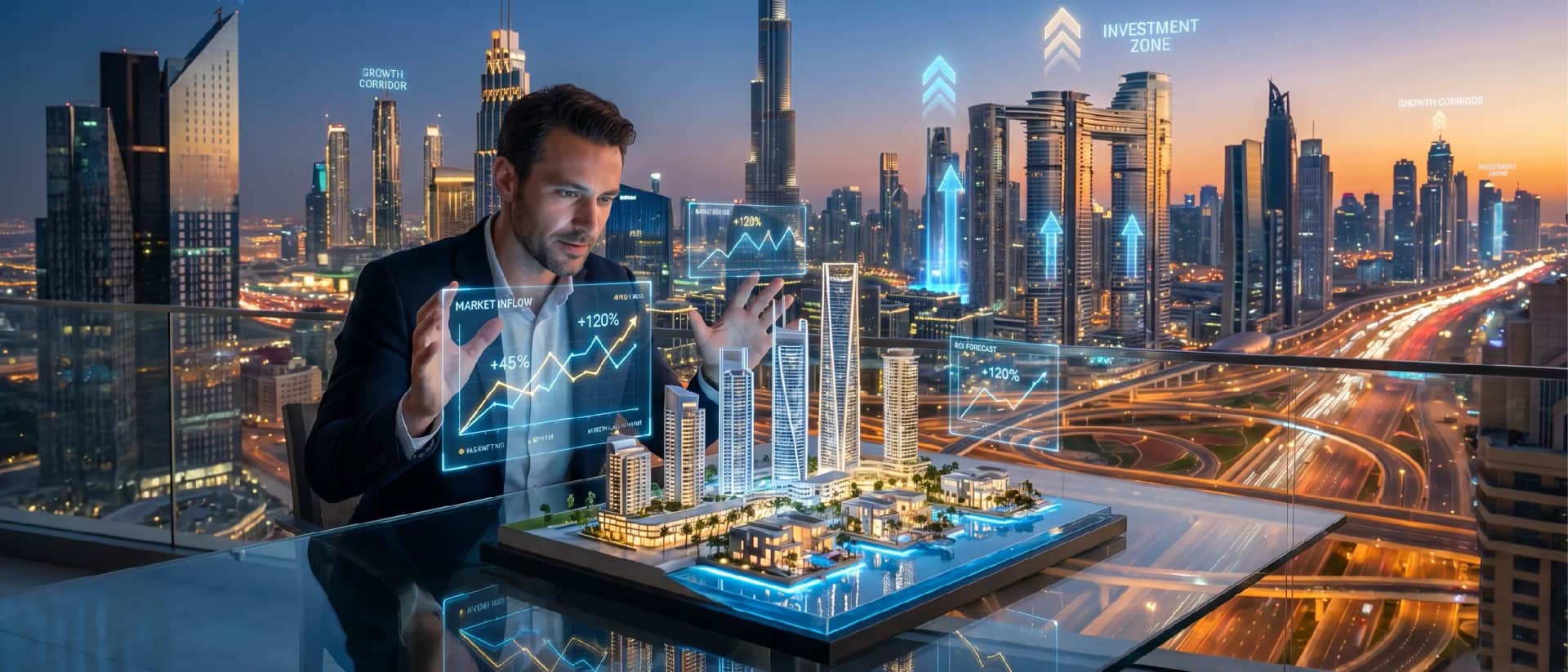
The Dubai Real Estate Hype is a reality, yet it is changing. It is backed by robust levels of transactions, international investor demand, and robust rental markets.
But when taken to mean consistent growth or infinite growth across all segments it becomes hyperbolic. This has evidently shifted the market into a selective investment stage, where location, developer quality and timing determine returns.
By 2026, Dubai real estate is not to be interpreted in terms of a hype cycle, but a fully developed, globally connected investment ecosystem.
Dubai Real Estate Hype refers to strong investor demand, rising transactions, and global capital inflows driving the Dubai property market.
Yes, the market is still growing but at a more moderate and stable pace of around 4%–7% annually in most segments.
Due to tax-free income, high rental yields, residency benefits, and strong long-term capital appreciation potential.
It is not a bubble; it is a mature growth market supported by real demand, population growth, and institutional investment.
Rental yields typically range between 5% and 8% depending on location and property type.
Prime areas like Downtown Dubai, Palm Jumeirah, and Dubai Marina continue to show strong performance.
Population growth, foreign investment, off-plan development, and strong economic diversification are key drivers.
Yes, but growth is moderating with an estimated 3%–7% rise in prime and mid segments.
Yes, if purchased from reputable developers, off-plan properties offer strong long-term appreciation potential.
The market is expected to remain stable and segmented, with luxury and prime assets outperforming mid-tier properties.

WRITTEN BY
Adil Raza Khan is a Dubai luxury real estate expert with over 13 years of experience in the UAE property market. He is the Chairman of APIL Properties.
Investment Finder
Use smart filters to discover Dubai projects matched to your investment goals.
Try the Investment Finder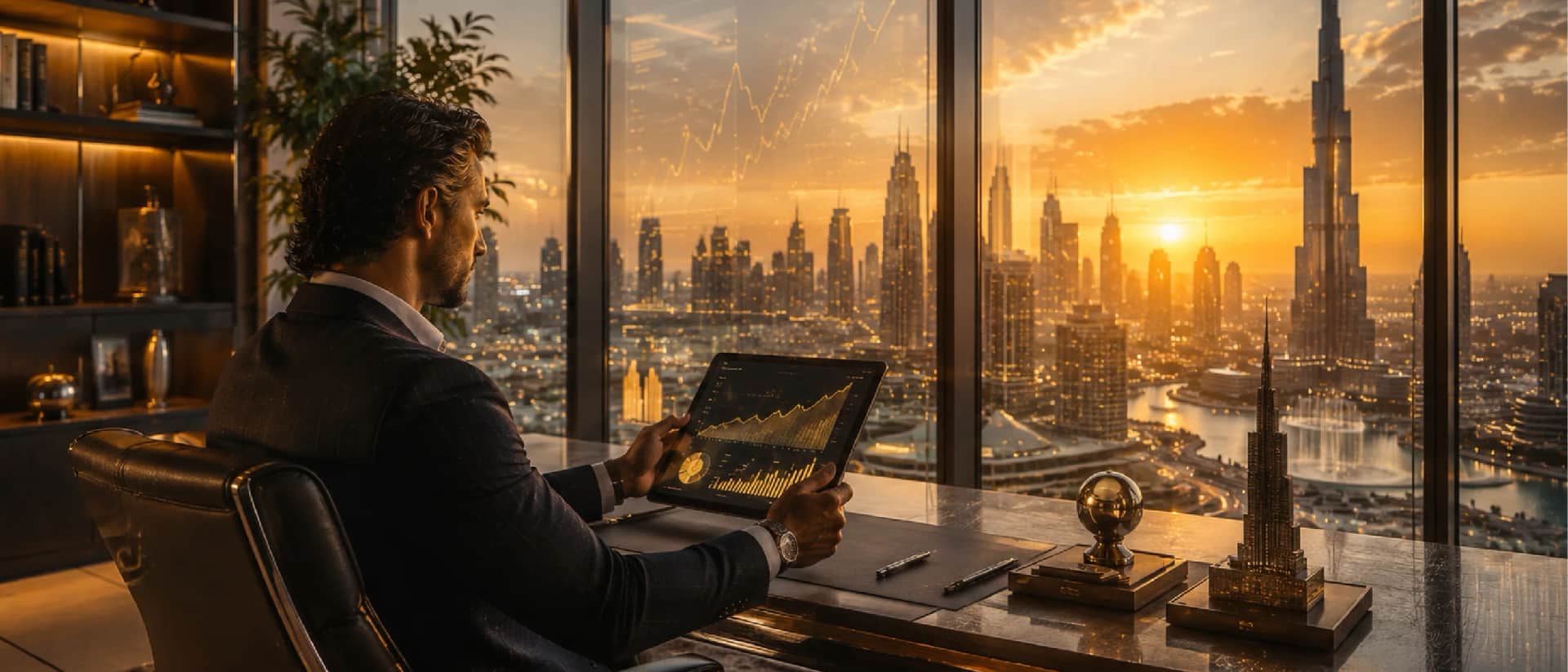
The Dubai Real Estate Market is set to see record-breaking momentum with transaction value reaching AED139.2 billion in Q1 2026—fueled by strong off-plan demand, foreign capital inflows, and increasing end-user activity.
Dubai is keeping its lead over other property hubs around the world thanks to its investor-friendly policies and the high potential for returns, as noted in market reports by Arabian Business and major brokerage data providers.
The Dubai Real Estate Market is not only expanding in terms of volume but also gaining greater value and quality as buyers are increasingly looking towards projects that are supported by infrastructure, credibility of the developers, and potential appreciation of capital value.
The Dubai Real Estate boom has evolved into a more stable, investment-driven cycle thanks to this structural shift in demand.
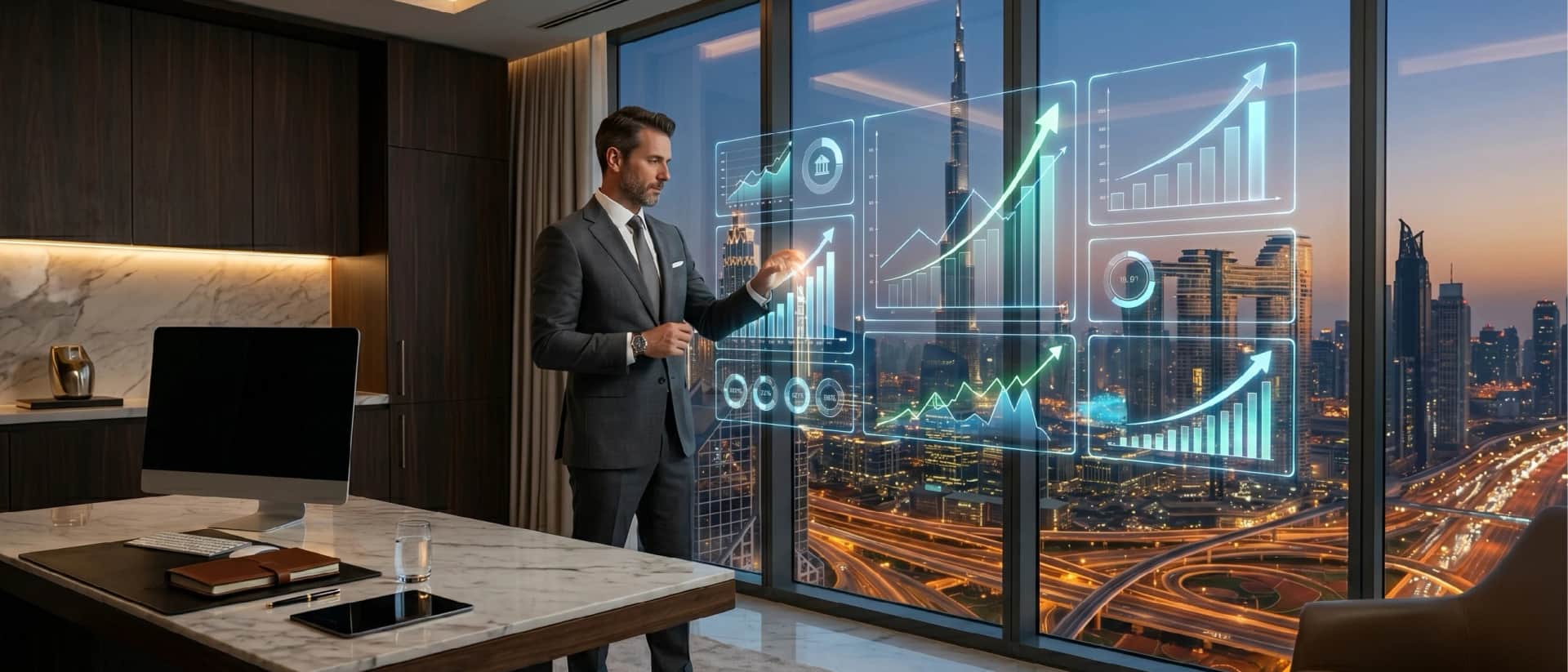
Capital appreciation in Dubai property market is the rise in property value over time, influenced by factors such as demand, location development, and macroeconomic conditions. To an investor, it is the money gained by selling the property for more than the initial investment.
Simply put, when you buy real estate in Dubai, and the value of that property improves over the next several years, then that gain in value is your capital appreciation. In Dubai, however, this concept has more than just the notion of price growth; it is correlated to infrastructure growth, off-plan deals, and demand from investors all over the world.
Dubai has emerged as one of the world's most vibrant real estate markets. It is offering opportunities for both immediate profit and future investment and wealth. For anyone interested in investing strategically in Dubai properties instead of speculatively, it is crucial to understand the concept of capital appreciation in the local real estate market.
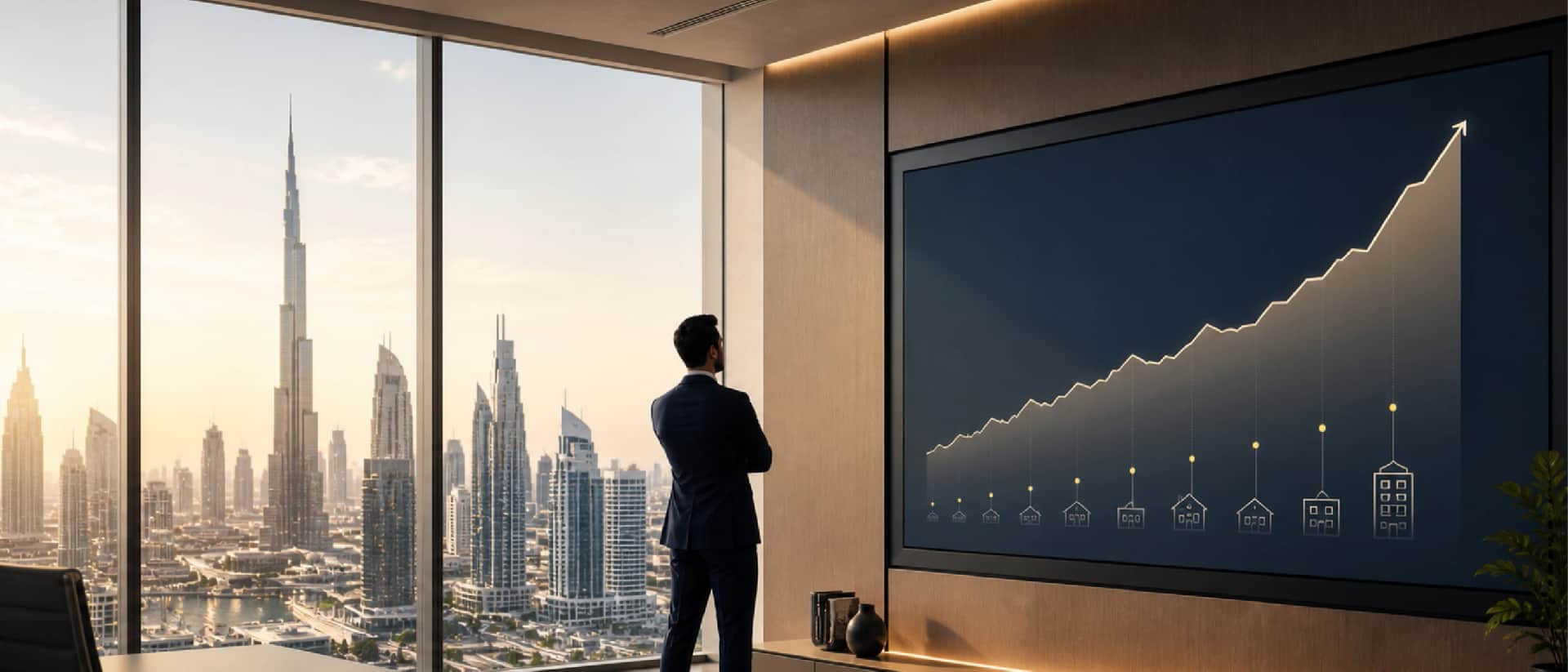
According to Dubai Land Department (DLD) statistics, the Dubai Property Market registered a sharp growth in April 2026, with total real estate transactions reaching AED 68.56 billion. It is more than a 20 percent month-on-month growth.
The surge is not a short-term spike but the result of structural demand drivers such as inflows of foreign investment, population growth, and sustained off-plan development activity across the masterplanned communities of the city of Dubai.
The Dubai Property Market has been able to exhibit its liquidity strength in both residential and commercial real estate segments. It will further help it to establish itself as one of the most dynamic global real estate hubs in 2026.