Adil Raza Khan | May 16, 2026
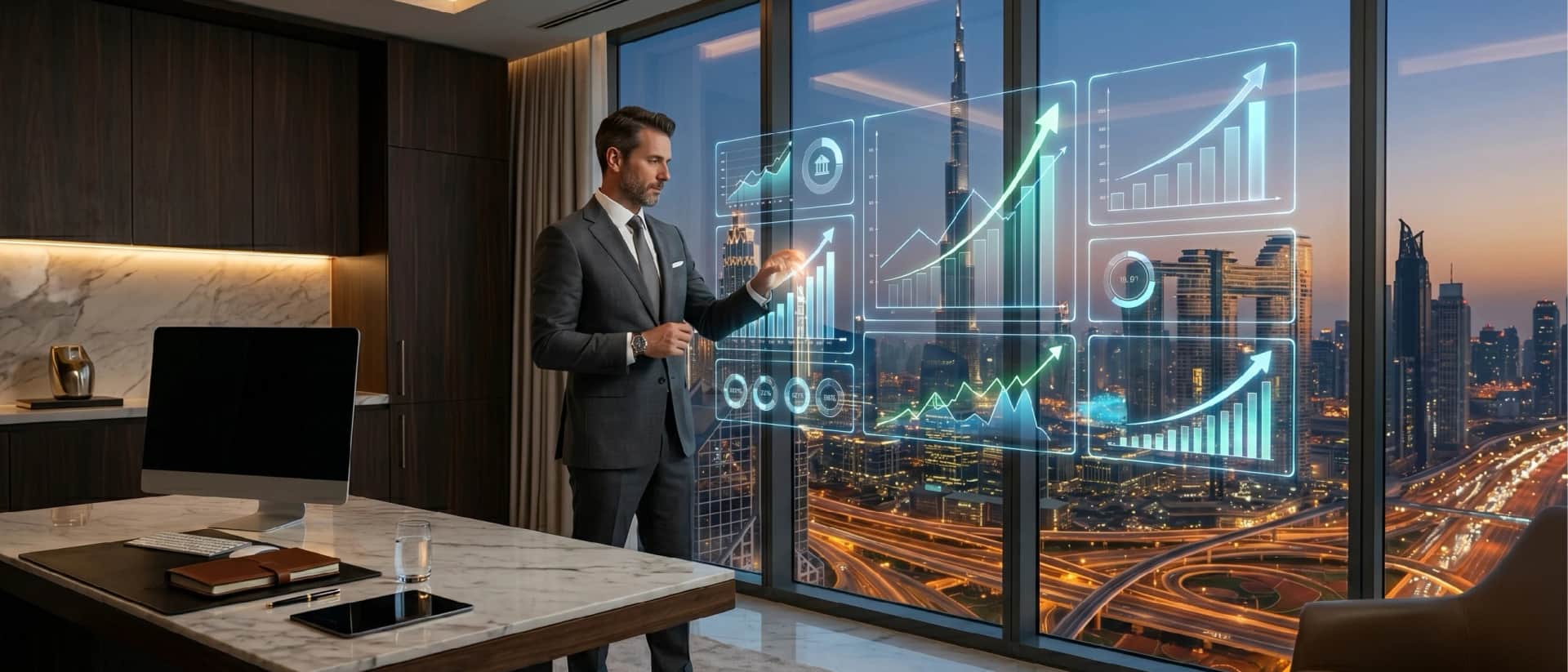
Capital appreciation in Dubai property market is the rise in property value over time, influenced by factors such as demand, location development, and macroeconomic conditions. To an investor, it is the money gained by selling the property for more than the initial investment.
Simply put, when you buy real estate in Dubai, and the value of that property improves over the next several years, then that gain in value is your capital appreciation. In Dubai, however, this concept has more than just the notion of price growth; it is correlated to infrastructure growth, off-plan deals, and demand from investors all over the world.
Dubai has emerged as one of the world's most vibrant real estate markets. It is offering opportunities for both immediate profit and future investment and wealth. For anyone interested in investing strategically in Dubai properties instead of speculatively, it is crucial to understand the concept of capital appreciation in the local real estate market.
Curated Opportunities
Flexible buying options for smarter property decisions.
Handpicked properties sorted for the strongest value.
Investment-focused listings with return potential.
Browse Dubai communities with properties for sale.
Capital appreciation in real estate is the increase in the value of a property over time. It can be attributed to various factors such as location, development, demand-supply imbalance, or economic growth.
The mechanism involves both urban expansion planning and investor demand in the context of capital appreciation in Dubai real estate. If you're buying a home, particularly in a new or off-plan community, you're actually buying on the lower end of the market. As the area is built out with new facilities, grocery stores and lifestyle amenities, the value of the property rises.
Dubai’s model is unique because:
Past market data from Khaleej Times and Gulf News reveal a 20% to 40% price hike for off plan properties in Dubai when they are launched and then completed in hot market areas.
The city's policy benefits and ongoing development make it a high-growth real estate market.
Several structural factors make Dubai attractive. The population continues to grow, including through long-term residence schemes such as the Golden Visa. The tax less environment of the city adds to investor returns, particularly when compared with more established markets such as London or New York.
Furthermore, mega projects like waterfront communities, financial districts, and branded residences generate new cycles of demand. Dubai's property market continued its bout of double-digit price increases in all the top locations in 2023–2025, as revealed in reports covered by APIL Properties experts.
When done strategically, capital appreciation in the Dubai property market is not only achievable but predictable, thanks to this steady trend.
How much has Dubai's capital increased on an average basis?
Dubai's capital appreciation average is between 5% and 12% per year, depending on the location, type of project, and market cycles.
But averages don't reveal the whole picture. New developments and master communities, as well as prime waterfronts, can actually outperform the market. In high growth cycles, some communities have seen growth rates of 15%-25% per year.
Recent data highlighted by Dubai Land Department shows that:
This is the reason why investors are actively seeking the highest capital appreciation in Dubai zones instead of the market averages.
Good appreciation is usually present in new master planned communities, waterfront communities, and branded residential projects.
Not all Dubai people are appreciative. These are areas with future infrastructure, new lifestyle amenities, and low supply that have a better performance. Early investors in these places get the price uplift as these places start to gain traction.
Reuters reported on the market, observing that Dubai has experienced some of the quickest price increases in the luxury and waterfront sectors over the past few years.
For Capital Appreciation Dubai 2026, the focus has shifted toward:
This is indicative of a shift towards investing in real estate that is not solely based on location, but also on lifestyle.
Capital appreciation is about the increase in value over time, and rental yield is about generating cash flow in the short-term. The ideal combination is both.
Dubai is one of the few markets in which investors can get solid rental yields (5%–8%) and good appreciation. This twofold benefit is highly appealing as opposed to other major cities worldwide where yields are generally low at 3%.
But the approach relies on the objective of the investors. Investors looking for quick resale profits will keep in mind the upswing in value, particularly in off-plan schemes. Investors who are interested in the long-term can expect a steady flow of rent income, with the potential for gradual price appreciation.
In reality, seasoned investors seeking capital appreciation in Dubai property market look to achieve a combination of income and growth, maximizing returns.
Best Project Finder
Filter opportunities by budget, property type, bedroom mix, and strategy to uncover projects aligned with your investment goals.
In addition to not collecting capital gains tax on property sales, Dubai is one of the world's most tax-efficient real estate markets.
This means that if there are any gains, the investors will receive 100% of the capital value, excluding the fees of the transaction, which include transfer fees. This benefit is a huge improvement over other markets such as the UK or US, where capital gains taxes can take a huge bite out of profits.
The tax-free environment is one of the key factors that keeps making Dubai real estate a lucrative investment opportunity for international investors and high-net-worth individuals.
The secret is in timing, place and asset selection.
The investor with the best returns is usually the first to get in at the beginning of an off-plan project. They choose developments that have established developers and are surrounded by growth corridors. They can reap rewards of price appreciation if they hold on to a property during the development period.
According to Forbes Middle East data, investors in early-stage projects in premium off-plan launches may have the highest appreciation returns, particularly if the projects correspond to infrastructure growth.
Also, properties that boast special features like waterfront views, branded interiors or close to landmarks can add value to resale.
Overall, the outlook is positive due to high demand, low supply in prime segments, and ongoing economic growth.
The growth in the Dubai real estate market is now entering a more sophisticated stage. Also, it is now fueled by end-users and long-term investors, less by speculation. According to the APIL reports from global consultancies such as Knight Frank, demand for the luxury and mid-market segment is expected to continue through 2026.
The price growth is continuing due to Expo legacy developments, inflows, and foreign investment. Although the price of properties in Dubai may see some short-term fluctuations, it is expected that the long-term trend will be upward.
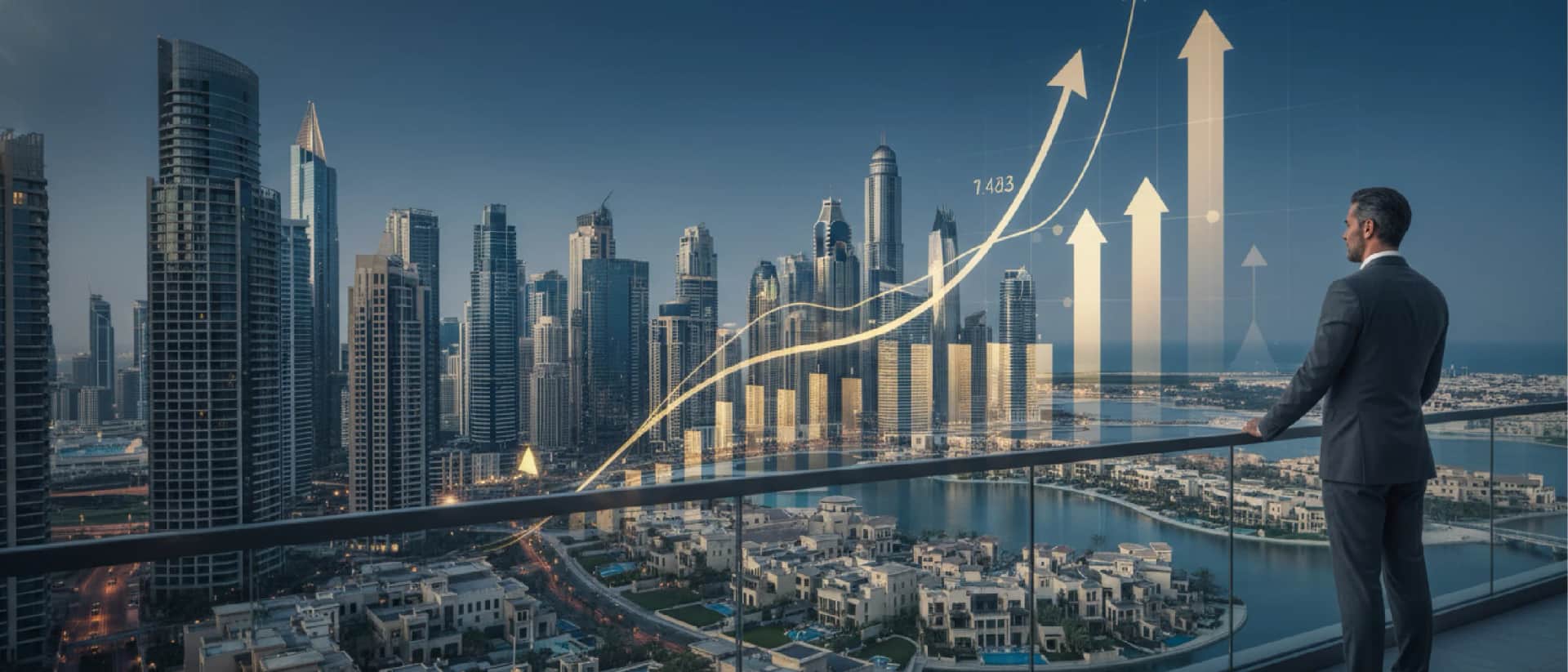
Dubai property market capital appreciation is not merely a matter of price appreciation; it's a matter of strategic wealth creation. With knowledge of the cycle, a sense of where to invest and when, investors can make strong profits.
Dubai is a combination of high appreciation potential, high rental yields, and no capital gains taxes. This is one of the most attractive real estate investment places in the world.
When investing with Apil Properties, the key is always to make sure the opportunities are the ones that are fueled by a sustained vision and appetite for infrastructure growth and genuine demand, rather than short-term chatter.
Capital appreciation in Dubai property market is the increase in a property’s value over time due to demand, development, and economic growth.
Capital appreciation in property refers to the profit gained when a property is sold at a higher price than its purchase value.
The average capital appreciation in Dubai ranges between 5% to 12% annually, depending on location and property type.
Emerging communities, waterfront developments, and branded residences typically deliver the highest capital appreciation in Dubai.
Capital appreciation in Dubai real estate focuses on long-term gains, while rental income provides steady cash flow, and the best strategy often combines both.
There is no capital appreciation tax in Dubai, allowing investors to retain full profit from property resale.
You can maximize capital appreciation in Dubai by investing early in off-plan projects within high-growth locations.
Capital appreciation in Dubai property market is driven by population growth, infrastructure development, and strong investor demand.
Capital Appreciation Dubai 2026 outlook remains strong due to sustained demand, luxury segment growth, and global investor interest.
Capital appreciation in Dubai is important because it enables long-term wealth creation alongside rental yield benefits.

WRITTEN BY
Adil Raza Khan is a Dubai luxury real estate expert with over 13 years of experience in the UAE property market. He is the Chairman of APIL Properties.
Investment Finder
Use smart filters to discover Dubai projects matched to your investment goals.
Try the Investment FinderCapital appreciation in Dubai property market is the rise in property value over time, influenced by factors such as demand, location development, and macroeconomic conditions. To an investor, it is the money gained by selling the property for more than the initial investment.
Simply put, when you buy real estate in Dubai, and the value of that property improves over the next several years, then that gain in value is your capital appreciation. In Dubai, however, this concept has more than just the notion of price growth; it is correlated to infrastructure growth, off-plan deals, and demand from investors all over the world.
Dubai has emerged as one of the world's most vibrant real estate markets. It is offering opportunities for both immediate profit and future investment and wealth. For anyone interested in investing strategically in Dubai properties instead of speculatively, it is crucial to understand the concept of capital appreciation in the local real estate market.
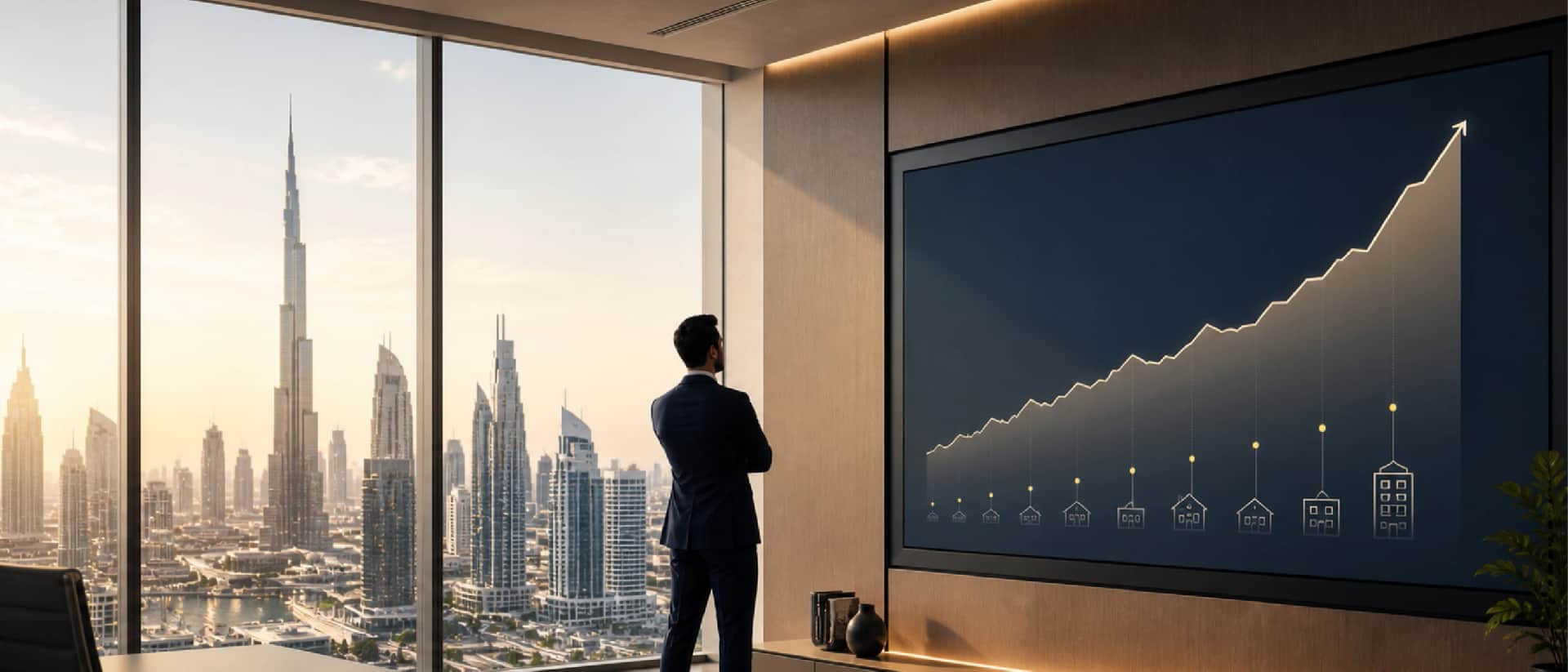
According to Dubai Land Department (DLD) statistics, the Dubai Property Market registered a sharp growth in April 2026, with total real estate transactions reaching AED 68.56 billion. It is more than a 20 percent month-on-month growth.
The surge is not a short-term spike but the result of structural demand drivers such as inflows of foreign investment, population growth, and sustained off-plan development activity across the masterplanned communities of the city of Dubai.
The Dubai Property Market has been able to exhibit its liquidity strength in both residential and commercial real estate segments. It will further help it to establish itself as one of the most dynamic global real estate hubs in 2026.
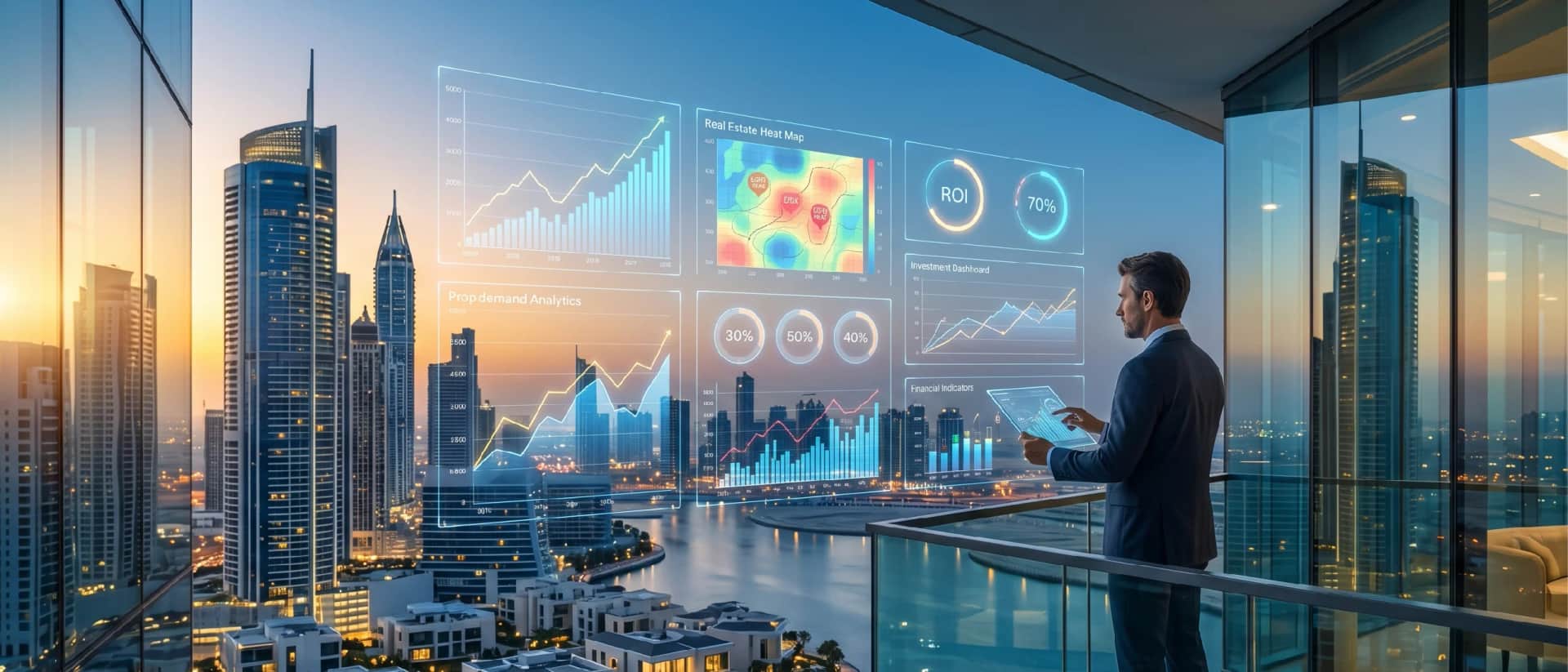
Yes - investing in Dubai luxury property in 2026 as a long-term strategy is a good opportunity to grow your capital rather than to earn rental income in the short-term. The high-net-worth migration, zero-tax ownership, and lack of ultra-prime supply make the Dubai luxury property market continue to outperform other cities around the world.
In 2025, Dubai registered approximately AED 900+ billion worth of real estate dealings, with luxury areas accounting for a significant portion of the worth increment. The global media reports about the increase in demand for branded homes and waterfront villas, indicating an evident surge in the Dubai luxury property market.
Prime area price increases have been 15-25% per year, and ultra-luxury properties over $10M are still setting sales records. This substantiates the robust momentum in Dubai's luxury property market, backed by international investors.
Nevertheless, rental yields remain at an average of 46 percent, and that is an appreciation. On the whole, luxury property in Dubai is a high-potential, fact-supported investment in long-term wealth creation.