Adil Raza Khan | May 4, 2026

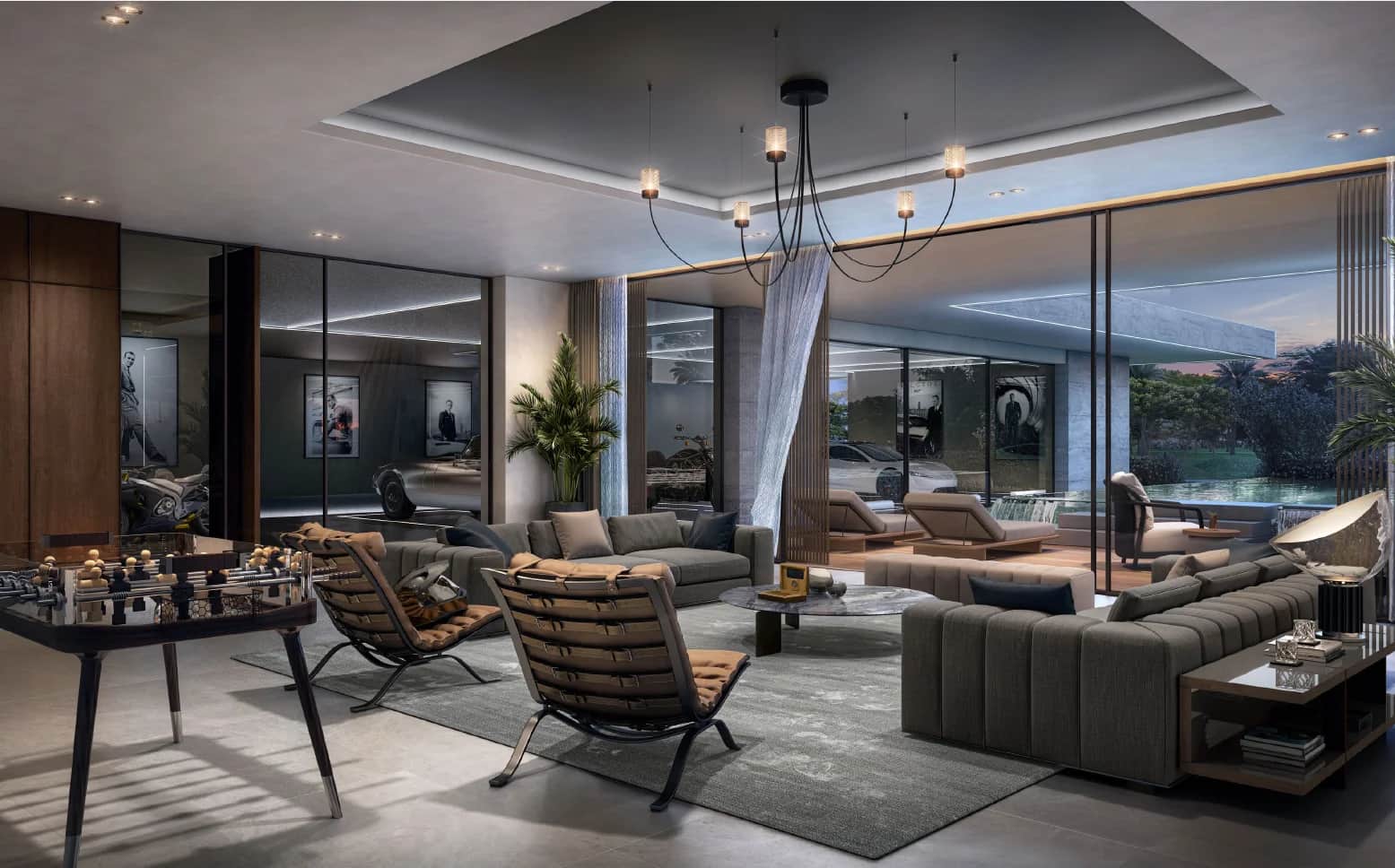
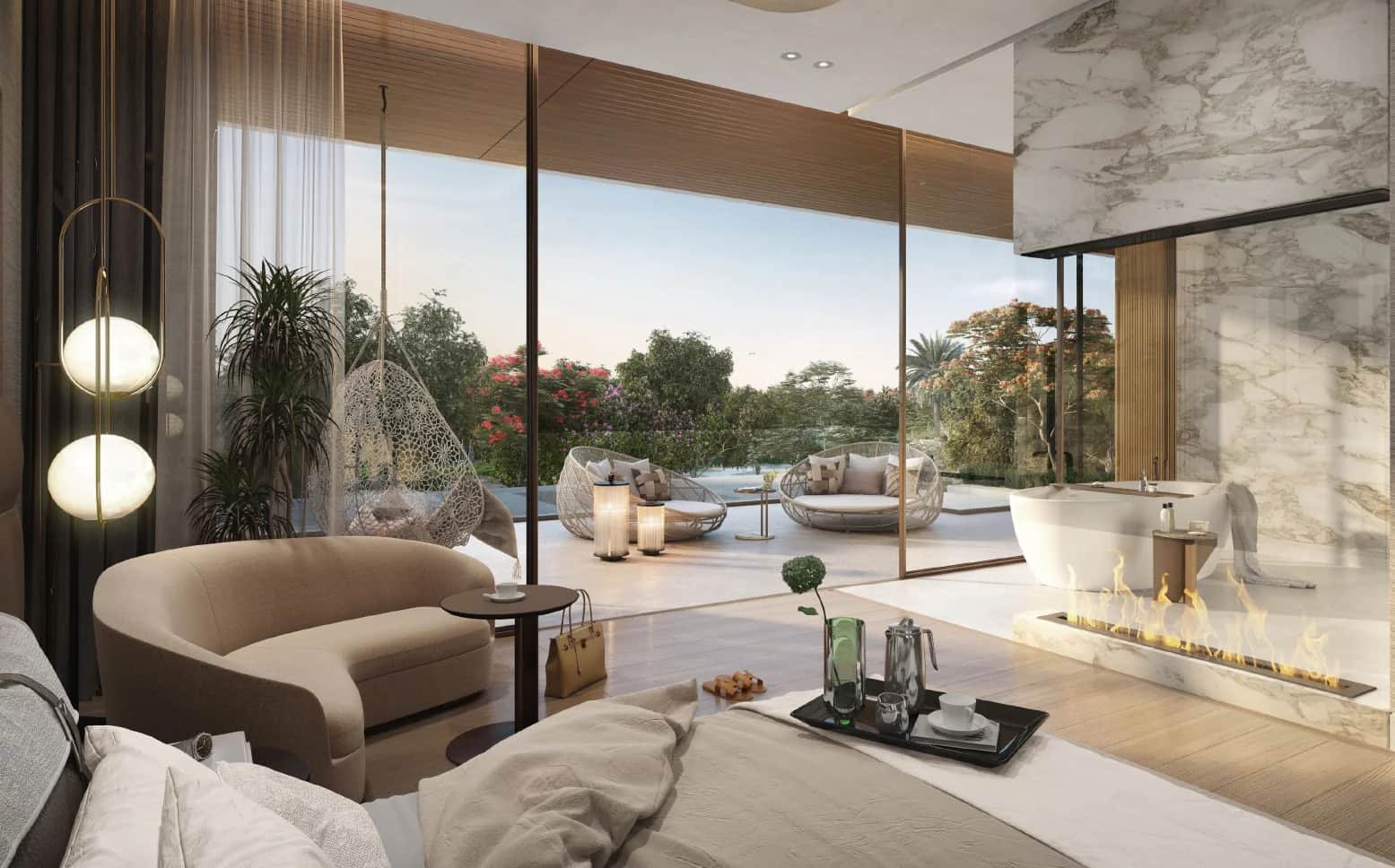
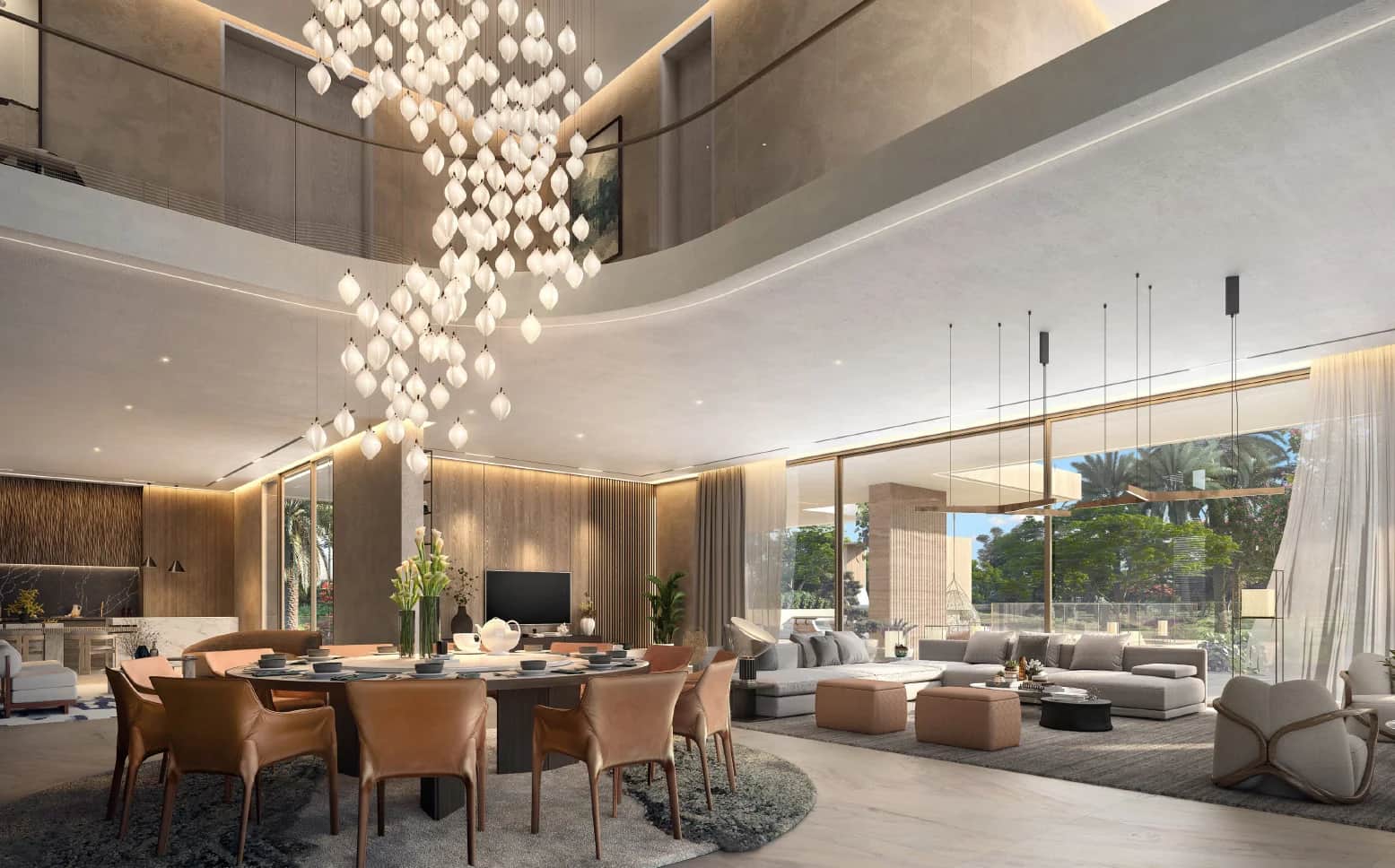
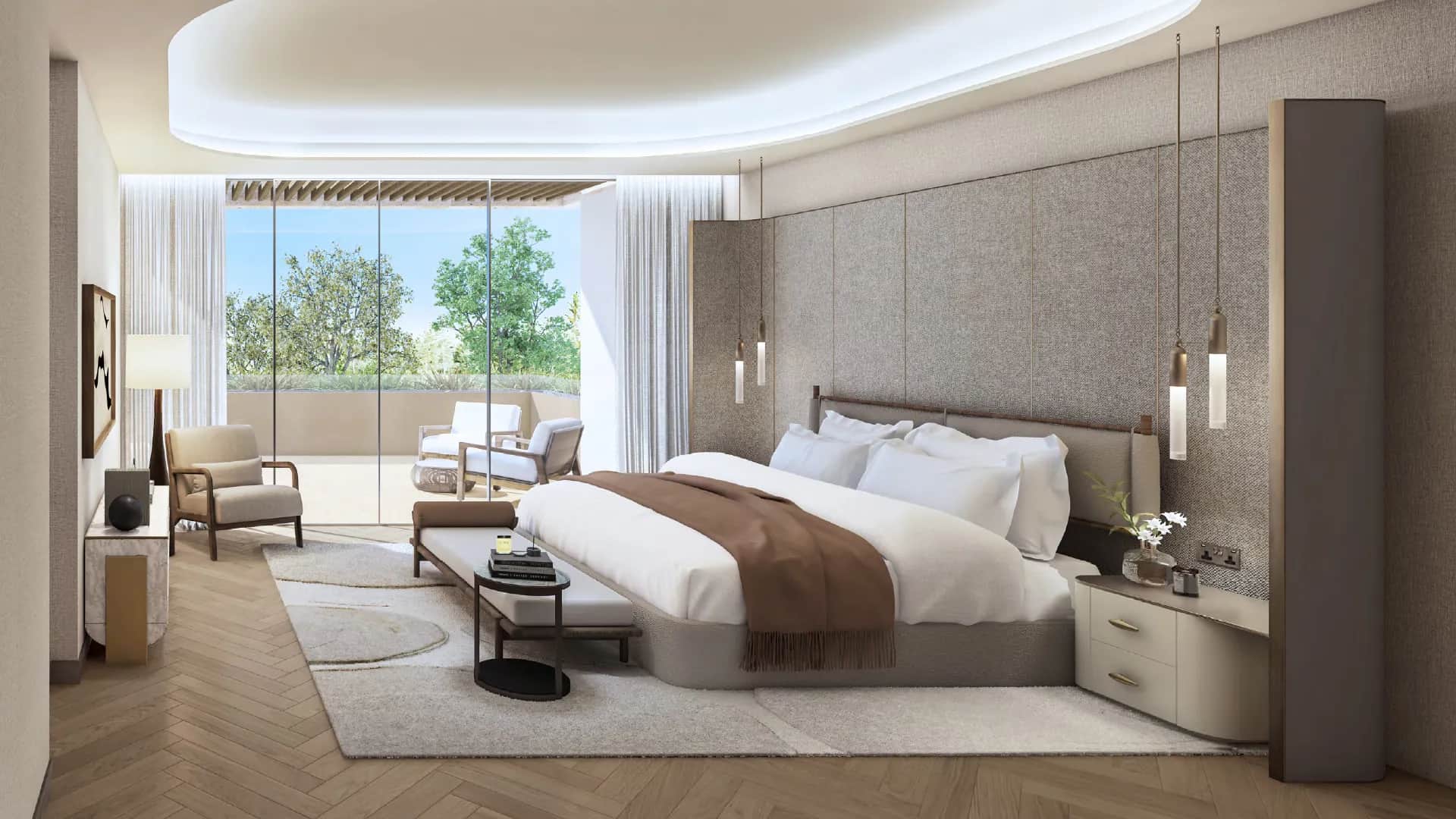
Yes - investing in Dubai luxury property in 2026 as a long-term strategy is a good opportunity to grow your capital rather than to earn rental income in the short-term. The high-net-worth migration, zero-tax ownership, and lack of ultra-prime supply make the Dubai luxury property market continue to outperform other cities around the world.
In 2025, Dubai registered approximately AED 900+ billion worth of real estate dealings, with luxury areas accounting for a significant portion of the worth increment. The global media reports about the increase in demand for branded homes and waterfront villas, indicating an evident surge in the Dubai luxury property market.
Prime area price increases have been 15-25% per year, and ultra-luxury properties over $10M are still setting sales records. This substantiates the robust momentum in Dubai's luxury property market, backed by international investors.
Nevertheless, rental yields remain at an average of 46 percent, and that is an appreciation. On the whole, luxury property in Dubai is a high-potential, fact-supported investment in long-term wealth creation.
Curated Opportunities
Flexible buying options for smarter property decisions.
Handpicked properties sorted for the strongest value.
Investment-focused listings with return potential.
Browse Dubai communities with properties for sale.
The Dubai luxury property market is currently taking an ultra-prime, branded, and master-planned development pipeline to shape its future in 2026. These developments are leading the second wave of Luxury Real Estate in Dubai. It is particularly in waterfront, financial district, and island communities where scarcity and branding are playing a major role in value creation.
The most prominent 2026 luxury projects in Dubai are listed below:
These developments mirror the current trends in the Dubai luxury property market, with demand shifting towards branded residential and luxury ecosystems. One of the biggest factors that has led the luxury property market of Dubai to beat its global counterparts is the increasing concentration of such developments. Investors are not only purchasing homes, but also purchasing brand value, scarcity, and potential future appreciation.
The current luxury property market in Dubai is fuelled by a combination of macroeconomic and structural forces as opposed to speculative demand. Dubai was ranked as one of the most vibrant property markets in the world, with more than AED 900 billion in real estate transactions in 2025.
As per Reuters and Gulf News reports, transaction value increased by a higher rate than volume, meaning that the market is getting overwhelmed by high-value luxury property in Dubai.
The driving force behind this boom in the Dubai luxury property market is the migration of high-net-worth individuals into the UAE. Dubai was one of the leading destinations in the world in terms of migration of millionaires, outdoing the traditional migration centers such as London and New York. The attraction is with zero property tax, no capital gains tax, and long-term residency.
Yes, Dubai luxury property is a good investment in 2026 for long-term investors. But its returns are all about strategy. According to market information, luxury real estate has provided an annual price increase of more than 20 percent over the past few years. Thus, Dubai is one of the most rapidly expanding prime markets worldwide.
But, in contrast to mid-market properties, luxury assets are not yield-driven. The luxury segment has an average of 4-6 percent rental returns, a lower percentage when compared with that of the rest of the market. The true benefit is the appreciation, particularly in the ultra-prime market like waterfront villas and branded residences.
Recent trends in the Dubai luxury property market show that there is a trend towards trading in ultra-high valued and branded developments. In 2025, alone, more than 500 homes were sold in Dubai at over $10 million. It is the highest in terms of ultra-luxury real estate dealings worldwide.
Statistics analysed by APIL experts reveal that the over 25 million-plus market has increased by more than 40 percent annually. This is an indication of an intensifying of the ultra-prime market and not a spike.
The other important trend is the off-plan luxury developments supported by leading developers. Investors are also venturing in early in order to benefit more in terms of capital gain at the completion of the project.
The Dubai luxury property sales have performed better than most markets in the world, especially in the ultra-prime sales. Stagnation in cities such as London and New York has been influenced by taxation and regulatory burdens though Dubai has been able to position itself as an alternative that is tax efficient.
According to APIL experts, Dubai was on top of the globe in terms of home sales of over 10 million dollars, and it is a measure of investor confidence as well as continued international demand. The fact that the city manages to draw international capital under the existing geopolitical uncertainty further reinforces the stance of the city.
This competitiveness on the world scene is one of the reasons why the luxury property market in Dubai has been growing, with or without economic fluctuations in other places.
Yes, despite its strong fundamentals, the Dubai luxury property market is not without risks. Short-term volatility may be a result of geopolitical tensions or economic changes in the world.
Moreover, the supply is likely to grow dramatically, reaching above 200,000 new units in 2027. A lot of this falls outside of the ultra-luxury segment, but it may affect prices in some of the regions.
The cost of services and repairs in luxury developments is also significantly higher. This can pose a problem with net returns unless as a part of the investment strategy.
Best Project Finder
Filter opportunities by budget, property type, bedroom mix, and strategy to uncover projects aligned with your investment goals.
Dubai luxury property is best suited for investors with a medium to long-term horizon, (usually three to seven years). It is ideal for people focusing on capital growth, international diversification, and securing assets.
The investors who venture into this segment are usually high-net-worth individuals who want to hedge their currency and inflation risk. The residency options add to its attractiveness as well and make it a financial and lifestyle investment.
Mid-market properties can give higher returns to short-term investors or those who are only interested in the rental income.
Luxury Real Estate in Dubai provides a distinctive blend of optimal growth and tax efficiency, as compared to the traditional luxury markets. Compared to cities such as London, which charge over 10% in stamp duties and ongoing property taxes, Dubai has no taxation.
Moreover, the rates per square foot in Dubai are relatively competitive even after the upward trend, and thus, investors are still able to purchase prime assets in the city at a lower entry point than in other parts of the world.
This is one of the most important value propositions that has contributed to the long-term increase in the Dubai luxury property market.
Yes, you should invest in Dubai luxury property if your goal is long-term capital growth and global portfolio diversification. The market has good fundamentals, such as high levels of transactions, migration by high-net-worth individuals, and government-imposed incentives.
Nevertheless, this segment is very dependent on the appropriate choice of project, location, and developer. Not every luxury property provides the same returns, and it is important to make strategic investment choices.
In the case of investors dealing with well-established companies such as Apil Properties, the capacity to determine high-performing assets in the Dubai luxury property market can play a significant role in enhancing results.
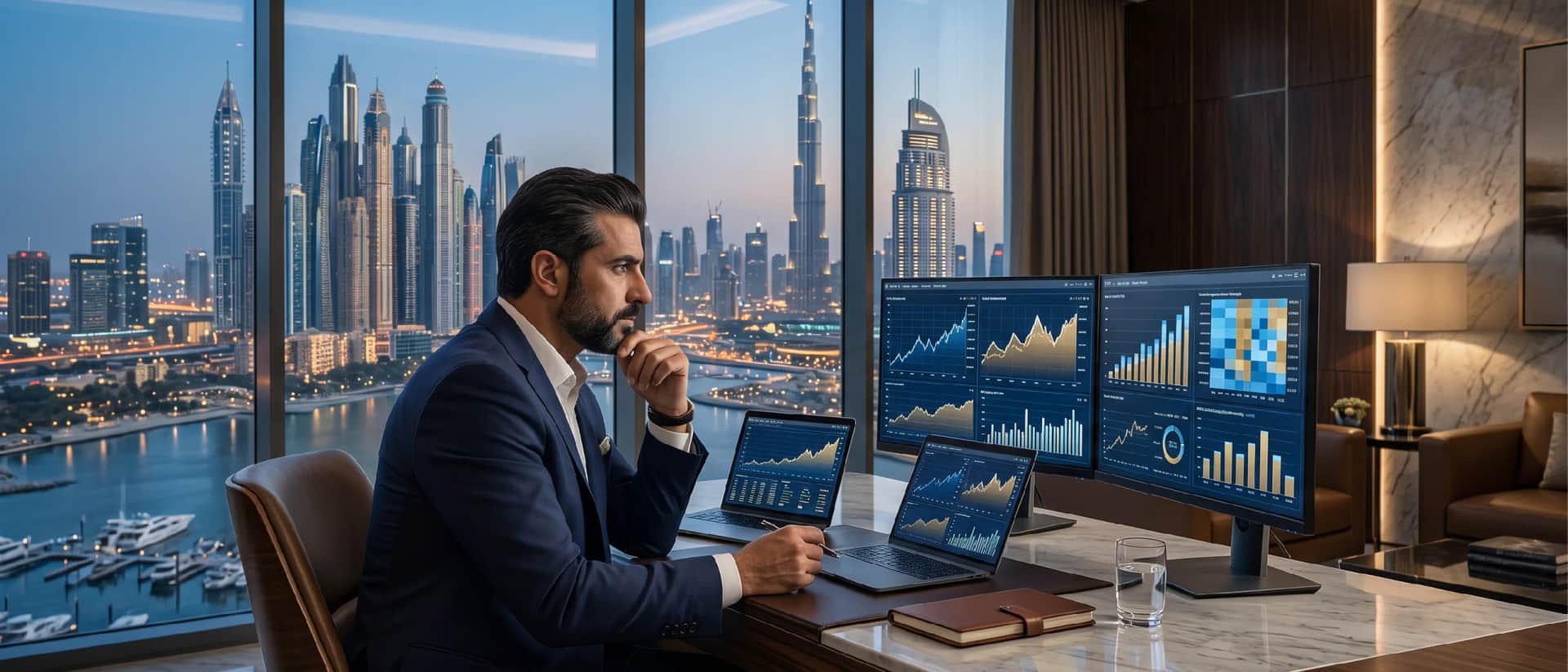
The data reported by APIL experts clearly demonstrates that the Dubai luxury property is no longer a speculative take. It is rather a systematic, globally competitive investment market. The Dubai Luxury Property market has a good opportunity. It is due to a steady increase in high-value transactions, growing international demand, and solid economic support.
Yes, Dubai luxury property offers strong long-term appreciation backed by global demand and high-value transactions.
Investors typically see 4–6% rental yield and higher returns through capital appreciation.
The dubai luxury property market surge is driven by HNWI migration, tax benefits, and branded developments.
Palm Jumeirah, Dubai Marina, Business Bay, and DIFC are top-performing luxury locations.
Dubai offers higher growth potential and zero property taxes compared to traditional markets.
Luxury property in Dubai typically starts from AED 3M+ depending on location and project.
Yes, branded projects lead current dubai luxury property market trends with higher demand and resale value.
Short-term fluctuations exist, but long-term fundamentals of the luxury property market in Dubai remain strong.
Yes, foreigners can fully own freehold luxury property in designated areas.
It offers stable but moderate yields, making it more suitable for appreciation-focused investors.

WRITTEN BY
Adil Raza Khan is a Dubai luxury real estate expert with over 13 years of experience in the UAE property market. He is the Chairman of APIL Properties.
Investment Finder
Use smart filters to discover Dubai projects matched to your investment goals.
Try the Investment Finder
The Dubai Real Estate Market is set to see record-breaking momentum with transaction value reaching AED139.2 billion in Q1 2026—fueled by strong off-plan demand, foreign capital inflows, and increasing end-user activity.
Dubai is keeping its lead over other property hubs around the world thanks to its investor-friendly policies and the high potential for returns, as noted in market reports by Arabian Business and major brokerage data providers.
The Dubai Real Estate Market is not only expanding in terms of volume but also gaining greater value and quality as buyers are increasingly looking towards projects that are supported by infrastructure, credibility of the developers, and potential appreciation of capital value.
The Dubai Real Estate boom has evolved into a more stable, investment-driven cycle thanks to this structural shift in demand.

Capital appreciation in Dubai property market is the rise in property value over time, influenced by factors such as demand, location development, and macroeconomic conditions. To an investor, it is the money gained by selling the property for more than the initial investment.
Simply put, when you buy real estate in Dubai, and the value of that property improves over the next several years, then that gain in value is your capital appreciation. In Dubai, however, this concept has more than just the notion of price growth; it is correlated to infrastructure growth, off-plan deals, and demand from investors all over the world.
Dubai has emerged as one of the world's most vibrant real estate markets. It is offering opportunities for both immediate profit and future investment and wealth. For anyone interested in investing strategically in Dubai properties instead of speculatively, it is crucial to understand the concept of capital appreciation in the local real estate market.
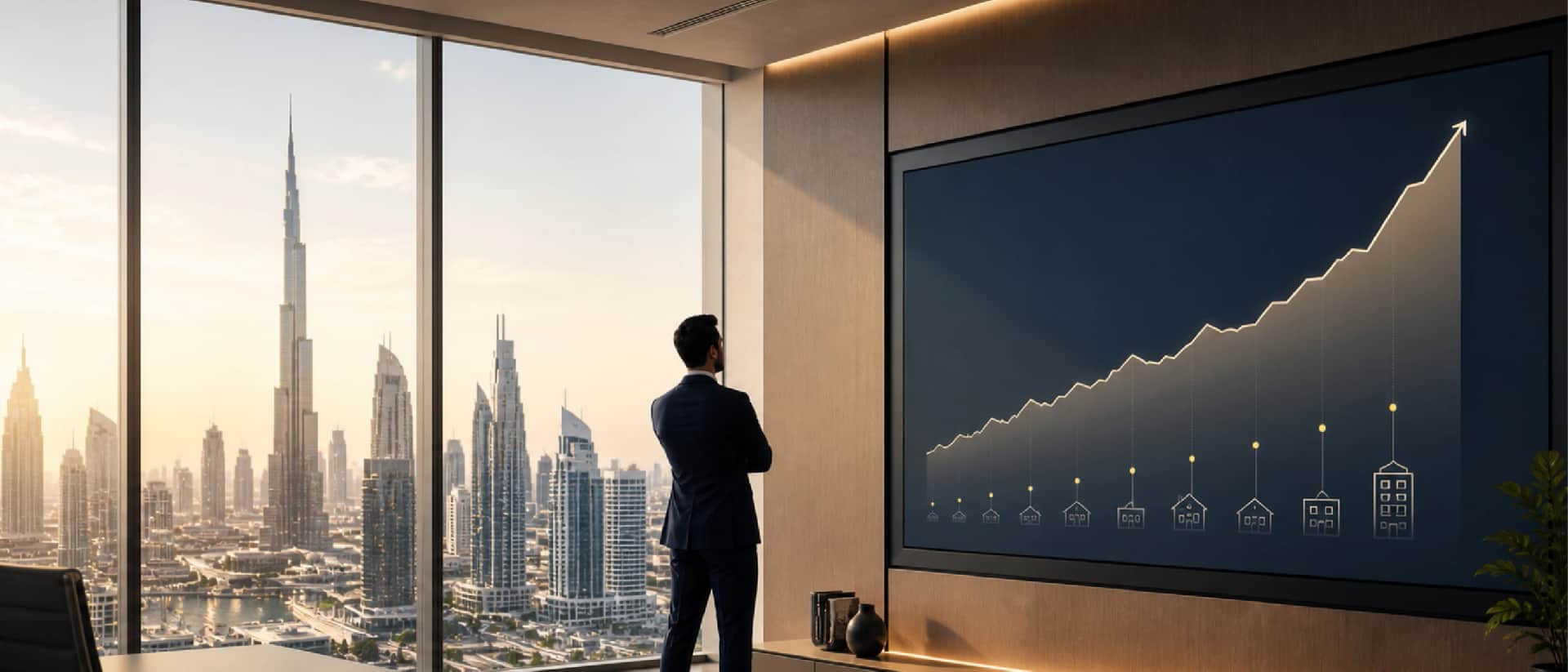
According to Dubai Land Department (DLD) statistics, the Dubai Property Market registered a sharp growth in April 2026, with total real estate transactions reaching AED 68.56 billion. It is more than a 20 percent month-on-month growth.
The surge is not a short-term spike but the result of structural demand drivers such as inflows of foreign investment, population growth, and sustained off-plan development activity across the masterplanned communities of the city of Dubai.
The Dubai Property Market has been able to exhibit its liquidity strength in both residential and commercial real estate segments. It will further help it to establish itself as one of the most dynamic global real estate hubs in 2026.