Adil Raza Khan | November 20, 2025

Moving to Dubai from the Philippines in 2026 is among the most sought-after relocation tracks for Filipinos seeking improved career prospects, tax-free earnings, and urban living. The cosmopolitan nature, leading infrastructure, and real estate friendliness of Dubai make it one of the best places for working people and families to improve their quality of life.
The process of moving from the Philippines to Dubai in 2026 requires planning for visas, housing, finances, acclimatising to the culture, and local legislation. A clear, structured way is a guarantee of a smooth transition.
This expert guide by APIL explains everything you need to know while shifting to Dubai from the Philippines this year!
Curated Opportunities
Flexible buying options for smarter property decisions.
Handpicked properties sorted for the strongest value.
Investment-focused listings with return potential.
Browse Dubai communities with properties for sale.
Filipinos are getting attracted to Dubai based on:
Also, a healthy community of Filipino expats guarantees socialization, communication, and mentoring.

The legal work and residence in Dubai can only be achieved when Filipinos fulfill the visa requirements. Some of the major visa types include work visa, Green visa, remote work visa and family sponsorship visa.
They can be a valid passport, employment agreement, education qualifications, and medical clearance. Knowing the right visa makes one be eligible to be housed, banked, and taken care of.
Tip: You should always ensure that your employer is registered and licensed to sponsor the visas in 2026.
MOVING TO DUBAI FROM PHILIPPINES DOCUMENT REQUIREMENTS include: a valid Philippine passport (at least 6 months), employment contract, academic/professional certificates, health check reports and a certificate of accommodation. The preparations of these will avoid delays and adhere to the rules and regulations of the UAE.
Additional Tip: Some visas may require police clearance certificates or notarized translations for certain documents.
Moving to Dubai from the Philippines in 2026 cost depends on rent, utility costs, grocery costs, transportation, education, and initial relocation expenditures. An apartment in affordable locations with a one-bedroom is between 3,500-5,500 AED/month.
Pro Tip:Check currency calculator to monitor PHP to AED exchange rate prior to transfer of money.
These factors can ensure the Filipinos make an informed decision when it comes to relocation.
Moving to Dubai from the Philippines in 2026 tax means that residents of the country will be able to keep the majority of their income tax-free without any personal income tax. This allows for increased financial freedom, savings, and property investment.
Tip: Taxes on personal income are not levied in Dubai but expatriates must take into account taxes in the Philippines on any earnings acquired there.
Filipinos can rent apartments, villas, or freeholds. Cheap areas include International City and those in Jumeirah Village Circle and Dubai Silicon Oasis.
There are high-end places such as the Dubai Marina and Downtown where people can enjoy high-quality living. Contracting with Apil Properties will guarantee legal and safe tenancy through Ejari registration, securing tenants and landlords.
Extra Tip: When choosing a neighborhood, compare prices, facilities and proximity to work places.
The climate of Dubai is very hot in summer (up to 45 °C) and cold in winter (18-25 °C). It must include air conditioning, sun protection, and hydration. Cultural integration entails dressing in low-key attire and respecting local legislation. Belonging to Filipino expat communities and attending cultural events enhances the adjustment process.
Lifestyle Tip: When considering a house, consider eco-friendly options with energy-efficient ACs to save on utility bills.
Open an account at the bank of the UAE, check the currency price of PHP and AED, and calculate the costs of rent, schooling, healthcare, and the daily costs. Financial planning is essential in order to manage the living expenses and maximize savings and investment opportunities.
Digital wallets and international transfer apps are quick and affordable to use when sending money abroad.
Invest in Property - The freehold areas are also good to invest in, whether as a source of long term rental income or as personal areas.
Best Project Finder
Filter opportunities by budget, property type, bedroom mix, and strategy to uncover projects aligned with your investment goals.

Apil Properties aims to help Filipinos who are moving to Dubai in 2026 with advice on housing, Dubai real estate, and investment opportunities. Knowledge of the neighborhoods, market trends, and legal procedures will make the relocation hassle-free and secure.
The benefits of working in Dubai include career advancement, financial stability, and an improved lifestyle, as well as property investment if moving to the Philippines in 2026! Ready to make a move!C
You can apply for a work visa, Green visa, remote work visa, or family sponsorship visa depending on your situation.
You’ll typically need a valid passport, employment contract, academic certificates, medical report, and proof of accommodation.
A Dubai visa from the Philippines can range from ~USD 99 to USD 750 depending on the visa type.
Major expenses include rent, utilities, transportation, schooling, and visa-related fees.
No — there is no personal income tax in Dubai for expatriates.
Yes, with a valid residency visa you can sponsor your spouse and children.
Living in Dubai can be more expensive than the Philippines, especially for housing and international school fees.
You can use international bank transfers or money services; many Filipinos use forex services while staying mindful of exchange rates.
For a single expat, monthly living expenses (excluding rent) average around AED 3,700.
Yes — high living costs, visa scams, cultural adjustment, and homesickness are common, so planning and networking help mitigate them.

WRITTEN BY
Adil Raza Khan is a Dubai luxury real estate expert with over 13 years of experience in the UAE property market. He is the Chairman of APIL Properties.
Investment Finder
Use smart filters to discover Dubai projects matched to your investment goals.
Try the Investment Finder
The Dubai Real Estate Market is set to see record-breaking momentum with transaction value reaching AED139.2 billion in Q1 2026—fueled by strong off-plan demand, foreign capital inflows, and increasing end-user activity.
Dubai is keeping its lead over other property hubs around the world thanks to its investor-friendly policies and the high potential for returns, as noted in market reports by Arabian Business and major brokerage data providers.
The Dubai Real Estate Market is not only expanding in terms of volume but also gaining greater value and quality as buyers are increasingly looking towards projects that are supported by infrastructure, credibility of the developers, and potential appreciation of capital value.
The Dubai Real Estate boom has evolved into a more stable, investment-driven cycle thanks to this structural shift in demand.

Capital appreciation in Dubai property market is the rise in property value over time, influenced by factors such as demand, location development, and macroeconomic conditions. To an investor, it is the money gained by selling the property for more than the initial investment.
Simply put, when you buy real estate in Dubai, and the value of that property improves over the next several years, then that gain in value is your capital appreciation. In Dubai, however, this concept has more than just the notion of price growth; it is correlated to infrastructure growth, off-plan deals, and demand from investors all over the world.
Dubai has emerged as one of the world's most vibrant real estate markets. It is offering opportunities for both immediate profit and future investment and wealth. For anyone interested in investing strategically in Dubai properties instead of speculatively, it is crucial to understand the concept of capital appreciation in the local real estate market.
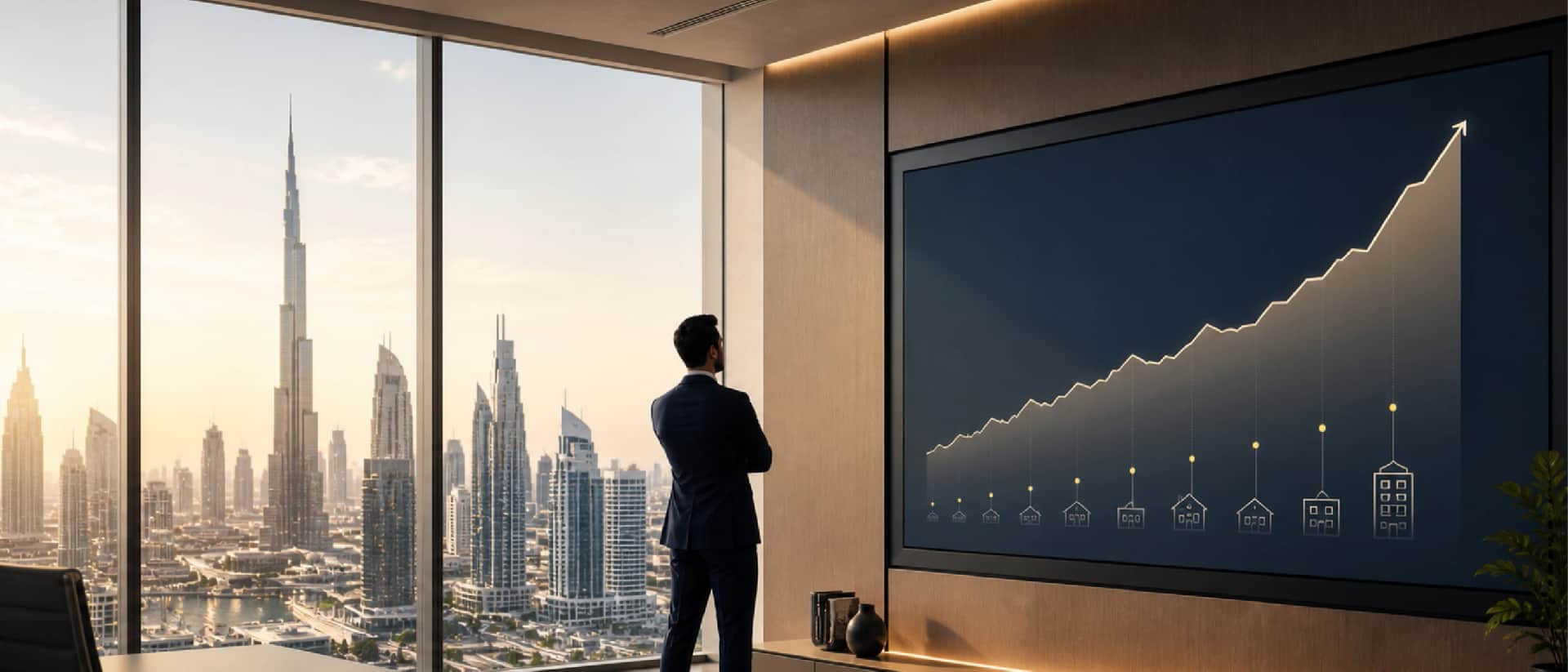
According to Dubai Land Department (DLD) statistics, the Dubai Property Market registered a sharp growth in April 2026, with total real estate transactions reaching AED 68.56 billion. It is more than a 20 percent month-on-month growth.
The surge is not a short-term spike but the result of structural demand drivers such as inflows of foreign investment, population growth, and sustained off-plan development activity across the masterplanned communities of the city of Dubai.
The Dubai Property Market has been able to exhibit its liquidity strength in both residential and commercial real estate segments. It will further help it to establish itself as one of the most dynamic global real estate hubs in 2026.