Adil Raza Khan | April 6, 2026
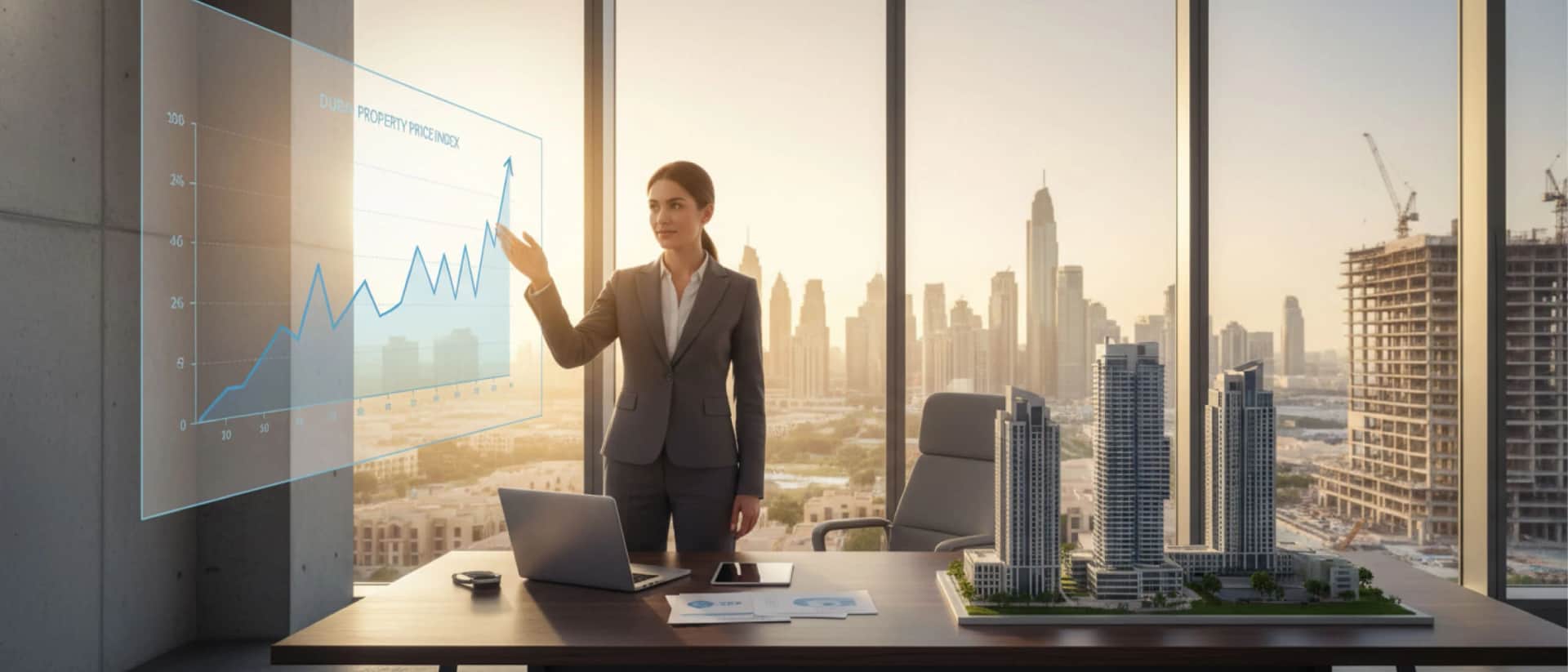
UAE Property Prices are not crashing—they are stabilizing after a multi-year surge, with selective growth in prime segments and mild cooling in mid-market areas.
That is the real picture that defines the UAE real estate market in 2026. The market is shifting to a more balanced, mature cycle after a period of phenomenal boom between 2022 and 2025. To the investors and end-users, this change is not a red flag- it is a green light of sustainability and long-term prospects.
Curated Opportunities
Flexible buying options for smarter property decisions.
Handpicked properties sorted for the strongest value.
Investment-focused listings with return potential.
Browse Dubai communities with properties for sale.
UAE Property Prices are not broadly falling; instead, price growth is slowing, with minor corrections in specific segments.
Recent reports by the major market reports and coverage by such publications as Reuters and Khaleej Times confirm that although the volumes of transactions are still at an all time high, the pace of price acceleration has slowed down. This moderation comes after a steep surge in the price of property in the UAE. This has been rising by about 50-60 percent in the major regions within the last three years.
The market today is taking in fresh supply with a constant demand. This has resulted in localized softening, especially in mid-range apartments. However, there is no evidence of a systemic downturn. Rather, the UAE property price expectations are being pegged on the long-term fundamentals and not speculative spikes.
The geopolitical activities of Iran have affected the world markets, and the real estate industry in the UAE is not an exception. UAE property prices and market sentiment were put to the test in early 2026 when retaliatory missiles and drone attacks related to the Iran conflict left the region with a formerly good reputation of safe-havenes. This caused a lack of confidence in buyers, and transaction activity and price dynamics in some market segments.
The Iranian-led Middle East crisis has prompted short-term changes in investor behavior. Other investors took a more conservative approach of wait and watch, especially on off-plan developments and entry-level units, which reduced the rates of transactions in the short run. As headlines focused on risk, data indicated that core demand and property prices in the UAE have not fallen to the ground but instead remained more or less steady.
Key market highlights included the continued activity in real estate despite tensions in the region, and good fundamentals behind sales in the secondary and off-plan business. Analysts pointed out that sentiment troughs are usually temporary, and institutional investment, diversified demand, and sound economic planning are able to support long-term confidence.
Meanwhile, the situation has marginally increased volatility in related financial markets, which can affect the pricing perceptions in real estate. Buyers, in certain instances, bargained more or more tardily committed themselves, particularly in the mid-tier residential market. This indicates a risk-adjusted plan instead of the sale through fear.
The geopolitical activities of Iran have affected the world markets, and the real estate industry in the UAE is not an exception. UAE property prices and market sentiment were put to the test in early 2026 when retaliatory missiles and drone attacks related to the Iran conflict left the region with a formerly good reputation of safe-havens. This caused a lack of confidence in buyers, and transaction activity and price dynamics in some market segments.
The UAE Property Prices are stabilizing as the supply is finally surpassing the demand, and a trend towards more informed and end-user focused purchasing behavior occurs.
One of the key reasons why this is shifting is the high pipeline of new developments that are coming into the market. With supply, pricing pressure is automatically dampened. This is prominent in areas with large amounts of off-plan inventory.
Simultaneously, buyer profiles have changed. Investors cannot be motivated solely by the short-term returns. Rather, the emphasis is laid more on rental yields, quality of location, and credibility of the developer. According to reports cited in the Gulf News, this change is bringing about a healthier market dynamic, which is lowering volatility in UAE property prices in the long-term.
The main force behind the positive movement in the UAE Property Prices is luxury and waterfront properties.
The individuals with high net worth are still flooding into the UAE market, especially in the prime regions of Dubai. The segment is competitive because of the small supply, world demand, and
the high lifestyle preference.
According to industry expectations, the high-end properties continue to post an annual growth of between 6 and 10 percent. Commercial property prices in the UAE, on the contrary, are increasing at a slower but more stable rate, due to business expansion and economic diversification efforts.
This deviation points to one major trend: the prices of property in the UAE are not moving in the same direction any longer. Rather, there is a large disparity in performance across asset classes and locations.
Yes, mid-market property prices in UAE are experiencing mild pressure due to increased supply and price sensitivity among buyers.
The buyers have increased choice as more units are shipped to the emerging communities. This has resulted in competitive pricing and, in other instances, minor downward adjustments.
The manner in which international media houses such as The Economic Times reported on the subject matter shows that the activity in the entry-level segments has declined as compared to the peak years.
This, however, is not the indicator of weakness, but a stage of normalization, when the prices become more adjusted to the real demand. To investors, this offers the opportunity to enter the market at lower valuations and at the same time enjoying long term growth prospects in the prices of property in the UAE.
The UAE property prices graph shows a sharp upward trend from 2022 to 2025, followed by a gradual flattening in 2026.
This is one of the characteristics of real estate cycles reaching maturity. Following high appreciation, markets are likely to stabilize due to an increase in supply and a decrease in speculative activity. This natural development can be seen in the present phase.
The flattening curve is a sign of resilience, as opposed to a decline. UAE property prices are already stable, and this stability is being supported by good economic fundamentals, population influx, and the inflow of foreign investments.
Best Project Finder
Filter opportunities by budget, property type, bedroom mix, and strategy to uncover projects aligned with your investment goals.
The sentiment is being affected by short-term geopolitical/economic factors, but is not undermining UAE Property Prices fundamentally.
Some buyers have been waiting and seeing because of the regional tensions and uncertainty in the global economy. According to recent Reuters insights, this has temporarily slowed deal activity in certain segments temporarily.
Nevertheless, the UAE remains an attractive global investment hub with a safe and tax-efficient environment that attracts foreign capital. This strength is fundamental in that UAE property prices are stable even when the external markets are volatile.
The outlook of UAE property prices is that of a stable and sustainable growth with fewer chances of significant correction.
According to market predictions, double-digit growth is not expected to persist in all the segments, but the prices will stay steady with moderate increases in prime areas. The emphasis is now going to be on performance as opposed to quick appreciation.
The developers are also getting adjusted to more planned-out projects. This minimizes the chances of the oversupply shock and promotes the stability of prices in the long run.
UAE Property Prices are currently a strategic entry point and not a peak-risk time. To the end-users, stabilized prices enhance affordability and give them greater bargaining power. To investors, the prevailing market provides them with the opportunity to acquire assets in high-potential locations before the next growth cycle.
The transition to the mature market also improves the transparency and the risk of speculation. This will render property prices in the UAE more predictable and by their actual drivers in the economy.
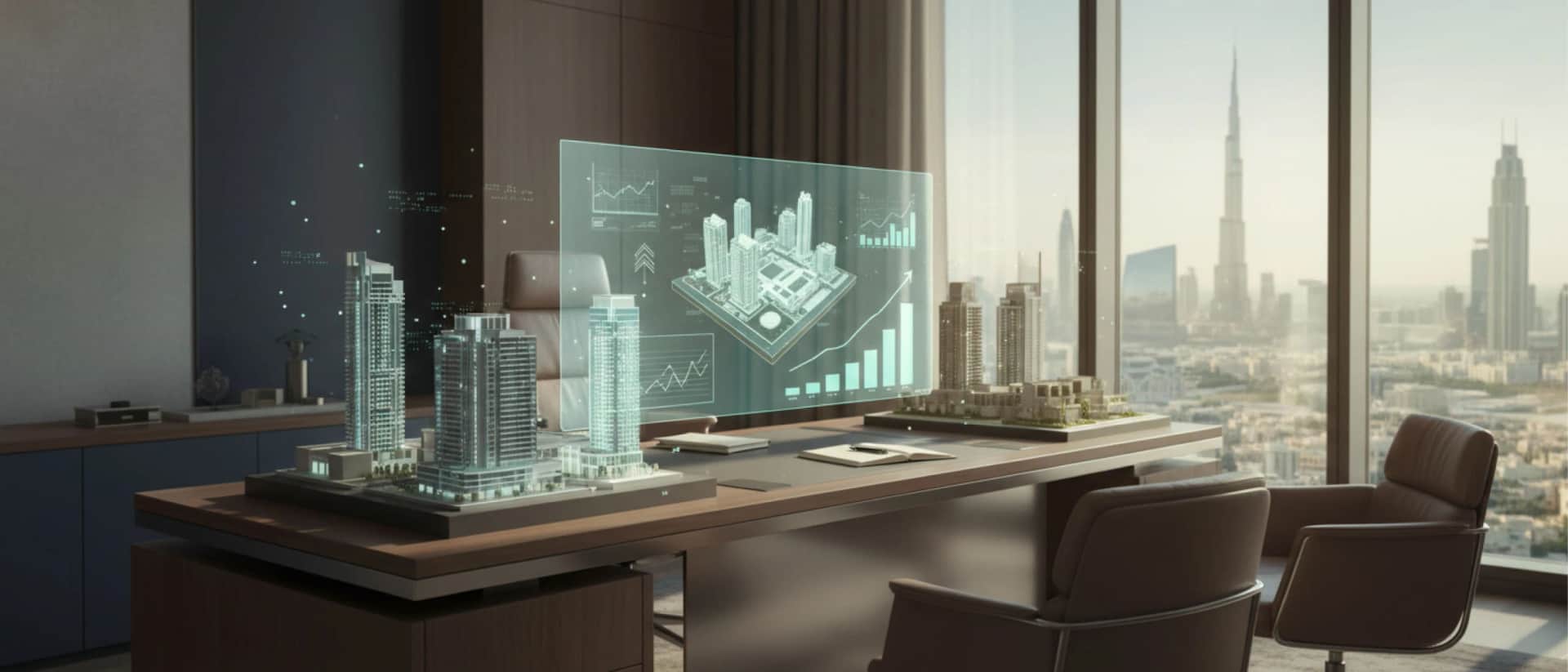
The UAE Property Prices are not deteriorating, it is moving to the stage of stability, which is the next step of the market becoming more sustainable and attractive to investors.
There is no data to support the narrative of a crash. Meanwhile, the period of uncontrolled, quick growth has ended. The future is a level playing field where the quality, location, and long-term value determine performance.
It is high time that Apil Properties clients make informed real estate decisions in the UAE and take advantage of the market clarity, better pricing conditions, and fundamentals.
UAE property prices are stabilizing after recent rapid growth, with selective increases in prime areas.
Broad declines are unlikely; only mid-market segments may see mild corrections.
Luxury waterfront and prime locations like Dubai Marina, Downtown Dubai, and Palm Jumeirah lead prices.
Commercial property prices in UAE remain steady with measured growth, supported by business expansion.
Expect moderate, sustainable growth with price stability in most segments.
Yes, off-plan properties offer long-term growth potential, especially in prime locations.
Geopolitical tensions may influence short-term sentiment, but fundamentals keep prices resilient.
Yes, mid-market apartments face mild cooling due to increased supply and buyer caution.
The UAE property prices graph shows sharp growth from 2022–2025, followed by stabilization in 2026.
Yes, stabilizing prices and improved negotiating power make it an ideal entry window for buyers and investors.

WRITTEN BY
Adil Raza Khan is a Dubai luxury real estate expert with over 13 years of experience in the UAE property market. He is the Chairman of APIL Properties.
Investment Finder
Use smart filters to discover Dubai projects matched to your investment goals.
Try the Investment Finder
The Dubai Real Estate Market is set to see record-breaking momentum with transaction value reaching AED139.2 billion in Q1 2026—fueled by strong off-plan demand, foreign capital inflows, and increasing end-user activity.
Dubai is keeping its lead over other property hubs around the world thanks to its investor-friendly policies and the high potential for returns, as noted in market reports by Arabian Business and major brokerage data providers.
The Dubai Real Estate Market is not only expanding in terms of volume but also gaining greater value and quality as buyers are increasingly looking towards projects that are supported by infrastructure, credibility of the developers, and potential appreciation of capital value.
The Dubai Real Estate boom has evolved into a more stable, investment-driven cycle thanks to this structural shift in demand.

Capital appreciation in Dubai property market is the rise in property value over time, influenced by factors such as demand, location development, and macroeconomic conditions. To an investor, it is the money gained by selling the property for more than the initial investment.
Simply put, when you buy real estate in Dubai, and the value of that property improves over the next several years, then that gain in value is your capital appreciation. In Dubai, however, this concept has more than just the notion of price growth; it is correlated to infrastructure growth, off-plan deals, and demand from investors all over the world.
Dubai has emerged as one of the world's most vibrant real estate markets. It is offering opportunities for both immediate profit and future investment and wealth. For anyone interested in investing strategically in Dubai properties instead of speculatively, it is crucial to understand the concept of capital appreciation in the local real estate market.
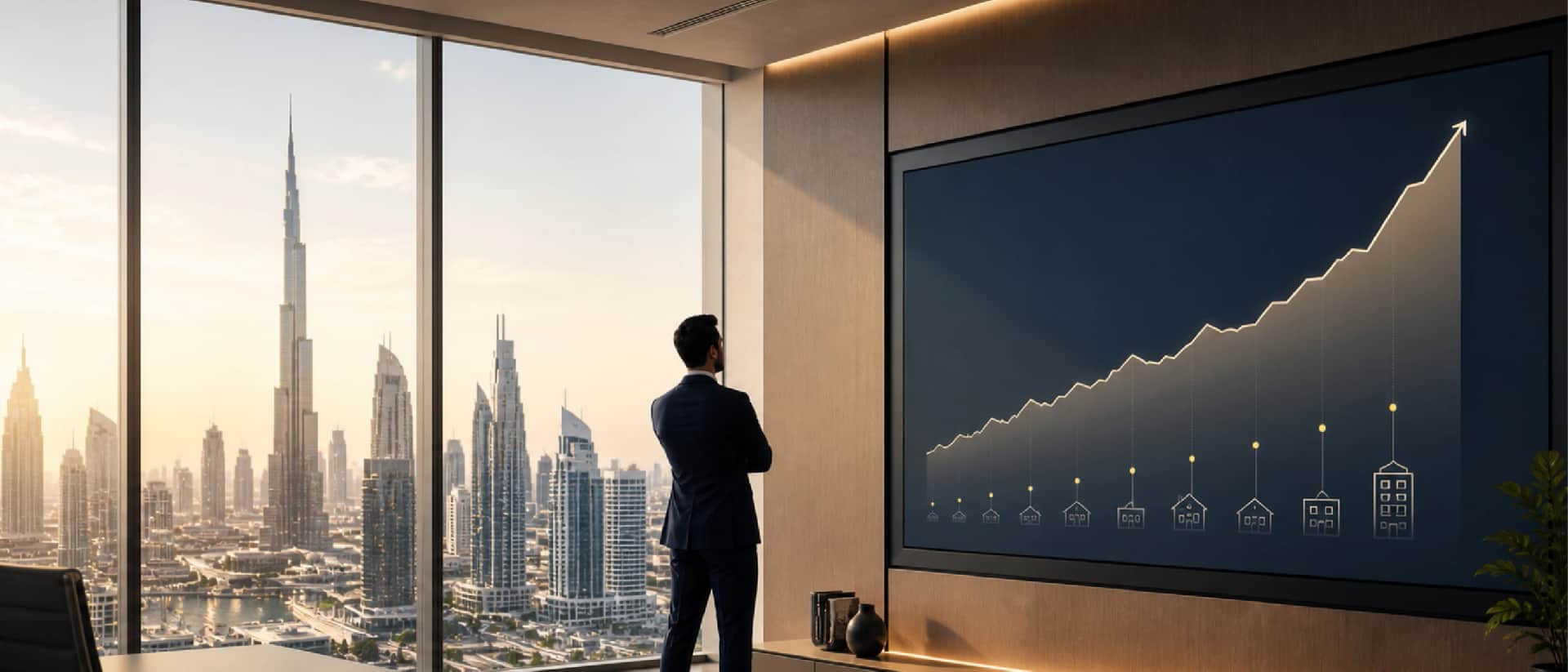
According to Dubai Land Department (DLD) statistics, the Dubai Property Market registered a sharp growth in April 2026, with total real estate transactions reaching AED 68.56 billion. It is more than a 20 percent month-on-month growth.
The surge is not a short-term spike but the result of structural demand drivers such as inflows of foreign investment, population growth, and sustained off-plan development activity across the masterplanned communities of the city of Dubai.
The Dubai Property Market has been able to exhibit its liquidity strength in both residential and commercial real estate segments. It will further help it to establish itself as one of the most dynamic global real estate hubs in 2026.