Adil Raza Khan | April 11, 2026
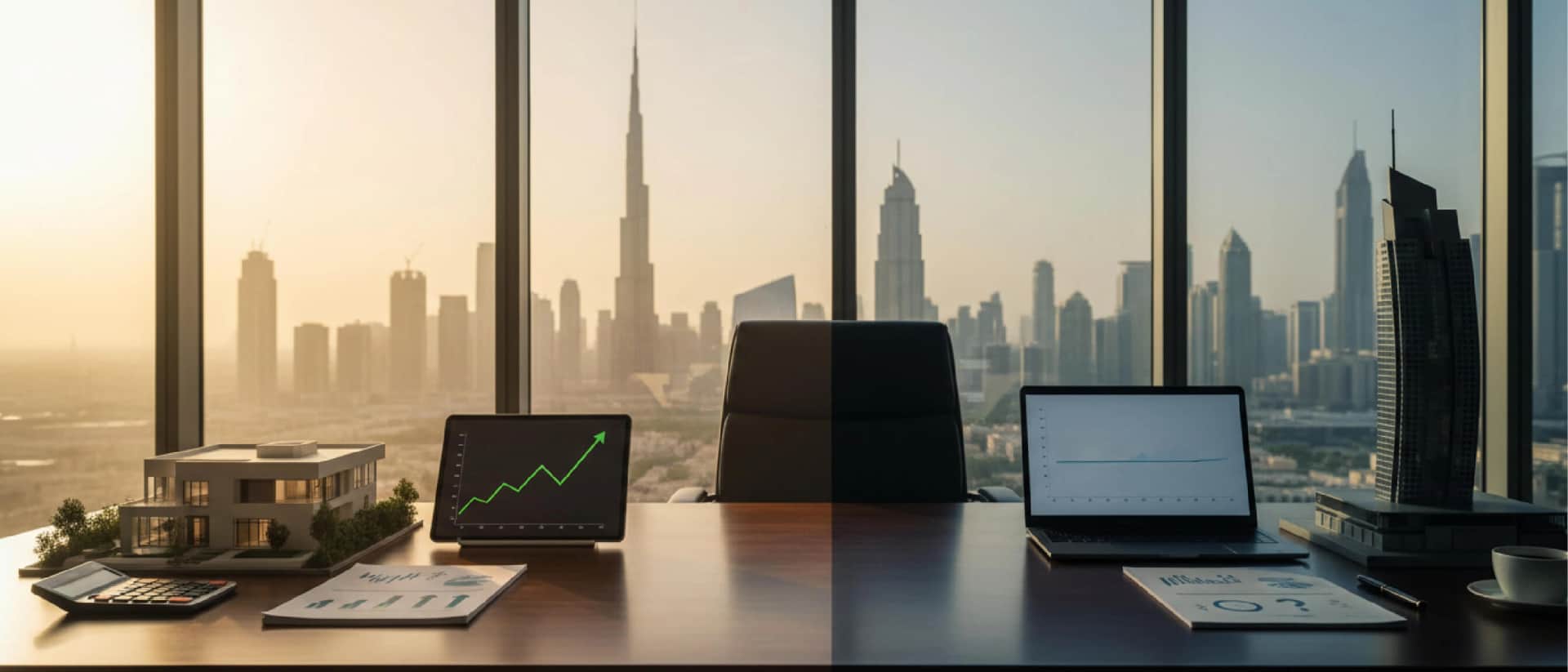
In 2026, Dubai property can still generate money for you despite geopolitical tension. Although only upon investing to generate rental income and long-term value rather than short-term hype.
The market has experienced a more balanced phase after a robust post-pandemic boom. This does not imply that profits cannot be obtained, but they are now conditional upon intelligent purchasing, sensible expectations, and awareness of the contemporary market forces.
To anyone who is thinking of investing in real estate in Dubai, the trend is a reality - however, planning is as important as it has ever been before.
Curated Opportunities
Flexible buying options for smarter property decisions.
Handpicked properties sorted for the strongest value.
Investment-focused listings with return potential.
Browse Dubai communities with properties for sale.
Yes, the Dubai property is still lucrative - despite geopolitical tension.
In recent reports published by Reuters and Gulf News, the real estate market in Dubai witnessed a growth of almost 60 per cent in property prices between 2022 and 2025. This was driven by foreign investment, residency incentives, and high demand.
The market, however, shifts to a more sustainable phase in 2026. This responds to the widely asked question: is Dubai real estate profitable - it is, but now profits are not pushed by resale gains but by what are known as steady income.
A properly chosen Dubai property remains at the leading edge in terms of rental yield, particularly against such cities as London or New York.
The average ROI of property in Dubai in 2026 is between 5-8 per cent and higher returns in mid-market locations.
Recent reports published in forums such as Property Finder and Bayut indicate that Dubai property ROI is still competitive in the world because rental demand is high and the entry prices are relatively low.
Places like Jumeirah Village Circle, Dubai South, and Al Furjan still present good Dubai real estate ROI to investors, especially apartments. Conversely, the prime areas such as Downtown Dubai and Palm Jumeirah are likely to have low-yielding rentals but possible appreciation in the long run. It implies that your Dubai property returns will be very dependent on the place and manner of investing.
Yes, but the game has changed to flipping to income-based investing.
Many investors in the past years reaped off-plan profits in a short period of time. This strategy is riskier in the case of Dubai real estate investment 2026 because of the stabilizing price and rising supply.
According to reports by Bloomberg and Fitch Ratings, many new units will be delivered in the period between 2026 and 2028. This would curb the short-term price spikes, and resale profits would be more unpredictable.
Consequently, the current Dubai property investment revolves around:
Purchasing at a discount, focusing on high rental, and retaining to generate steady revenue. A Dubai property that conforms to these fundamentals is much more likely to yield consistent returns.
The rental demand, entry price, service charges, and location quality determine profitability. Not all Dubai properties do it. Profit and loss frequently come down to basics, not branding and marketing.
The high rental demand is sustained by the increasing population and business-friendly environment in Dubai. Nonetheless, net Dubai property returns may be diminished by high service charges in some developments, and it is therefore important to consider real costs.
Moreover, future supply in particular regions would also affect the prices and rental competition that would directly influence Dubai real estate ROI for the investors.
Yes, the current market is still the most returns-driven by rental income.
Khaleej Times and Arabian Business reports indicate that the tenant demand is still very high, especially in the affordable and the mid-tier districts.
This renders Dubai real estate investment, based on rentals, more certain compared to the speculative approaches. A well-positioned Dubai property will be good in the sense that it will give a stable income, which would be appealing to long-term investors.
This may mean that short-term rentals will provide a better ROI on Dubai property, yet they need to be actively managed and are subject to regulatory factors.
The latest news indicates that the market has stabilized, and in the short term, there can be correctional moves, whereas in the long-term, the fundamentals are sound.
According to global organizations such as Reuters and Fitch Ratings, the property market in Dubai is in a normalization phase following a period of booming growth. Analysts predict a possible price correction of 10-15 percent in some of the segments, largely owing to a rise in supply.
More than 200,000 new housing units are planned in 2028. Hence, it can cause temporary pressure on prices and rents. Meanwhile, there are reports of initial indications of reduced transaction activity as a result of global and regional uncertainty.
Best Project Finder
Filter opportunities by budget, property type, bedroom mix, and strategy to uncover projects aligned with your investment goals.
In the short term, prices can be influenced, though the long-term returns of Dubai property are not going to change. Although there are short-term challenges, the fundamentals of Dubai are good. Demand is still backed by population growth, infrastructure expansion, and long-term planning.
The governmental programs, like the Dubai 2040 Urban Master Plan and massive investments in infrastructure, are likely to increase property value in the long term.
This supports the fact that the ROI of Dubai real estate to investors is changing towards a steady income and gradual appreciation as opposed to quick profits.
Buying Dubai real estate when the market is slowing down can enhance future ROI due to enhanced entry prices. Real estate investors are likely to make the greatest returns when entering markets in times of market correction or uncertainty.
The investors will be able to take advantage of:
Reduced prices compared to when the market is at its highest, high rental demand, and long-term gains as the market stabilizes.
Analysts posit that although the price growth could subside to 5-8% per year, the market is likely to correct itself instead of falling sharply. This renders a carefully selected Dubai property a good long-term investment.
It is both, but to the informed investor, it is an opportunity rather than a risk.
The excess supply in some parts can lead to short-term difficulties, but a high level of demand and government support remain in favor of the market. According to industry reports, there is still high interest in investors by developers, and a growing supply is a sign of market maturity as opposed to weakness.
To investors, this provides an opportunity to get better deals and be placed in long-term growth in Dubai real estate investment in 2026.

Yes — a Dubai property will make you money if you invest with a long-term, income-focused strategy.
Investors in this market in 2026 will be rewarded by focusing on the rental yield, location selection, and not overvaluing it in periods of peak cycles.
In the case of Apil Properties, the target is to steer the clients towards data-based decision-making that is in line with the actual market conditions. A Dubai property remains a good investment. However, it must be done with strategy, discipline, and a clear vision of the current changing world of real estate.
Yes, Dubai property remains a strong investment in 2026 due to high rental demand and stable long-term growth.
Average Dubai property ROI ranges between 5% to 8% depending on location and property type.
Yes, Dubai real estate is profitable when bought in the right location with a rental-focused strategy.
Location, entry price, service charges, and rental demand are the biggest factors affecting returns.
Yes, foreigners can buy freehold Dubai property in designated investment zones.
Yes, 2026 offers value entry opportunities due to market stabilization after rapid growth.
Mid-market areas like JVC, Dubai South, and Al Furjan typically offer higher rental yields.
Short-term rentals can offer higher returns but require active management and higher costs.
Long-term trends suggest gradual growth supported by population and infrastructure expansion.
Overpaying during peak demand or ignoring net rental yield calculations is the biggest mistake.

WRITTEN BY
Adil Raza Khan is a Dubai luxury real estate expert with over 13 years of experience in the UAE property market. He is the Chairman of APIL Properties.
Investment Finder
Use smart filters to discover Dubai projects matched to your investment goals.
Try the Investment Finder
The Dubai Real Estate Market is set to see record-breaking momentum with transaction value reaching AED139.2 billion in Q1 2026—fueled by strong off-plan demand, foreign capital inflows, and increasing end-user activity.
Dubai is keeping its lead over other property hubs around the world thanks to its investor-friendly policies and the high potential for returns, as noted in market reports by Arabian Business and major brokerage data providers.
The Dubai Real Estate Market is not only expanding in terms of volume but also gaining greater value and quality as buyers are increasingly looking towards projects that are supported by infrastructure, credibility of the developers, and potential appreciation of capital value.
The Dubai Real Estate boom has evolved into a more stable, investment-driven cycle thanks to this structural shift in demand.

Capital appreciation in Dubai property market is the rise in property value over time, influenced by factors such as demand, location development, and macroeconomic conditions. To an investor, it is the money gained by selling the property for more than the initial investment.
Simply put, when you buy real estate in Dubai, and the value of that property improves over the next several years, then that gain in value is your capital appreciation. In Dubai, however, this concept has more than just the notion of price growth; it is correlated to infrastructure growth, off-plan deals, and demand from investors all over the world.
Dubai has emerged as one of the world's most vibrant real estate markets. It is offering opportunities for both immediate profit and future investment and wealth. For anyone interested in investing strategically in Dubai properties instead of speculatively, it is crucial to understand the concept of capital appreciation in the local real estate market.
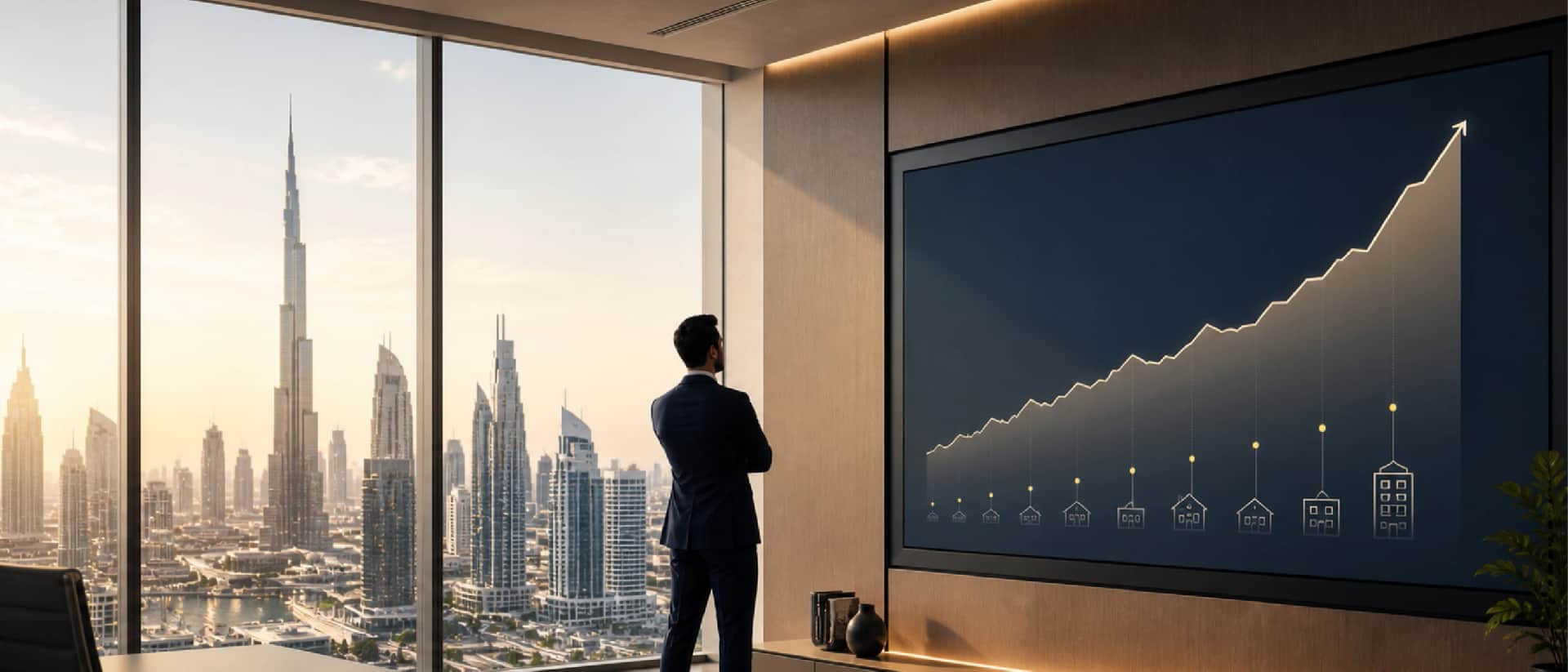
According to Dubai Land Department (DLD) statistics, the Dubai Property Market registered a sharp growth in April 2026, with total real estate transactions reaching AED 68.56 billion. It is more than a 20 percent month-on-month growth.
The surge is not a short-term spike but the result of structural demand drivers such as inflows of foreign investment, population growth, and sustained off-plan development activity across the masterplanned communities of the city of Dubai.
The Dubai Property Market has been able to exhibit its liquidity strength in both residential and commercial real estate segments. It will further help it to establish itself as one of the most dynamic global real estate hubs in 2026.