Adil Raza Khan | March 24, 2026
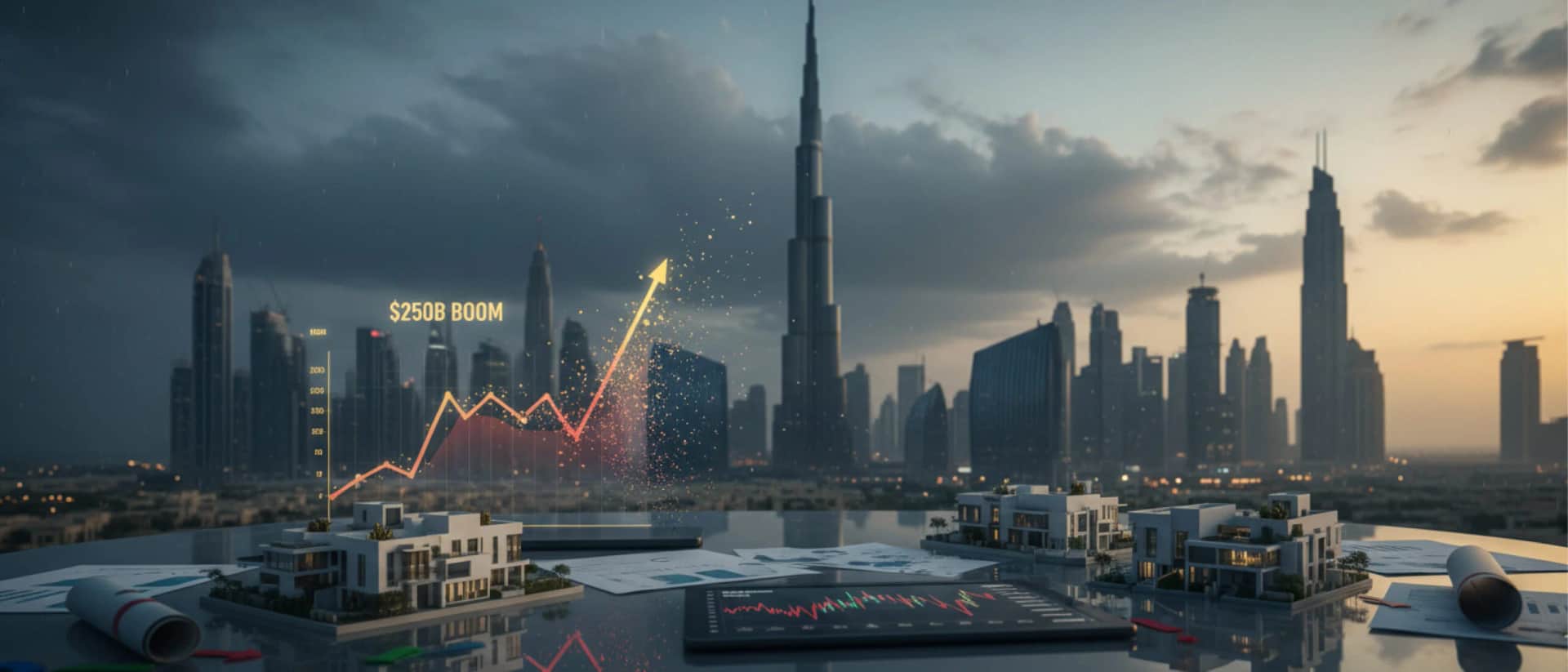
No, Dubai real estate is not likely to take any hit after $250B in transactions in 2025, as it has established a rock-solid foundation for the coming years.
High volumes of records transaction, sound government policies, discipline in banking practices, investor confidence, sound lending practices, and viable financials in all developers and institutions make Dubai real estate a market that is quite resilient.
These basics, in conjunction with a diversified property portfolio, a growing population, and continuing foreign investment, make the environment where big price corrections are quite impossible. Dubai real estate will continue to be unmatched for investors who want to achieve capital growth, as well as rental income, in the face of geopolitical tensions in 2026.
Curated Opportunities
Flexible buying options for smarter property decisions.
Handpicked properties sorted for the strongest value.
Investment-focused listings with return potential.
Browse Dubai communities with properties for sale.
$250B in total property transactions set a strong market baseline.
Policies promoting investment, mortgage support, and visa incentives maintain stability.
Banks follow strict lending rules, avoiding over-leveraging and systemic risk.
Developers have strong balance sheets and investors high liquidity, allowing the market to absorb shocks.
Balanced mix of apartments, villas, and commercial properties reduces risk.
Over 60% of 2025 transactions involved international buyers, showing strong trust.
Early 2026 Data Shows Stability with active transactions ($85B early 2026) and tokenization improve liquidity.
Diversified fundamentals and government management buffer the market.
Sellers remain confident, and listing prices are stable or higher.
Developers offer fee waivers and discounts, creating strategic investment opportunities.
Emaar projects sold out on launch even amid tensions, proving strong demand.
Dubai provides unmatched safety, security, lifestyle charm, and investor trust in the region.
It is projected that the Dubai real estate market in 2026 will remain very strong. The volume of transactions in the early years was around $30 billion, indicating the sustained investor interest and confidence. Analysts believe that the existing movements are cyclical adjustments and not a crash in the market.
The residential apartments, villas, and prime commercial spaces are still in demand, whose focus on deep liquidity, strategic incentives on foreign investment, and the strength of the rental demand, which are contributing factors to the growth of demand.
Such good fundamentals have put the Dubai real estate market view 2026 in the perspective of stability and sustainable growth, which makes it an ideal market for smart investors.
Dubai real estate is predicted to be stable with moderate and short-term changes being made in individual segments. According to the Dubai real estate price index 2026, the demand for prime residential properties has significantly increased!
It shows that the structural demand is sound, which implies that the prices of Dubai property change insignificantly despite the uncertainties in the region. Shareholders need not worry that the price is going to drop because long-term patterns of growth and market strength will help.
Dubai real estate after $250 billion boom has positioned investors in a secure, profitable, and resilient market. The 2025 influx brought on board first-time buyers, high-net-worth, and institutional investors. It guaranteed high liquidity and diminished the concentration risk.
The transaction volumes have confirmed confidence through early 2026 of up to 85 billion. Such diversity in the investor base. Plus - sound regulatory and financial systems turn Dubai property investment into a market where strategic property investments could flourish even in the state of geopolitical uncertainty.
The Iran-Israel crisis poses geopolitical risks, but the Dubai real estate market post-war remains a strong one. Expatriate structural demand, high rental rates, and government sponsorship in terms of visa facilitation, mortgage guarantees, and economic strategic policies aid in sustaining investor confidence.
There can also be short-term doubts, but the robust market base of 2025 will protect against extreme interference, and the property markets of Dubai during war years will be safe.
Even in case of the continuation of the Iran conflict, Dubai real estate will not collapse. The market is anchored on good fundamentals of 2025 with total property transactions of 250 billion, the global buyers population exceeding 60 percent and the structural demand among the residents and expatriates is high.
Short-term impacts: There can be a slight slowing of the transaction activity. According to the current data, in March 2026, there will be 28 billion transactions, and this proves that transactions are being made even in times of tension in the region. Prices can undergo smaller corrections, particularly in middle-market or speculative off-plan units; however, there can be no big decrees.
Stability factors: Banks in Dubai are stable lenders, developer finances are healthy, and government measures such as incentives to investments and mortgage coverage have made the market resistant. The rental yields are also high and average 7 percent in prime locations and 5-6 percent in suburbs to strengthen investor returns.
Luxury and prime properties are anticipated to be more robust, and they are in demand even in the case of geopolitical uncertainty. All in all, Dubai property will not collapse but will undergo moderate adjustment and will take a sturdy leap as soon as the market situation normalizes.
It is expected that property prices will not drastically reduce but instead undergo moderate changes in Dubai. According to Dubai real estate price index 2026, the prime residential apartments increased 12% in 2025, villas 10%, and commercial spaces 8%, and off-plan in high-demand regions increased 9%.
Price stability is strengthened with little supply and some demand, and annual growth of 7% in prime locations. Investors are assured of uninterrupted returns and continuous growth of capital, irrespective of the uncertainties in the market in the short run.
It is also expected that Dubai property investment is very appealing in 2026 because it has excellent rental returns, great liquidity within the market, and continued demand in the global market.
Diversified investors in apartments, villas, and commercial space are assured of a stable revenue and capital appreciation in the long term. The Dubai property market perspective highlights the resilience, such that it is an opportunity for strategic buying on behalf of buyers and institutional investors to gain stability, growth, and stable sources of income.
Current market stability is directly attributed to the fact that the record expansion in 2025 will see the total transactions of the record be 250 billion and an annual compound growth of 21 percent.
The temporary shocks can be absorbed by the market because of the large-scale involvement of investors, high structural demand, and international purchases (60-65 percent). These indicators affirm the realization that the Dubai real estate business is in a good position to grow and have greater resilience in the long-term.
Best Project Finder
Filter opportunities by budget, property type, bedroom mix, and strategy to uncover projects aligned with your investment goals.
Housing apartments, villas, and high-quality commercial areas are still giving good returns. Apartments made up 45 percent, villas 35 percent, and commercial properties 20 percent of the transactions in 2025.
Prime luxury apartments were realized to have 12 percent capital growth and 6-7 percent rental returns, and villas were a 10 percent increase. The commercial offices in business areas were 8-9 percent appreciation. The choice of these types of property is strategic so that there are guaranteed incomes and capital gains.
Current market stability is directly attributed to the fact that the record expansion in 2025 will see the total transactions of the record be 250 billion and an annual compound growth of 21 percent.
The temporary shocks can be absorbed by the market because of the large-scale involvement of investors, high structural demand, and international purchases (60-65 percent). These indicators affirm the realization that the Dubai real estate business is in a good position to grow and have greater resilience in the long-term.
Yes, 2026 is still the best time to invest in Dubai. The average rental returns in prime areas stand at 7, occupancy rates are higher than 85, and the early-year transaction business is strong.
The Dubai property investment is the best option for short and long-term capital appreciation, market liquidity, and structural demand, making it the best place where any investor would find security and growth in a global property market.
The future predictions of the Dubai property market suggest that the future changes will be moderate and not drastic. The stability is achieved through structural demand, diversification in property type, and helpful government policies.
The Dubai real estate price index 2026 indicates that prime apartments and villas will grow between 6-8 and 5-6 percent, respectively. This fact helps strengthen Dubai as a robust and lucrative investment and end-user market.
Some of how investors can reduce the risks are by selecting varieties of property, location, and keeping track of the Dubai property index. High levels of structural demand, good rental returns, and liquidity in the market minimise the risks of exposure to short-run geopolitical shocks, and therefore the safety of investment in Dubai property. The ability to plan strategically and be aware of markets helps the investors to get maximum returns and reduce risk.
By 2026, the Dubai real estate market is strong in terms of rental yields, with 7-percent in prime locations and 5-6 percent in established suburban areas. Rental income is a sure source of revenue due to high occupancy rates and constant demand for expatriates. These returns, coupled with regular capital growth, will make real estate in Dubai still yield attractive returns to investors.

There is a high investor confidence in Dubai real estate, and the initial transaction volumes in 2026 are at $85 billion amid geopolitical tensions. These transactions were 60 percent funded by international investors. This shows long-term global confidence. The trends in the Dubai real estate market are still cementing the fact that it is a safe, profitable, and resilient market in which long-term real estate investment can be made.
In 2026, Dubai real estate is predicted to be resilient based on the record levels of 2025. There can be small adjustments in price, but the structural demand, diversification of investments, strong financial health, and support by governments reduce the chances of a significant blow.
The trends in the Dubai real estate market, Dubai property index trends. Plus, the Dubai real estate price index 2026 can guide the decision of investors. The 250B property market boom of 2025 made the Dubai real estate a global force with the ability to continue to boost investor confidence, ensure stability, and offer long-term growth prospects.
No, the Dubai real estate market remains resilient, supported by strong 2025 fundamentals and diversified investor demand.
It created deep liquidity, international investor confidence, and structural demand that buffer the market against shocks.
Yes, Dubai property investment safety is reinforced by government oversight, prudent banking, and strong developer financials.
Prime residential apartments, villas, and luxury commercial spaces continue to offer stable returns and high rental yields.
Minimal corrections may occur, but Dubai property prices fall only slightly due to strong demand and controlled supply.
Yes, buyers can take advantage of incentives like fee waivers, early-payment discounts, and sustained market liquidity.
Dubai remains the safest and most trusted investment hub in the UAE and across the Middle East and Asia.
Short-term fluctuations may appear, but long-term growth potential and structural demand ensure resilience.
Yes, average rental yields in prime districts remain around 7%, with suburban areas yielding 5–6%.
Confidence remains strong, with international buyers contributing over 60% of transactions and market activity staying robust.

WRITTEN BY
Adil Raza Khan is a Dubai luxury real estate expert with over 13 years of experience in the UAE property market. He is the Chairman of APIL Properties.
Investment Finder
Use smart filters to discover Dubai projects matched to your investment goals.
Try the Investment Finder
The Dubai Real Estate Market is set to see record-breaking momentum with transaction value reaching AED139.2 billion in Q1 2026—fueled by strong off-plan demand, foreign capital inflows, and increasing end-user activity.
Dubai is keeping its lead over other property hubs around the world thanks to its investor-friendly policies and the high potential for returns, as noted in market reports by Arabian Business and major brokerage data providers.
The Dubai Real Estate Market is not only expanding in terms of volume but also gaining greater value and quality as buyers are increasingly looking towards projects that are supported by infrastructure, credibility of the developers, and potential appreciation of capital value.
The Dubai Real Estate boom has evolved into a more stable, investment-driven cycle thanks to this structural shift in demand.

Capital appreciation in Dubai property market is the rise in property value over time, influenced by factors such as demand, location development, and macroeconomic conditions. To an investor, it is the money gained by selling the property for more than the initial investment.
Simply put, when you buy real estate in Dubai, and the value of that property improves over the next several years, then that gain in value is your capital appreciation. In Dubai, however, this concept has more than just the notion of price growth; it is correlated to infrastructure growth, off-plan deals, and demand from investors all over the world.
Dubai has emerged as one of the world's most vibrant real estate markets. It is offering opportunities for both immediate profit and future investment and wealth. For anyone interested in investing strategically in Dubai properties instead of speculatively, it is crucial to understand the concept of capital appreciation in the local real estate market.
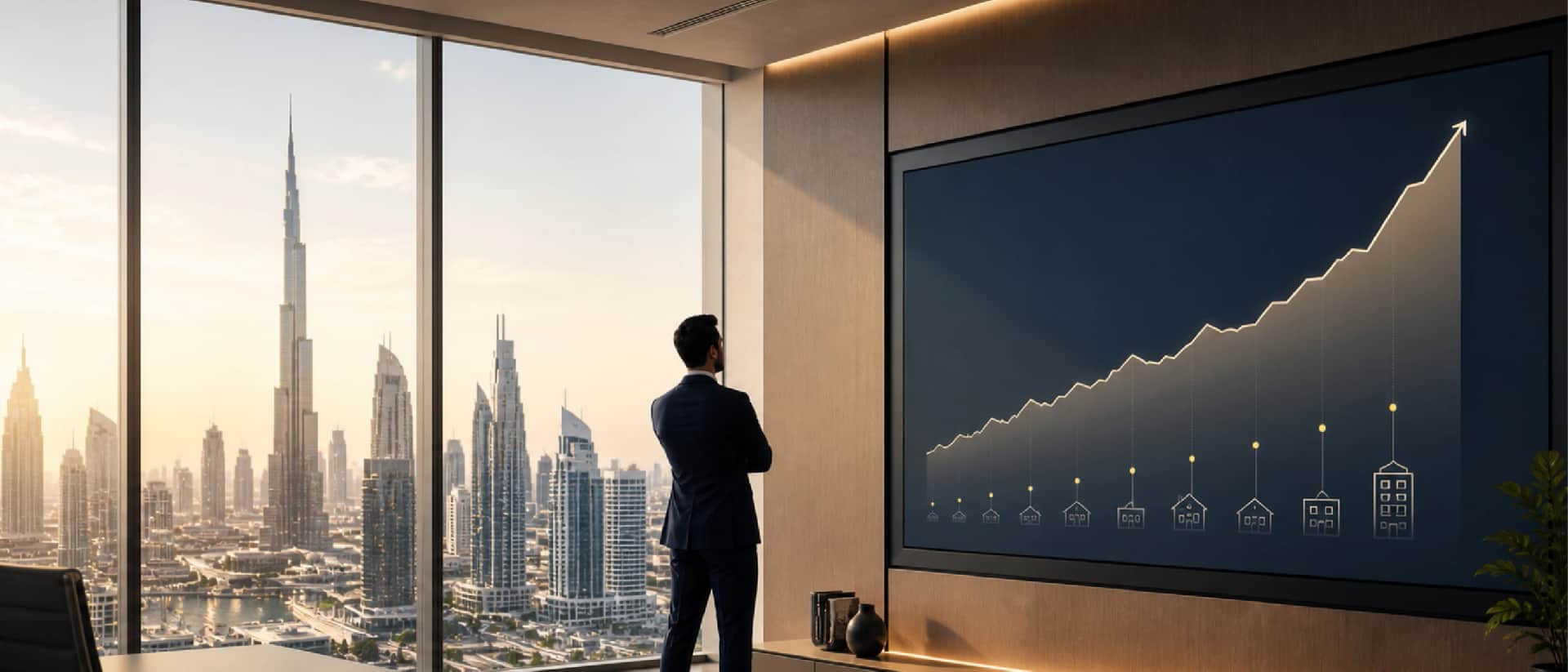
According to Dubai Land Department (DLD) statistics, the Dubai Property Market registered a sharp growth in April 2026, with total real estate transactions reaching AED 68.56 billion. It is more than a 20 percent month-on-month growth.
The surge is not a short-term spike but the result of structural demand drivers such as inflows of foreign investment, population growth, and sustained off-plan development activity across the masterplanned communities of the city of Dubai.
The Dubai Property Market has been able to exhibit its liquidity strength in both residential and commercial real estate segments. It will further help it to establish itself as one of the most dynamic global real estate hubs in 2026.