Adil Raza Khan | August 18, 2025
_1755319857.webp&w=1920&q=65)
You’ve collected the keys—now the real work begins.
Post-handover is where small misses become expensive headaches. Here’s how to glide through the first 90 days (and beyond) like a pro for your Dubai off-plan properties!
Curated Opportunities
Flexible buying options for smarter property decisions.
Handpicked properties sorted for the strongest value.
Investment-focused listings with return potential.
Browse Dubai communities with properties for sale.
Best Project Finder
Filter opportunities by budget, property type, bedroom mix, and strategy to uncover projects aligned with your investment goals.
Usually within 7–30 days post-handover—submit as early as possible.
The developer (or their contractor) handles defects covered by the defect-liability period; keep everything in writing.
The rate is set, but you can dispute inaccuracies or services not delivered as budgeted. Document everything.
Commonly yes, if you have the handover certificate and Ejari—confirm building policy.
Document differences and request rectification or compensation per your SPA.
Not mandatory but recommended for a thorough report.
Often up to 10 years for structural elements; check your SPA.
Initial commissioning and leaks can spike usage; request AC balancing and seal checks.
Only if your SPA allows—many don’t. Use written commitments and timelines instead.
Ensure all payments, NOCs, and documents are complete and names match exactly.

WRITTEN BY
Adil Raza Khan is a Dubai luxury real estate expert with over 13 years of experience in the UAE property market. He is the Chairman of APIL Properties.
Investment Finder
Use smart filters to discover Dubai projects matched to your investment goals.
Try the Investment Finder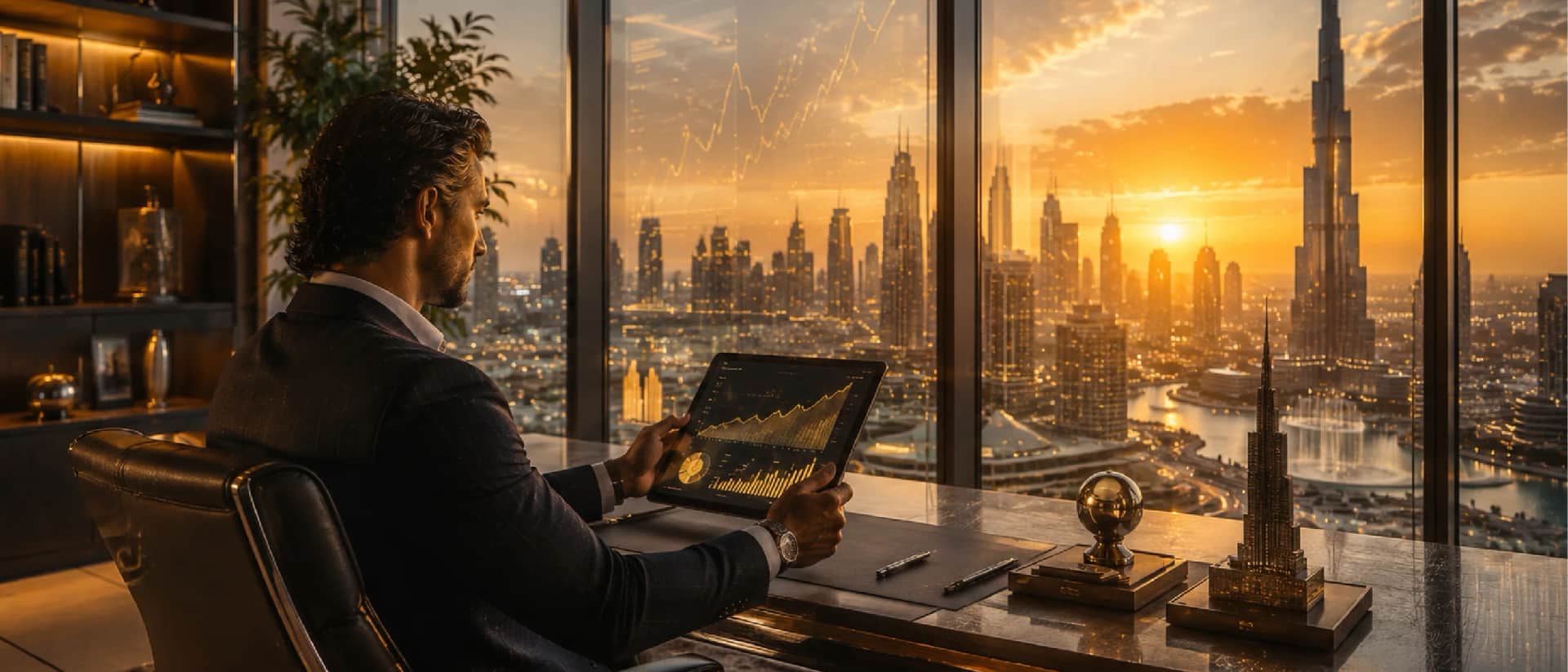
The Dubai Real Estate Market is set to see record-breaking momentum with transaction value reaching AED139.2 billion in Q1 2026—fueled by strong off-plan demand, foreign capital inflows, and increasing end-user activity.
Dubai is keeping its lead over other property hubs around the world thanks to its investor-friendly policies and the high potential for returns, as noted in market reports by Arabian Business and major brokerage data providers.
The Dubai Real Estate Market is not only expanding in terms of volume but also gaining greater value and quality as buyers are increasingly looking towards projects that are supported by infrastructure, credibility of the developers, and potential appreciation of capital value.
The Dubai Real Estate boom has evolved into a more stable, investment-driven cycle thanks to this structural shift in demand.

Capital appreciation in Dubai property market is the rise in property value over time, influenced by factors such as demand, location development, and macroeconomic conditions. To an investor, it is the money gained by selling the property for more than the initial investment.
Simply put, when you buy real estate in Dubai, and the value of that property improves over the next several years, then that gain in value is your capital appreciation. In Dubai, however, this concept has more than just the notion of price growth; it is correlated to infrastructure growth, off-plan deals, and demand from investors all over the world.
Dubai has emerged as one of the world's most vibrant real estate markets. It is offering opportunities for both immediate profit and future investment and wealth. For anyone interested in investing strategically in Dubai properties instead of speculatively, it is crucial to understand the concept of capital appreciation in the local real estate market.
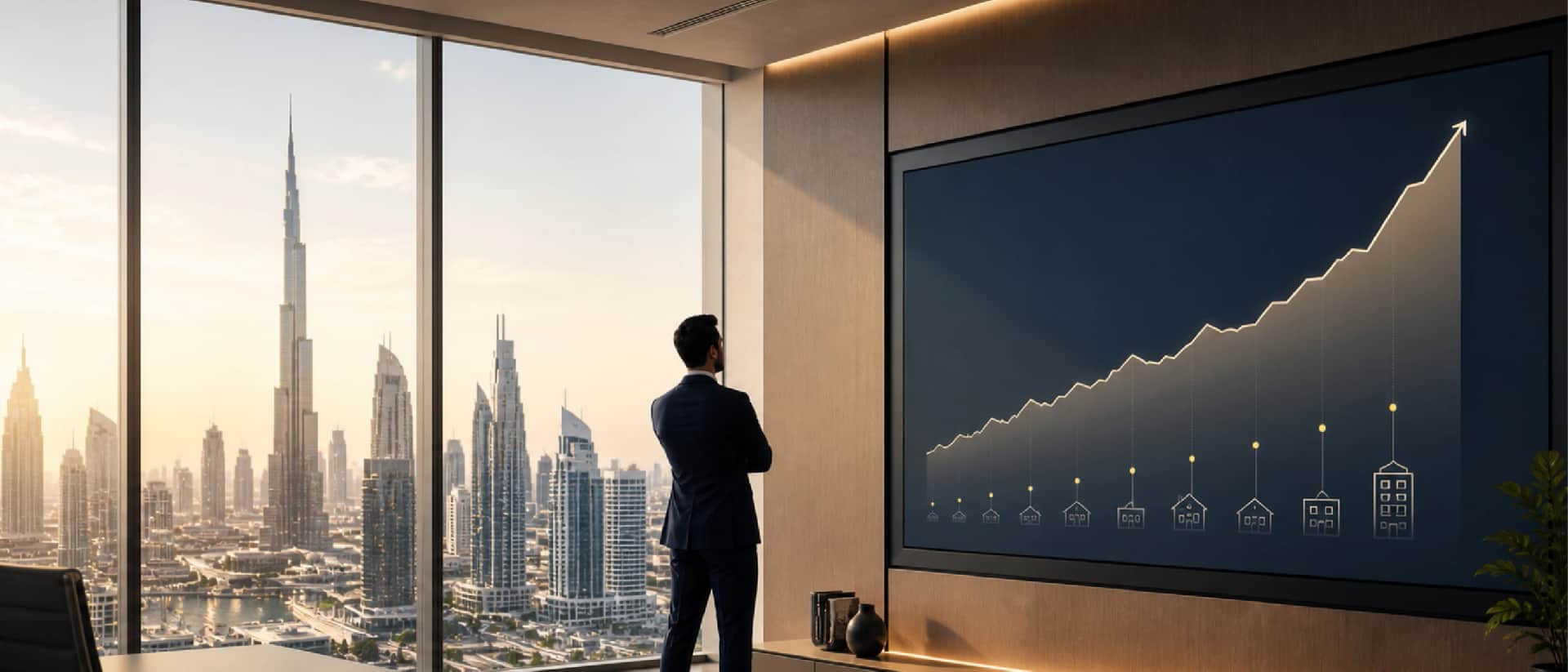
According to Dubai Land Department (DLD) statistics, the Dubai Property Market registered a sharp growth in April 2026, with total real estate transactions reaching AED 68.56 billion. It is more than a 20 percent month-on-month growth.
The surge is not a short-term spike but the result of structural demand drivers such as inflows of foreign investment, population growth, and sustained off-plan development activity across the masterplanned communities of the city of Dubai.
The Dubai Property Market has been able to exhibit its liquidity strength in both residential and commercial real estate segments. It will further help it to establish itself as one of the most dynamic global real estate hubs in 2026.