Adil Raza Khan | November 13, 2025

Foreigners can transfer property ownership in Abu Dhabi by submitting a Sale and Purchase Agreement (SPA), title deed and No Objection Certificate (NOC) to the Department of Municipalities and Transport (DMT), and pay a 2% Abu Dhabi property transfer fee.
This process is a legal document that registers new ownership under Abu Dhabi property law for foreigners and applies to both ready and off-plan property in specified investment zones.
Property ownership in Abu Dhabi is among the most investor-friendly in the Gulf, and the ownership of foreign property has been clearly maintained, with low rates and consistent returns in 2026. The established property transfer procedure in Abu Dhabi, the emirate, enables foreign buyers to transfer the ownership with security in accordance with UAE law.
Let us check out everything about in this guide by APIL Experts - aligned with 2025-26 updates!
Curated Opportunities
Flexible buying options for smarter property decisions.
Handpicked properties sorted for the strongest value.
Investment-focused listings with return potential.
Browse Dubai communities with properties for sale.
Yes - according to the Abu Dhabi law on foreigners in property ownership, foreigners who are not UAE nationals are allowed to legally own, sell, and transfer property in specific areas of the city. In freehold investment zones – foreigners can own 100 per cent real estate property – including long-term rights that are enjoyed by UAE citizens.
Foreigner-friendly investment zones (2025-26):
The Abu Dhabi property ownership law for foreigners offers three structures:

This adaptability in foreign property ownership Abu Dhabi encourages investors to select options that favor them in their investment objectives and purpose.
Here’s how foreigners can complete a property transfer in Abu Dhabi efficiently:
Confirm the property is within a freehold or investment zone where foreign ownership is permitted.
This contract outlines the terms between buyer and seller.
The developer’s NOC ensures no dues or pending charges exist.
You’ll need:
The Abu Dhabi property transfer fee percentage is 2% property purchase value (for both residents and non residents)
Additional fees:
Present all the papers and fees at the DMT Registration Centre. After this, the buyer is issued with a new title deed.
Modify utilities with ADDC and inform the homeowners' association about the change of ownership.
On average:

Such a transparent system simplifies property transfer in Abu Dhabi.
No, Abu Dhabi does not charge property tax and capital gains tax on annual basis. The Abu Dhabi property transfer fee is paid by the buyers only when registering the property. This tax-free model is still appealing to foreign investors up to 2025 and 2026.
Yes. Non-residents buying in the investment zones have been provided with mortgage financing by many banks. Most lenders require:
This makes Abu Dhabi real estate ownership foreigners very accessible even to non-residents.
Best Project Finder
Filter opportunities by budget, property type, bedroom mix, and strategy to uncover projects aligned with your investment goals.
Not necessarily. Without residency, foreigners can purchase and transfer property. But the real estate valued at more than AED 1 million can grant buyers a long-term investor visa, which is a significant incentive of 2025-2026.
No, as long as the developer is registered with DMT and with a certified escrow account. This ensures compliance with Abu Dhabi property law for foreigners and safeguards buyers' funds during construction.
Once the property transfer Abu Dhabi is complete, foreign owners have full rights to:
These privileges are protected in Abu Dhabi real estate ownership foreigners, where the international investors are treated under the local law equally.
The confidence by investors and the average of 6-8 in terms of rental returns makes Abu Dhabi an ideal destination to foreign investors. The simplified property transfer Abu Dhabi systems will also facilitate transactions in 2026 as the government gets digitalized.
Foreign investors benefit from:
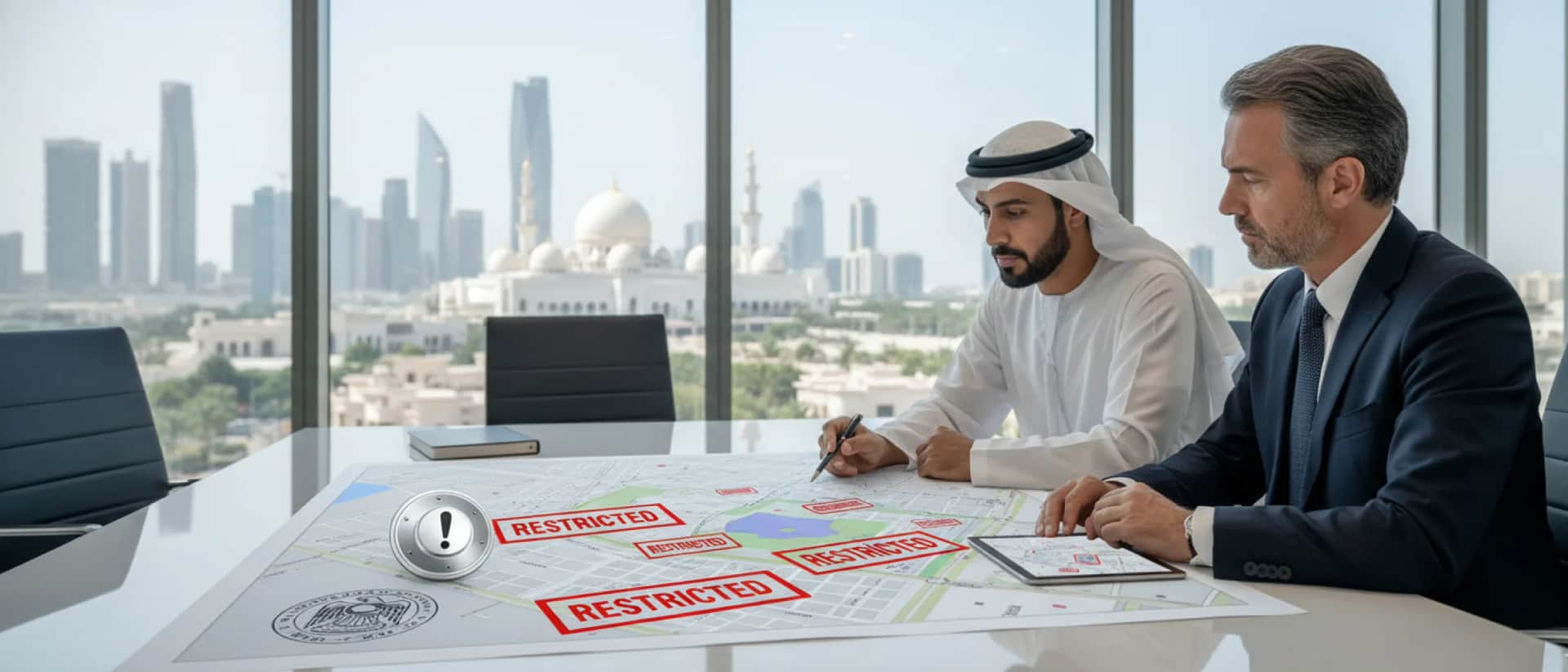
No, only the properties situated in the approved freehold/investment zones could be owned by foreigners, and trying to transfer the properties to other zones is not legally correct.
No, only off-plan projects that are registered with the DMT and have adequate escrow accounts could be transferred legally and this would protect investors.
No, any outstanding services charges or dues should be paid to the full before such a property can be transferred to a new owner.
Can mortgaged properties be transferred immediately?
No, a property that has an outstanding mortgage has to be cleared by the bank or lien released before the transfer process can be completed.
No, the properties that are under court cases or under dispute in a court cannot be transferred at all before the entire case is sorted out.
No, any transfer of property requires a No Objection Certificate (NOC) issued by the developer that no obligations or restrictions remain.
Being a foreigner, it is not hard to transfer property ownership in Abu Dhabi by following the steps of proper legal procedures, paying necessary fees, and fulfilling the Abu Dhabi property registration.
Either the buyer or seller can initiate the transfer with required documents.
No, but hiring an agent can simplify the process and ensure compliance.
Yes, passport and other identification are sufficient for non-residents.
No, but some off-plan projects may have developer-specific resale restrictions.
Yes, a legally notarized power of attorney allows someone to complete the transfer on your behalf.
No, the Abu Dhabi property transfer fee is 2% regardless of property type.
Yes, companies registered in approved zones can purchase property under certain conditions.
No, only annual service charges apply; ownership itself does not require renewal.
Yes, inheritance is allowed under UAE law if properly documented.
No, disputes are rare if DMT procedures and NOC requirements are properly followed.
Yes, provided the bank approves and all transfer conditions are met.
Most steps can be processed online via DMT portals, though some documentation may require in-person submission.

WRITTEN BY
Adil Raza Khan is a Dubai luxury real estate expert with over 13 years of experience in the UAE property market. He is the Chairman of APIL Properties.
Investment Finder
Use smart filters to discover Dubai projects matched to your investment goals.
Try the Investment Finder_1783320909.webp&w=1920&q=65)
Capital appreciation in Dubai property market is the rise in property value over time, influenced by factors such as demand, location development, and macroeconomic conditions. To an investor, it is the money gained by selling the property for more than the initial investment.
Simply put, when you buy real estate in Dubai, and the value of that property improves over the next several years, then that gain in value is your capital appreciation. In Dubai, however, this concept has more than just the notion of price growth; it is correlated to infrastructure growth, off-plan deals, and demand from investors all over the world.
Dubai has emerged as one of the world's most vibrant real estate markets. It is offering opportunities for both immediate profit and future investment and wealth. For anyone interested in investing strategically in Dubai properties instead of speculatively, it is crucial to understand the concept of capital appreciation in the local real estate market.
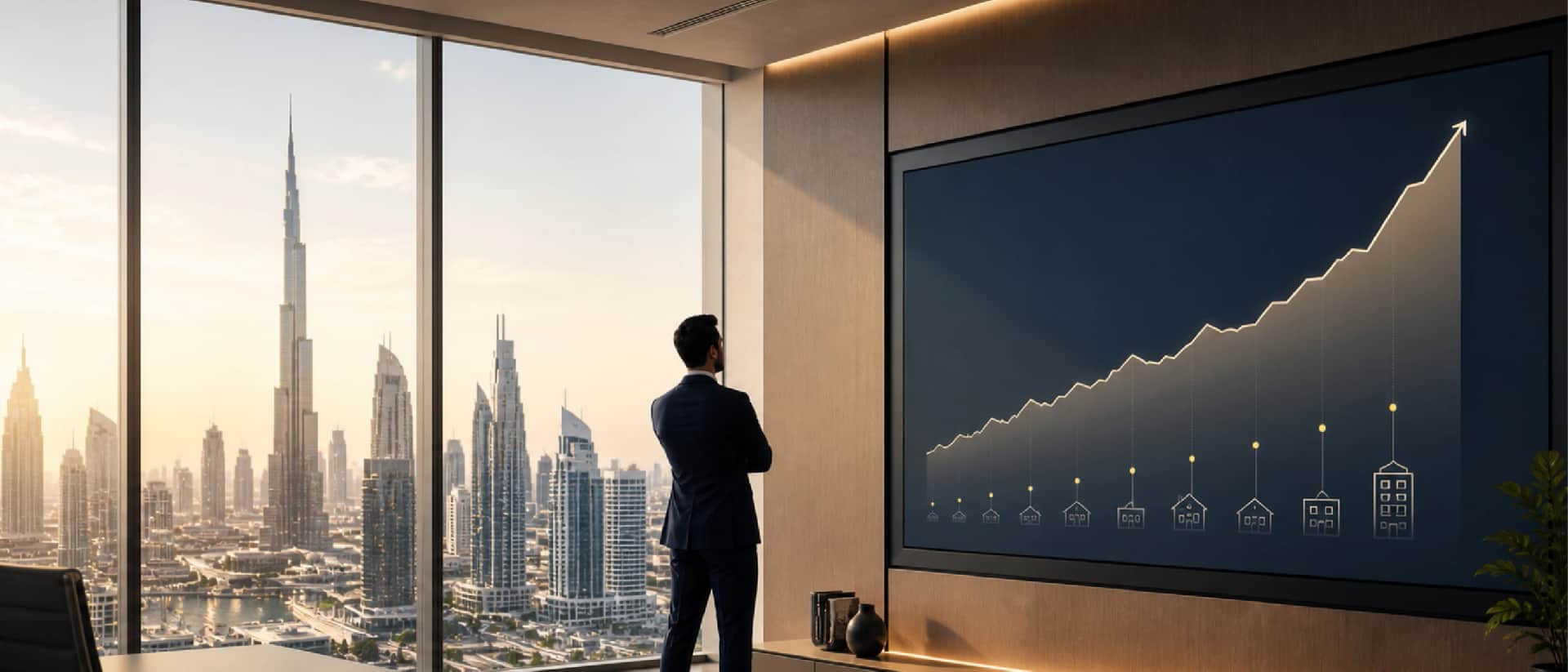
According to Dubai Land Department (DLD) statistics, the Dubai Property Market registered a sharp growth in April 2026, with total real estate transactions reaching AED 68.56 billion. It is more than a 20 percent month-on-month growth.
The surge is not a short-term spike but the result of structural demand drivers such as inflows of foreign investment, population growth, and sustained off-plan development activity across the masterplanned communities of the city of Dubai.
The Dubai Property Market has been able to exhibit its liquidity strength in both residential and commercial real estate segments. It will further help it to establish itself as one of the most dynamic global real estate hubs in 2026.

Yes - investing in Dubai luxury property in 2026 as a long-term strategy is a good opportunity to grow your capital rather than to earn rental income in the short-term. The high-net-worth migration, zero-tax ownership, and lack of ultra-prime supply make the Dubai luxury property market continue to outperform other cities around the world.
In 2025, Dubai registered approximately AED 900+ billion worth of real estate dealings, with luxury areas accounting for a significant portion of the worth increment. The global media reports about the increase in demand for branded homes and waterfront villas, indicating an evident surge in the Dubai luxury property market.
Prime area price increases have been 15-25% per year, and ultra-luxury properties over $10M are still setting sales records. This substantiates the robust momentum in Dubai's luxury property market, backed by international investors.
Nevertheless, rental yields remain at an average of 46 percent, and that is an appreciation. On the whole, luxury property in Dubai is a high-potential, fact-supported investment in long-term wealth creation.