Adil Raza Khan | April 29, 2025
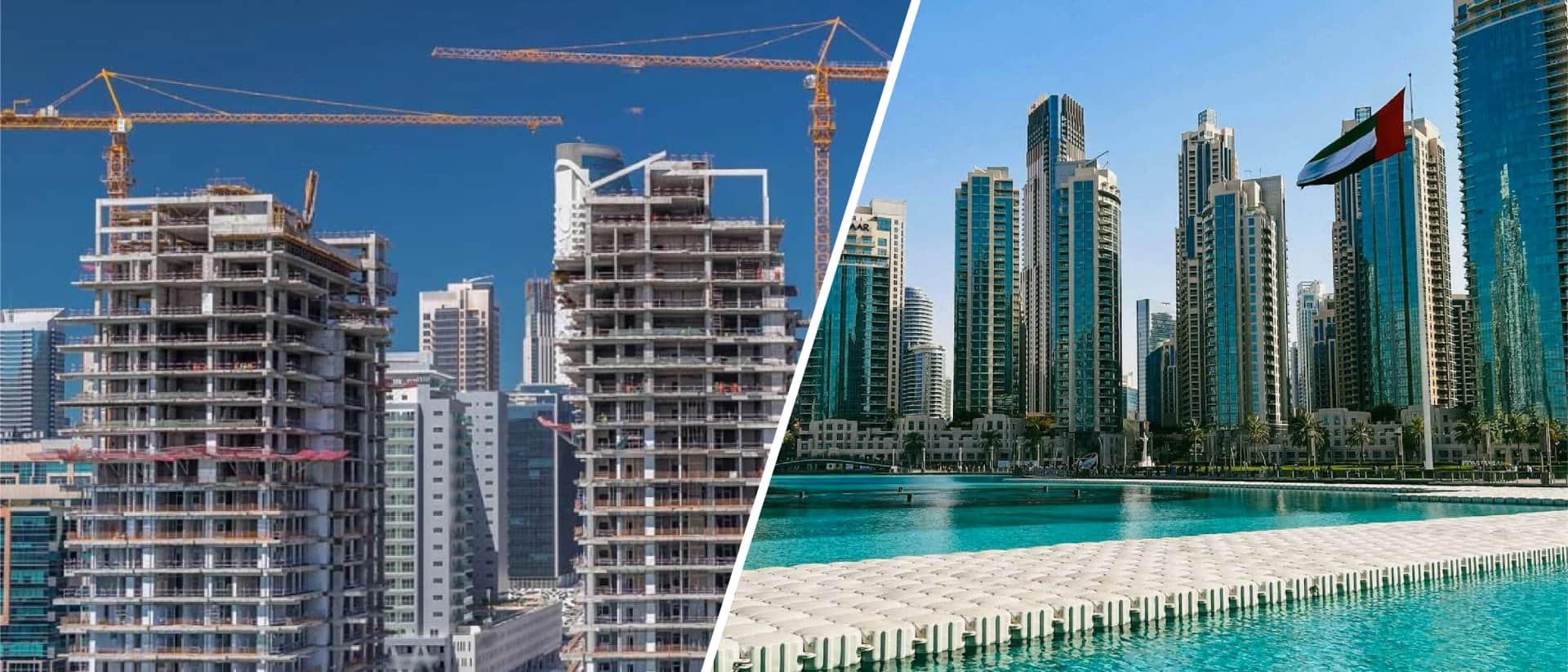
Should I go for a ready property or an off-plan property?
Both options come with their own perks, risks, and potential rewards. Let's break it down, shall we?
So, one of the first questions an investor asks when entering the Dubai real estate—is: How best can I maximize my returns? You are most certainly not alone if you are choosing between investing in an off-plan property (the ones still under construction) and a ready property (the type already built).
Real estate is a dynamic field; thus, recognizing the difference between these two choices could either strengthen or devastate your investing plan. Let's look into the ROI comparison of off-plan vs. ready properties in Dubai closely to find which would be best for your investment portfolio.
With lots of data to support it, we will discuss everything from rental yields and capital appreciation to dangers and market circumstances.
Simply put, Ready properties—that is, the developments already built and ready for use or rent. These could be offices, villas, or apartments you could start renting out right away or move into right now.
The great advantage of purchasing a ready to move in properties in Dubai is not having to wait. From the location to the state of the property, you are precisely entering what you are getting into. For investors, who want to start making money right away, immediate rental revenue is quite beneficial.
Off-plan properties are ones still under development or have not yet reached ground-level breaking. Often sold before they are finished, these qualities make them more reasonably priced initially. Investing in a home at a reduced price allows you to start making money only once it is constructed.
The off plan properties in Dubai mostly appeal to those looking for more capital appreciation. Once development is completed, the property is sold at a cheaper price, hence there is usually a chance for a notable rise in value—especially if the region grows or becomes more popular during the building period. Note that you can avail potential for appreciation of 10 to 15% during construction for every year until handover.
Curated Opportunities
Flexible buying options for smarter property decisions.
Handpicked properties sorted for the strongest value.
Investment-focused listings with return potential.
Browse Dubai communities with properties for sale.
The real estate sector in Dubai presents several opportunities for investors. These are some of the top-performing sectors based on current statistics and market trends:
Check out some of the off-plan properties for sale in Dubai projected to have great ROIs in the coming years!
(Quick Note)
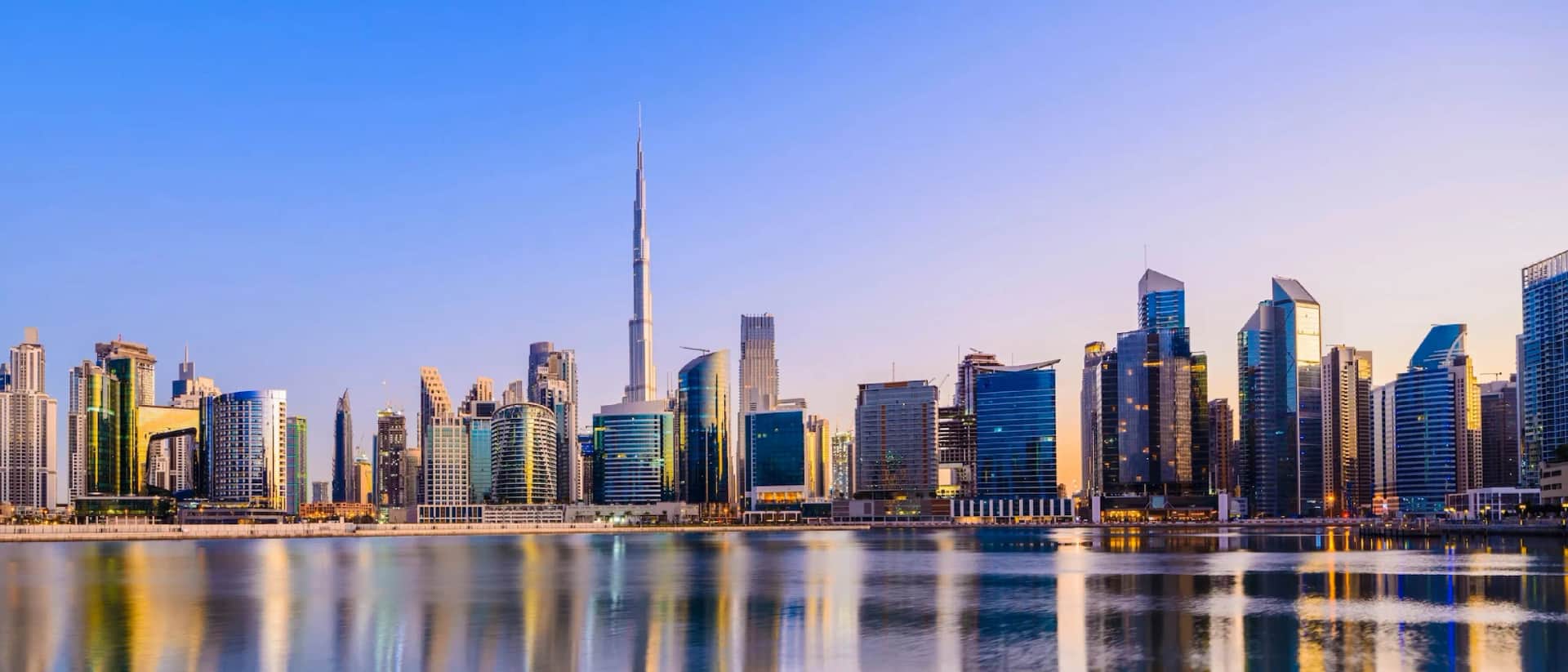
(For instance, Downtown Dubai has a nominal 4.9% rental yield while Palm Jumeirah generates a strong 5.34%. Not bad, right?)
Best Project Finder
Filter opportunities by budget, property type, bedroom mix, and strategy to uncover projects aligned with your investment goals.
Still confused? Contact us at Apil Properties, your go-to solution for Dubai Real Estate!

WRITTEN BY
Adil Raza Khan is a Dubai luxury real estate expert with over 13 years of experience in the UAE property market. He is the Chairman of APIL Properties.
Investment Finder
Use smart filters to discover Dubai projects matched to your investment goals.
Try the Investment Finder_1783320909.webp&w=1920&q=65)
Capital appreciation in Dubai property market is the rise in property value over time, influenced by factors such as demand, location development, and macroeconomic conditions. To an investor, it is the money gained by selling the property for more than the initial investment.
Simply put, when you buy real estate in Dubai, and the value of that property improves over the next several years, then that gain in value is your capital appreciation. In Dubai, however, this concept has more than just the notion of price growth; it is correlated to infrastructure growth, off-plan deals, and demand from investors all over the world.
Dubai has emerged as one of the world's most vibrant real estate markets. It is offering opportunities for both immediate profit and future investment and wealth. For anyone interested in investing strategically in Dubai properties instead of speculatively, it is crucial to understand the concept of capital appreciation in the local real estate market.
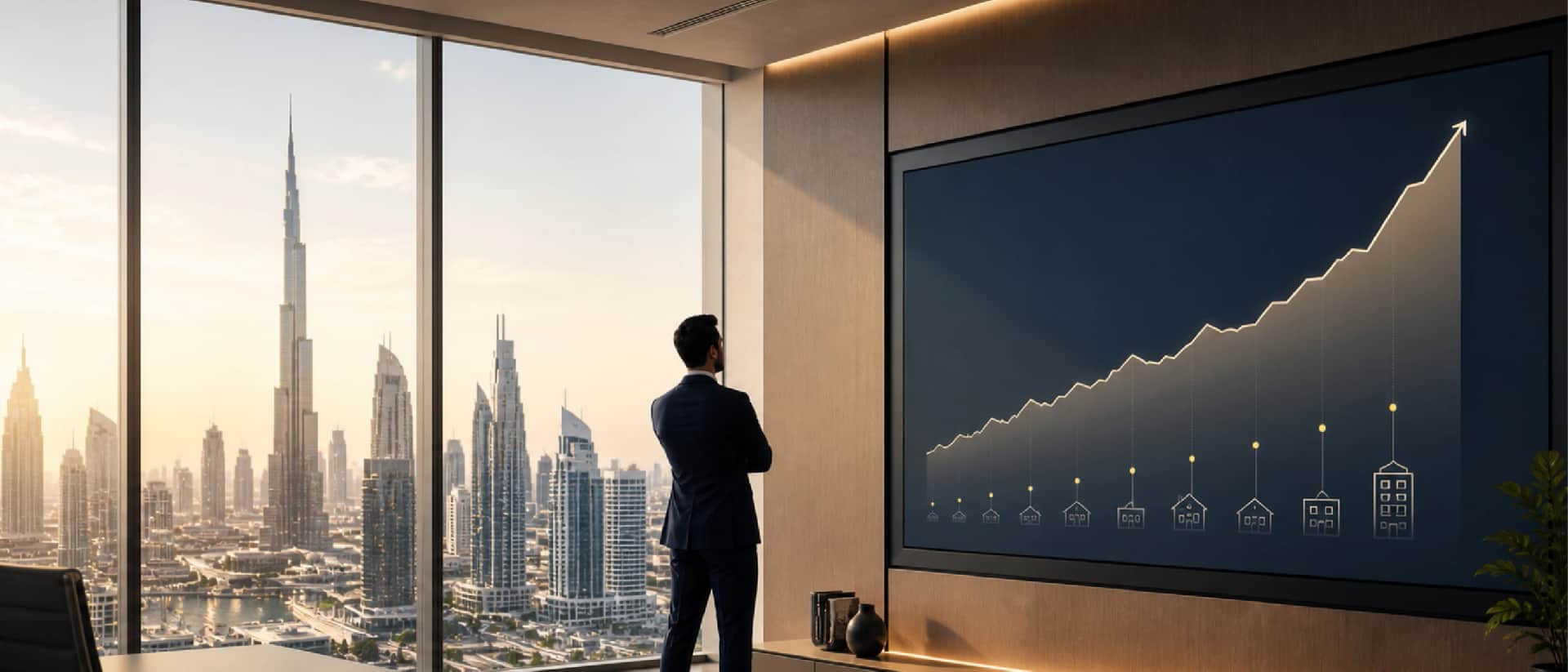
According to Dubai Land Department (DLD) statistics, the Dubai Property Market registered a sharp growth in April 2026, with total real estate transactions reaching AED 68.56 billion. It is more than a 20 percent month-on-month growth.
The surge is not a short-term spike but the result of structural demand drivers such as inflows of foreign investment, population growth, and sustained off-plan development activity across the masterplanned communities of the city of Dubai.
The Dubai Property Market has been able to exhibit its liquidity strength in both residential and commercial real estate segments. It will further help it to establish itself as one of the most dynamic global real estate hubs in 2026.

Yes - investing in Dubai luxury property in 2026 as a long-term strategy is a good opportunity to grow your capital rather than to earn rental income in the short-term. The high-net-worth migration, zero-tax ownership, and lack of ultra-prime supply make the Dubai luxury property market continue to outperform other cities around the world.
In 2025, Dubai registered approximately AED 900+ billion worth of real estate dealings, with luxury areas accounting for a significant portion of the worth increment. The global media reports about the increase in demand for branded homes and waterfront villas, indicating an evident surge in the Dubai luxury property market.
Prime area price increases have been 15-25% per year, and ultra-luxury properties over $10M are still setting sales records. This substantiates the robust momentum in Dubai's luxury property market, backed by international investors.
Nevertheless, rental yields remain at an average of 46 percent, and that is an appreciation. On the whole, luxury property in Dubai is a high-potential, fact-supported investment in long-term wealth creation.