Adil Raza Khan | March 28, 2026
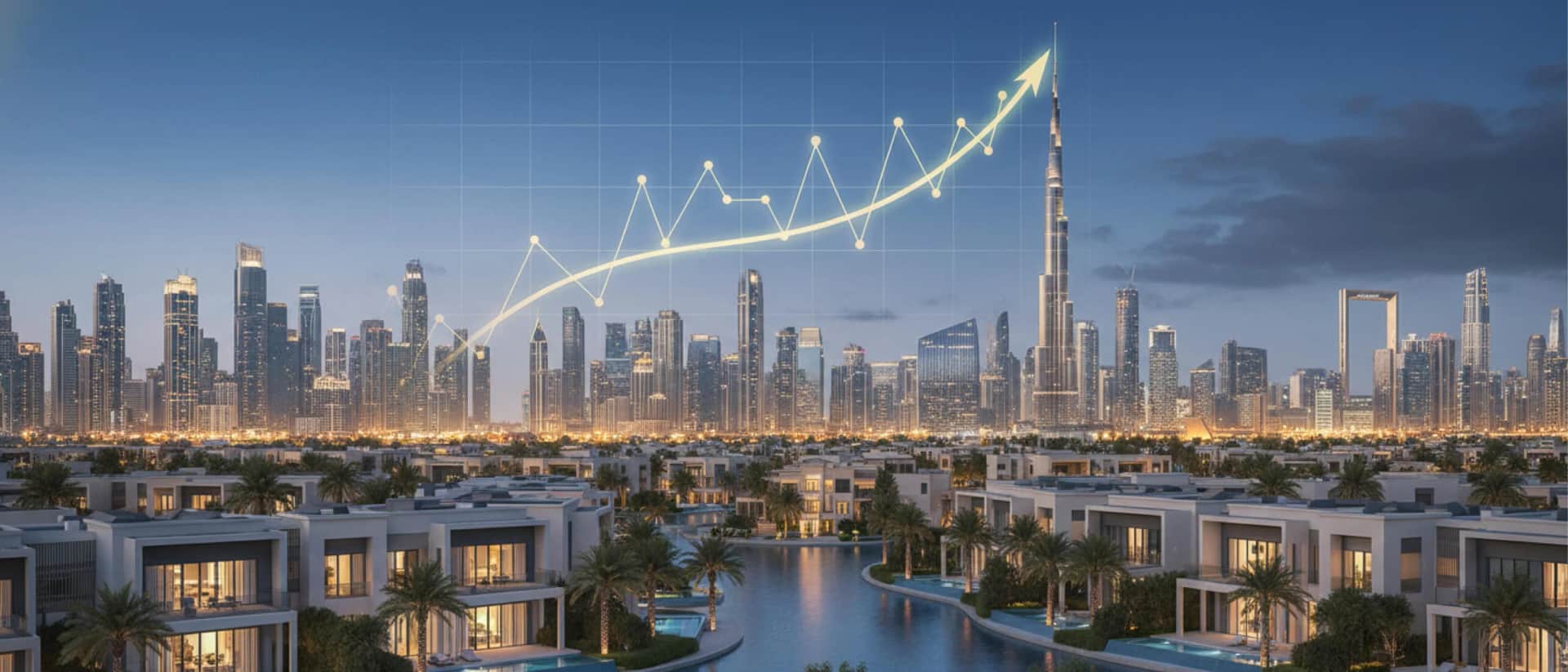
Even if the Middle East conflict escalates, the research and market signs indicate that the Dubai property market will not suffer adversely and will continue to appeal to both the local and international investors in the city. No doubt - Dubai real estate has remained resilient, even in times of global and regional insecurity.
The city has good economic fundamentals, strategic positioning, and the best infrastructure in the world that cushions it against short term volatility. The statistics regarding transaction volumes, rental yields, and property prices indicate that Dubai continues to provide profitable and safe prospects even in a crisis situation.
Curated Opportunities
Flexible buying options for smarter property decisions.
Handpicked properties sorted for the strongest value.
Investment-focused listings with return potential.
Browse Dubai communities with properties for sale.
As long as the Middle East conflict escalates, there are numerous investors who will be puzzled by a possible crash. Nevertheless, the trends of the Dubai real estate market in 2026 are very robust.
Dubai real estate registered 215,000+ property transactions in 2025 with an overall value of sales amounting to over AED 682 billion. The average property prices increased between 6 and 8 percent, and the luxury segments increased by double-digit percentages in prime communities.
As also indicated in the history, Dubai has been swift in bouncing back from past global and regional uncertainties, such as the 2008 financial crisis and regionalized geopolitical tensions. In the 2014 - 2015 round of regional unrest, there was a slight slumping of the market, which was soon overcome in price and transaction.
Through the rise in tension, good buyer demand, a limited supply in quality development projects, and the development of infrastructure, there is a stable future for Dubai real estate in 2026.
If the Middle East conflict escalates, Dubai real estate will have a safe and viable place to invest. The city has full foreign ownership in freehold land, high legal protection, and tax free environment for property investors.
The rental yields are also competitive with the apartments offering gross yields between 6-8 percent and the villas offering gross yields between 5-7 percent, which is favorable to the property real estate markets in the world, like London, New York, and Singapore.
The growth of the population of over 200,000 new residents every year and a good inflow of expatriates guarantees an unending housing demand. The programs of the government (e.g. the Golden Visa property scheme) also increase the investor confidence, especially among long-term buyers who intend to enjoy the capital gain as well as the rental money.
Investor exits will not be heavy in case tensions increase. International purchasers constituted approximately 40 percent of total purchases in 2025, which is an indication that the global community is very interested and has a lot of confidence in the stability of the Dubai market. The liquidity and regulatory environment in the city still expose institutional investors and property funds in a very big way.
The history of the fluctuations in the investment market indicates that when the market is uncertain, investors tend to keep their stakes in the real estate sector in Dubai instead of selling the investments and losing. Even in the past times of regional tensions like the Gulf crises, long-term investor confidence remained high. And, the recovery of the market took several months.
Property prices in Dubai will likely not fall even when there is an increase in regional tensions. The current median price per square foot stands at AED 1,690 to 1,720, with the average price of the apartments being AED 1.3 million and the villas being AED 3.6 million. Waterfront and luxury properties still perform better than the mid-market markets.
In 2025-2026, Dubai real estate market statistics indicate that prime locations will continue to appreciate, including the Dubai Marina, the Business Bay, and the Palm Jumeirah, with an average appreciation of between 7 and 12 percent in a year in premium units. Traditionally, when there is uncertainty, price corrections are slight (generally less than 3-5) and regain their lost momentum in a short period.
This trend endorses the Dubai real estate future forecasts, which means that despite the increasing geopolitical threats, the property values are not likely to fall drastically.
Prime communities should be considered by the investors, who are interested in stability and growth:
These areas have a long history of high transaction volumes and stable yields in terms of rents, even when the conflict increases. These communities are a good long-term investment in Dubai real estate, as the investors enjoy the liquidity, increase in capital, and high rental demand.
Dubai real estate values are still supported by some macro and micro factors:
These factors give the cushioning effect against short-term market changes. It will strengthen the stability of the Dubai real estate market in 2026 in the event of escalation of the Middle East quarrel.
Best Project Finder
Filter opportunities by budget, property type, bedroom mix, and strategy to uncover projects aligned with your investment goals.
Rent income is still a decisive stabilizing factor. Even during times of uncertainty, prime residential areas like Downtown Dubai, Dubai Marina and Palm Jumeirah have continued to record an average minimum occupancy rate of over 90 per cent.
The gross rental yield of apartments is usually equal to 6-8 percent, and that of villas is 5-7 percent, which is a nice prospective investment. Regional tensions may increase, but with steady rental demands and a shortage of high-quality rental properties, Dubai is also a secure rental investment destination both locally and internationally.
Dubai has maintained a high number of international buyers because of its stable economy, good infrastructure, and lifestyle amenities, as well as legal safeguards. The city will continue to be a prime destination for investors in Europe, South Asia, and the GCC, even if the Middle East conflict is intensified.
Global buyers are drawn by:
Dubai real estate tension has historically had minimal effect on long-term global investment decisions.
Yes. Despite the increase in the tensions in the region, the demand for luxury and waterfront properties is high. Transactions of ultra-prime more than AED 300-400 million are ongoing due to the presence of wealthy international buyers in search of low-risk, high-quality assets.
Waterfront and luxury segments are perceived to be stronger in times of uncertainty. Thus, this gives waterfront and luxury properties a cushion and diversification to investor portfolios. These patterns are in line with the future prediction of Dubai real estate, as they reflect a long-term capital gain potential.
The continuous and scheduled extensions are projected to have 15,000+ new residential and 15,000 commercial, lifestyle and technology-oriented districts by 2028. These projects:
Such mega-projects as the Dubai Creek Harbour and Dubai South are still reinforcing the basics of real estate in the city, which means that despite the potential increase in the conflict in the Middle East, the Dubai property will be a safe and profitable investment.
In case the conflict in the Middle East intensifies, Dubai real estate is strong, supported by data and ready to face the future. High levels of transaction, constant house prices, good rentability, and diversification in the world investor will facilitate long-term growth. Other risk mitigating factors include historical trends, state programs, as well as mega-projects. Also, Dubai remains a safe, lucrative, and internationally appealing real estate market despite the uncertainty looming in the region.
No. Historical trends and 2025–2026 data indicate price stability and gradual growth.
Yes, due to foreign ownership rights, legal protection, and competitive rental yields.
Investor exits are minimal, thanks to high liquidity and strong market confidence.
Dubai Marina, Business Bay, JVC, and Dubai Creek Harbour provide stable returns.
Yields remain competitive at 6–8% for apartments and 5–7% for villas.
Yes, these segments maintain high demand and price growth even during uncertainty.
Short-term fluctuations may occur, but long-term trends remain positive.
Population growth, economic diversification, government initiatives, and mega-projects support stability.
Yes, thanks to its stable economy, infrastructure, and lifestyle amenities.
New developments diversify options, sustain demand, and strengthen long-term market stability.

WRITTEN BY
Adil Raza Khan is a Dubai luxury real estate expert with over 13 years of experience in the UAE property market. He is the Chairman of APIL Properties.
Investment Finder
Use smart filters to discover Dubai projects matched to your investment goals.
Try the Investment Finder
The Dubai Real Estate Market is set to see record-breaking momentum with transaction value reaching AED139.2 billion in Q1 2026—fueled by strong off-plan demand, foreign capital inflows, and increasing end-user activity.
Dubai is keeping its lead over other property hubs around the world thanks to its investor-friendly policies and the high potential for returns, as noted in market reports by Arabian Business and major brokerage data providers.
The Dubai Real Estate Market is not only expanding in terms of volume but also gaining greater value and quality as buyers are increasingly looking towards projects that are supported by infrastructure, credibility of the developers, and potential appreciation of capital value.
The Dubai Real Estate boom has evolved into a more stable, investment-driven cycle thanks to this structural shift in demand.

Capital appreciation in Dubai property market is the rise in property value over time, influenced by factors such as demand, location development, and macroeconomic conditions. To an investor, it is the money gained by selling the property for more than the initial investment.
Simply put, when you buy real estate in Dubai, and the value of that property improves over the next several years, then that gain in value is your capital appreciation. In Dubai, however, this concept has more than just the notion of price growth; it is correlated to infrastructure growth, off-plan deals, and demand from investors all over the world.
Dubai has emerged as one of the world's most vibrant real estate markets. It is offering opportunities for both immediate profit and future investment and wealth. For anyone interested in investing strategically in Dubai properties instead of speculatively, it is crucial to understand the concept of capital appreciation in the local real estate market.
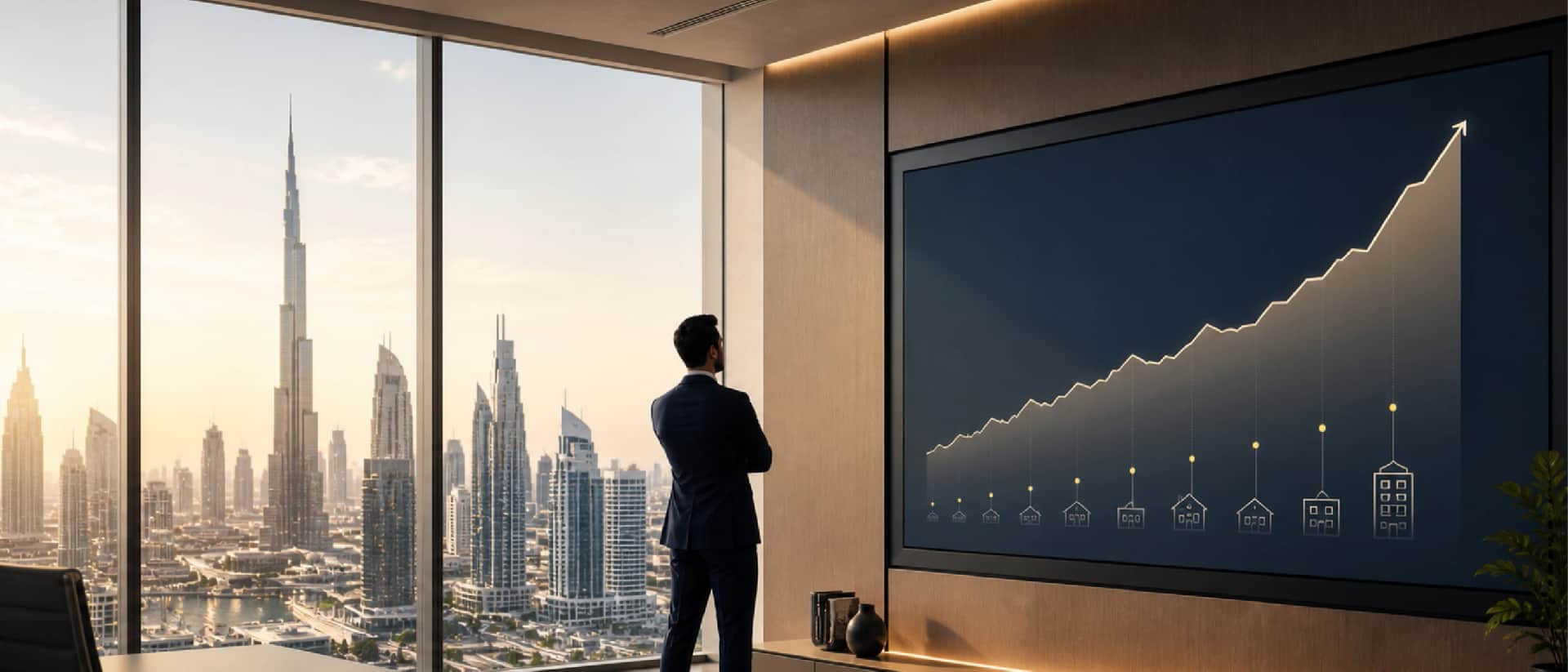
According to Dubai Land Department (DLD) statistics, the Dubai Property Market registered a sharp growth in April 2026, with total real estate transactions reaching AED 68.56 billion. It is more than a 20 percent month-on-month growth.
The surge is not a short-term spike but the result of structural demand drivers such as inflows of foreign investment, population growth, and sustained off-plan development activity across the masterplanned communities of the city of Dubai.
The Dubai Property Market has been able to exhibit its liquidity strength in both residential and commercial real estate segments. It will further help it to establish itself as one of the most dynamic global real estate hubs in 2026.