Adil Raza Khan | February 4, 2026
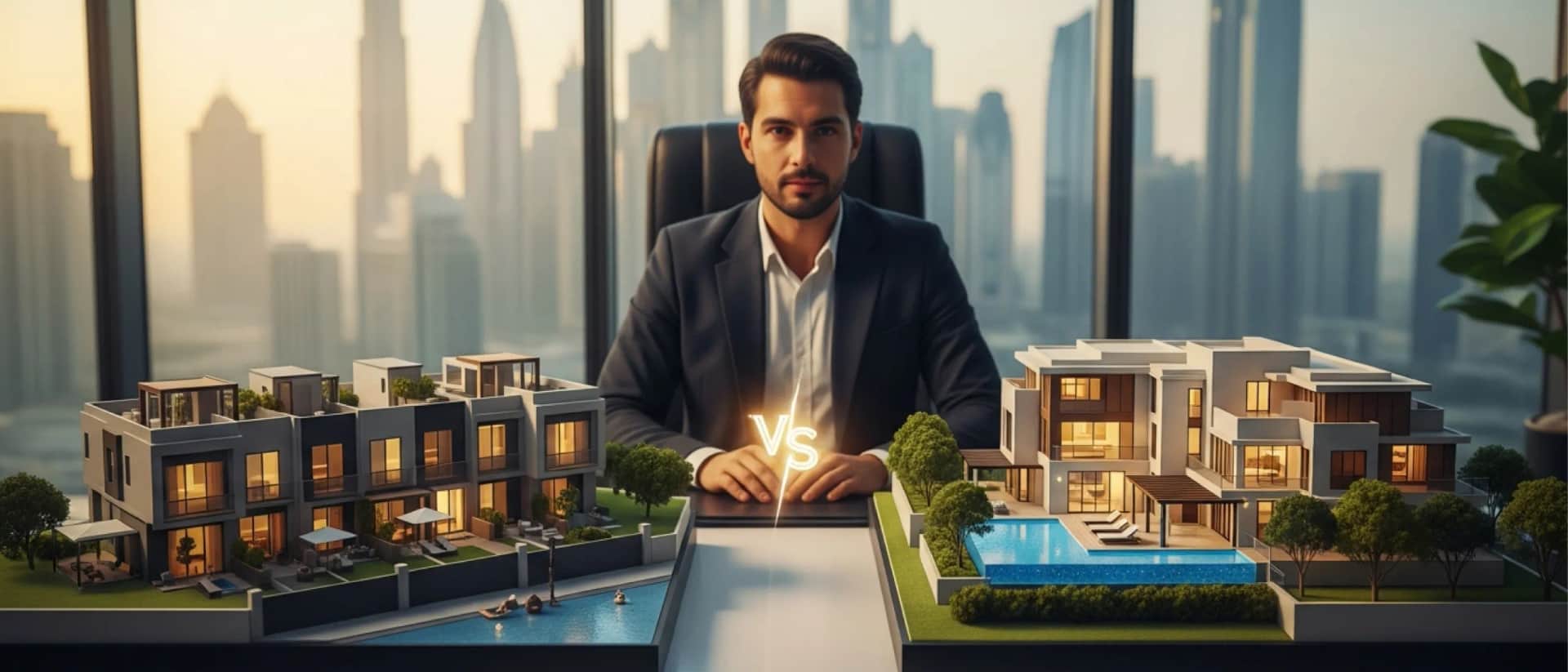
One of the most critical decisions available to buyers and investors in the Dubai real estate market is townhouses vs villas in Dubai. The townhouses are typically cheaper, have better rental returns and are best suited for living in communities. Villas are, however, bigger, more private and well-capitalised in terms of long-term appreciation, particularly in prime areas.
This APIL Properties guide on the disparities in size, price, rental returns, maintenance expenses, and investment prospects when you buy property in Dubai. Let us get to more details!
Curated Opportunities
Flexible buying options for smarter property decisions.
Handpicked properties sorted for the strongest value.
Investment-focused listings with return potential.
Browse Dubai communities with properties for sale.
The difference between townhouse and villa Dubai buyers need to understand is the structure and land ownership. A townhouse has one or two common walls with other units and is commonly a master-planned community. A villa is a complete stand-alone house that has no common walls with another house.
The result of this structural difference is on privacy, space, pricing, and long-term value. The townhouses in most communities in Dubai have smaller private gardens and shared facilities.
Yes. In Dubai, townhouses are cheaper than villas.
This is due to the fact that townhouses take up smaller pieces of land and in gated communities that share the infrastructure costs. In 2025, the townhouses available at the entry-level range would be AED 1.1 million. Mid-sized apartments will fall between AED 3 million and AED 6 million with modern layouts, private gardens and common facilities.
In comparison, villas are more expensive to invest in. The prices usually begin at AED 4 million and increase to more than AED 12 million in mature communities. Top location villas of high luxury, like those in Palm Jumeirah and Emirates Hills can be higher than AED 50 million.
When it comes to the first time buyers, price variation is usually used to decide whether to adopt a townhouse or a villa. The investors can also consider affordability against rental yield and capital growth in the long term. That is why Townhouses vs Villas in Dubai is one of the important searches that any person who enters the market should make.
The difference in Townhouses vs Villas Dubai price on average in a single community in Dubai is 30 to 50 per cent. As an illustration, an average three-bedroom townhouse in Dubai Hills Estate costs AED 3.2 million. Also, a similar villa costs more than AED 6 million. This shows the situation of the Townhouses vs Villas Dubai and their prices to the investors and buyers.
Townhouses tend to be more profitable in terms of rental returns, whereas villas are more powerful in capital development. Townhouses have a 5.5 to 7% as they have lower entry prices and are always needed by tenants.
Villas also provide returns of between 4.5 and 6%, yet have the advantage of higher absolute rental income and long-term increase in values. Townhouses are mostly preferred by investors interested in income and villas when it comes to wealth preservation. This is a necessary Villa vs Townhouse comparison amongst investors.
Yes, villas generally will increase in value more than townhouses in the long run. Market data indicate that the prices of villas in Dubai have risen by almost 90% since 2020 in some of the prime locations.
It is due to the decline in the supply of land and high demand among buyers with high net worths. Townhouses have not been left behind as they have also risen, although at a slower rate. Hence, villa vs townhouse is an apparent comparison between growth at long and performance at constant rates.
In Dubai, the current rental demand for townhouses is wider. They are desirable to families and professionals who want to rent space at an affordable price and enjoy the benefits of community facilities. Villas attract high-income tenants and executives.
However, the tenant base is smaller, particularly for the large luxury apartments. Townhouses tend to perform better when the investor is interested in occupancy stability and the reduction in the risk of vacancy.
The service charges of townhouses are generally lower than those of villas in Dubai. Common landscaping, parks, community facilities distribute the costs throughout the development. Villas that have bigger personal gardens, swimming pools and individual buildings need more upkeep. Consequently, the villa service fees can be much higher, even 20-40 per cent more than a similar townhouse.
Yes, there is a lot more privacy and space in villas than there is in townhouses. The houses are constructed on bigger plots, which in most cases exceed 4,000 square feet of construction space. Also, most of them have their own gardens and swimming pools. The villas are more likely to be chosen by buyers who value their privacy and exclusivity.
Maintenance costs of townhouses are less than the cost of villas. Townhouse service fees normally comprise landscaping and common amenities, with limited exterior maintenance maintained by the owners.
Villas will entail individual garden services, pool services, and exterior services, making the yearly expenses higher. Villa costs are also, on average, 20-40% more costly than townhouses to maintain.
Best Project Finder
Filter opportunities by budget, property type, bedroom mix, and strategy to uncover projects aligned with your investment goals.
Townhouses tend to sell more quickly as they are cheaper and have a larger number of buyers. They are favoured by first-time buyers and families, and this increases liquidity. Villas may also take a long time to sell unless they are in the best areas or sold at competitive prices. Luxury villas have a niche market. Hence, it may take time to resell, particularly when dealing with high-end markets.
The best townhouse neighbourhoods are Dubai Hills Estate and Arabian Ranches 3, DAMAC Hills, Mudon, and Villanova. There are well developed infrastructure, accessibility to schools in these areas, and there are stable rentals in these areas. The modern facilities such as gyms, pools, and park,s are also provided by new townhouses in the communities. This endears them to investors and end-users.
The most ideal places to build villas are Palm Jumeirah, Emirates Hills, Jumeirah Golf Estates and Arabian Ranches. Their demand is very high. It is because of the scarce supply, luxurious facilities and long-term demand by the wealthy local and international clients. In this area, villas are usually equipped with personal gardens, pools and protection. This adds beauty and value in terms of investment.
First-time buyers in Dubai are usually better off with townhouses. They have reduced capital investment, have easy financing terms, and are associated with less complex maintenance. Townhouse valuation is also favoured by banks because of greater liquidity, which decreases the aggregate buying risk.
The supply in the future will affect townhouses more than villas as developers keep introducing new townhouses to satisfy market demands. The supply of villa land is low, and this assists in stabilizing prices of villas in the long-run. The supply of more townhouses can result in moderate price adjustments. Whereas villas will be more insulated because of the lack of them.
Select a townhouse when you are concerned with affordability, rental yield and community living. Select a villa in case of the importance of privacy, space, and long-term capital growth. The choice of the Townhouses vs Villas in Dubai will be limited to your time of investment and the lifestyle ambitions.
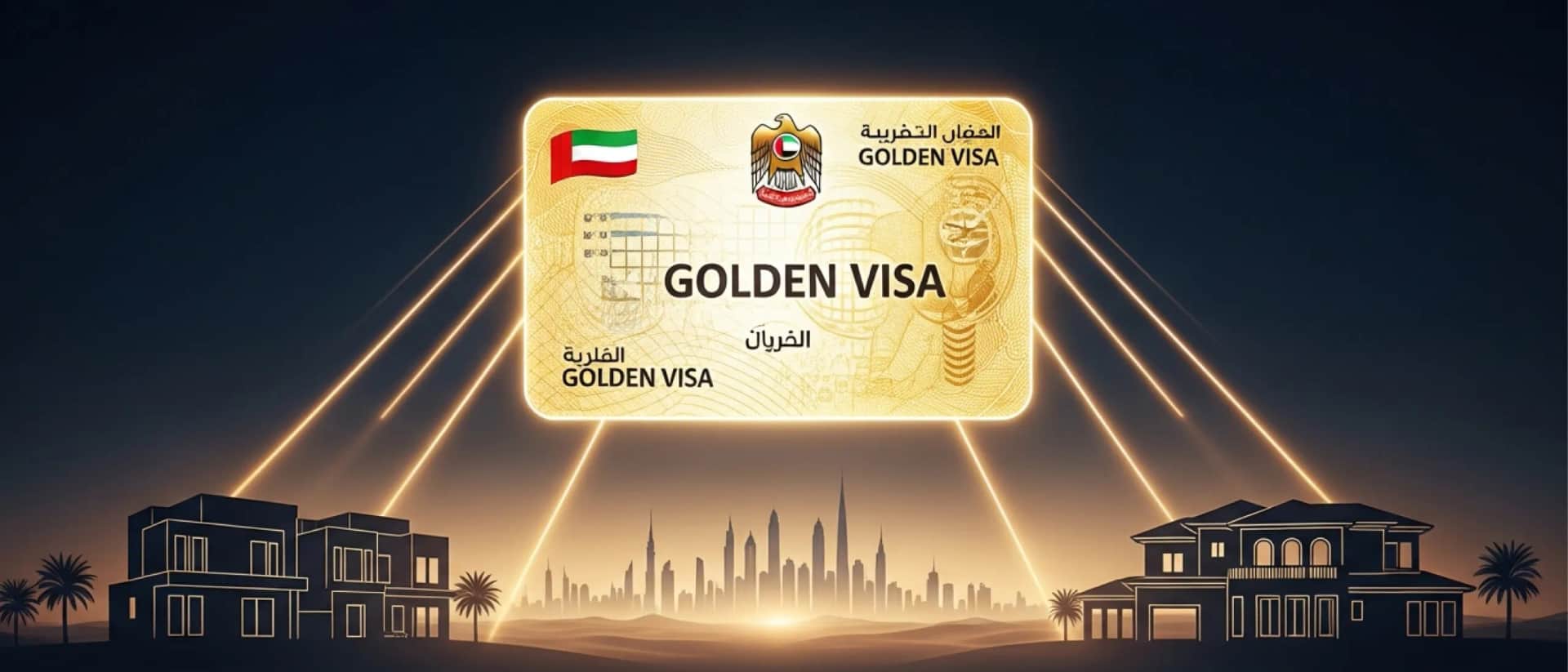
Yes. The Golden Visa in the UAE can be obtained with the purchase of a property worth at least AED 2 million in Dubai. Townhouses and villas can qualify provided that the minimum investment level is met. This provides the buyers with long-term residency privileges. Thus, Dubai real estate is a good investment choice for the investor who wants a stable and secure lifestyle.
At Apil Properties, we do not make assumptions when guiding buyers to buy using real market data. The existing trends reveal that townhouses provide better yields and liquidity in terms of rentals. Whereas the villas provide prestige, privacy and better long-term returns. To the buyers conducting their comparison research on this topic about the townhouse or villa, the best option will be the one that matches their financial plan, holding period and lifestyle expectations.
A townhouse shares walls and has smaller plots, while a villa is standalone with larger land and private amenities.
Yes, townhouses are generally more affordable due to smaller plots and shared infrastructure.
Townhouses usually offer higher rental yields because of lower entry prices and steady tenant demand.
Yes, villas tend to have stronger long-term capital appreciation, especially in prime locations.
Townhouses are easier to resell due to wider buyer demand and lower price points.
Townhouses range from 1,500–3,500 sq. ft., while villas start at 3,000 sq. ft. and can exceed 15,000 sq. ft.
Townhouses have lower maintenance costs, while villas require more care for gardens, pools, and large plots.
Yes, properties valued at AED 2 million or more may make buyers eligible for the UAE’s Golden Visa.
Townhouses are ideal for families due to community amenities, schools, and parks.
Townhouses: Dubai Hills Estate, Arabian Ranches 3, DAMAC Hills; Villas: Palm Jumeirah, Emirates Hills, Jumeirah Golf Estates.

WRITTEN BY
Adil Raza Khan is a Dubai luxury real estate expert with over 13 years of experience in the UAE property market. He is the Chairman of APIL Properties.
Investment Finder
Use smart filters to discover Dubai projects matched to your investment goals.
Try the Investment Finder
Capital appreciation in Dubai property market is the rise in property value over time, influenced by factors such as demand, location development, and macroeconomic conditions. To an investor, it is the money gained by selling the property for more than the initial investment.
Simply put, when you buy real estate in Dubai, and the value of that property improves over the next several years, then that gain in value is your capital appreciation. In Dubai, however, this concept has more than just the notion of price growth; it is correlated to infrastructure growth, off-plan deals, and demand from investors all over the world.
Dubai has emerged as one of the world's most vibrant real estate markets. It is offering opportunities for both immediate profit and future investment and wealth. For anyone interested in investing strategically in Dubai properties instead of speculatively, it is crucial to understand the concept of capital appreciation in the local real estate market.
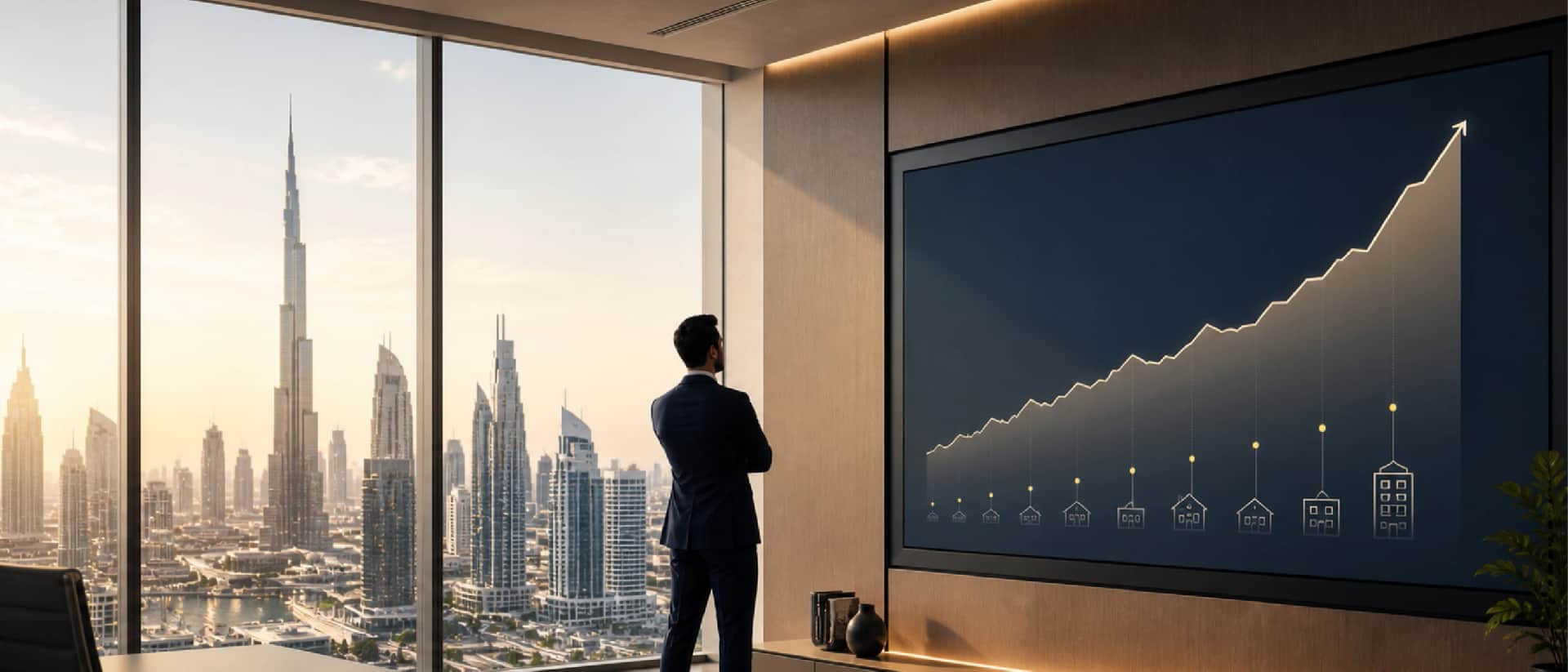
According to Dubai Land Department (DLD) statistics, the Dubai Property Market registered a sharp growth in April 2026, with total real estate transactions reaching AED 68.56 billion. It is more than a 20 percent month-on-month growth.
The surge is not a short-term spike but the result of structural demand drivers such as inflows of foreign investment, population growth, and sustained off-plan development activity across the masterplanned communities of the city of Dubai.
The Dubai Property Market has been able to exhibit its liquidity strength in both residential and commercial real estate segments. It will further help it to establish itself as one of the most dynamic global real estate hubs in 2026.

Yes - investing in Dubai luxury property in 2026 as a long-term strategy is a good opportunity to grow your capital rather than to earn rental income in the short-term. The high-net-worth migration, zero-tax ownership, and lack of ultra-prime supply make the Dubai luxury property market continue to outperform other cities around the world.
In 2025, Dubai registered approximately AED 900+ billion worth of real estate dealings, with luxury areas accounting for a significant portion of the worth increment. The global media reports about the increase in demand for branded homes and waterfront villas, indicating an evident surge in the Dubai luxury property market.
Prime area price increases have been 15-25% per year, and ultra-luxury properties over $10M are still setting sales records. This substantiates the robust momentum in Dubai's luxury property market, backed by international investors.
Nevertheless, rental yields remain at an average of 46 percent, and that is an appreciation. On the whole, luxury property in Dubai is a high-potential, fact-supported investment in long-term wealth creation.