Adil Raza Khan | November 3, 2025
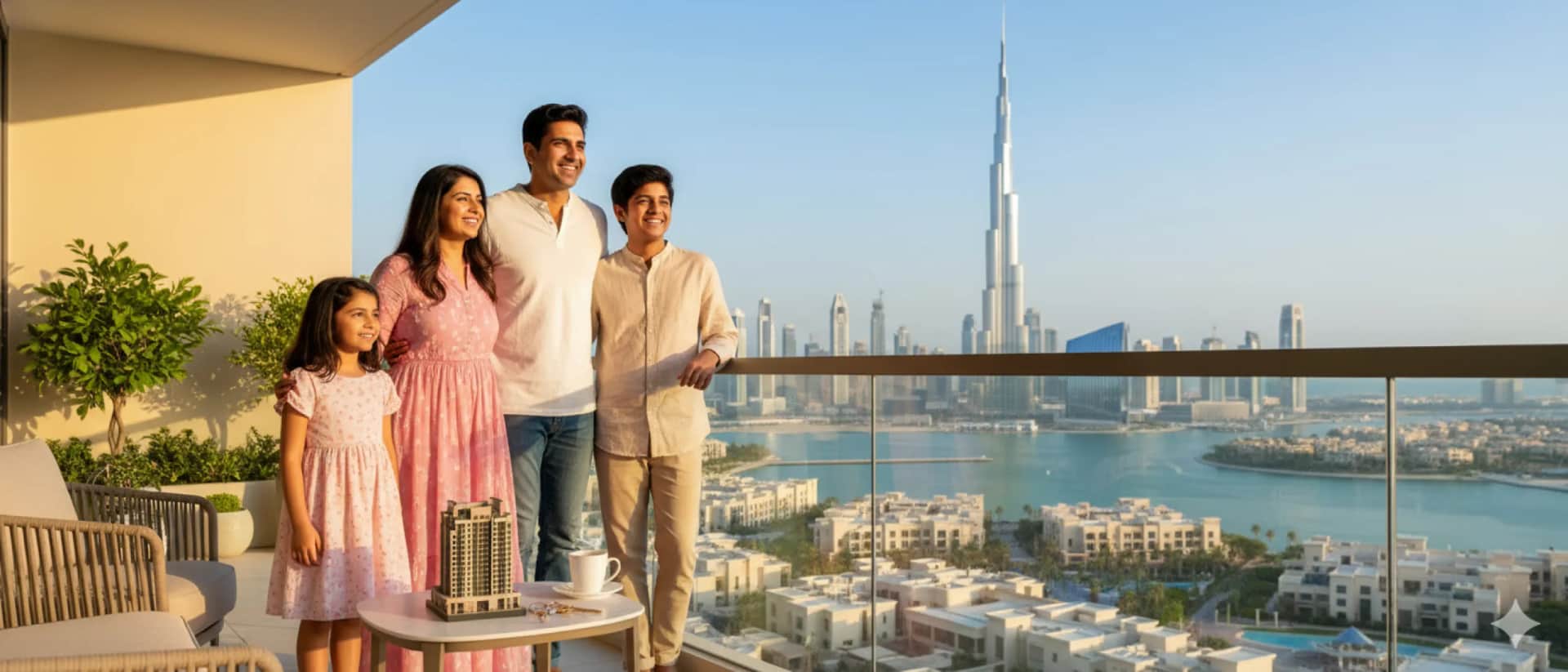
Buying a Second Home in Dubai for Indian Nationals has become a lifestyle and wealth planning trend. Dubai has now become the best international destination for the Indian population based on stable property prices, visa incentives, and a location that is closer to India, which promises the Indian population a secure and rewarding second home.
This guide by APIL Experts discusses the main advantages, costs, the most popular regions, and how Indian nationals can purchase a second home in Dubai in 2025-26.
Curated Opportunities
Flexible buying options for smarter property decisions.
Handpicked properties sorted for the strongest value.
Investment-focused listings with return potential.
Browse Dubai communities with properties for sale.
Dubai is the highest benchmark of comfort and luxury - from oceanfront penthouses to golf-view villas. Indian nationals purchasing a second home in Dubai have access to the global facilities: international schooling, Michelin-starred restaurants, private beaches, and premium medical care.
It is the second home and a luxury getaway – which provides safety, tranquillity and class not found in most Indian metros.
One of the top benefits of buying a second home in Dubai for Indian nationals is its easy connectivity. Dubai is only 3-4 hours away with several daily flights in Mumbai, Delhi, and Bengaluru.
This renders visits over the weekend, business trips, and family getaways hassle-free. Visa-free travel (up to 90 days) for Indian nationals will allow Dubai to be a perfect second base in a foreign country without any protracted immigration procedure.
Dubai provides full freehold ownership to foreigners in special zoned areas unlike most cities in the world. The Indian purchasers will have 100 per cent ownership of their property under the Dubai Land Department's (DLD) protection.
For those exploring a second home in Dubai for Indian nationals for sale, it entails complete control as you can lease, sell or leave an inheritance to the heirs without limitations.
Do you know Why Indians Invest in Dubai Property Market? One of the main reasons is currency benefit! UAE Dirham (AED) is indexed in the US dollar. Therefore, it is stable. This would allow the Indian buyers to retain the value of capital even if the Indian rupee weakens.
To long-term holders, this monetary hedge makes their second home an offshore asset and protection against inflation.
To many Indian nationals, the Dubai Golden Visa is a bonus of having property. Purchasing an AED 2 million or above will provide a 10-year renewable residence visa.
This will enable buyers and their families to reside, work, study in the UAE and make their second home a permanent base for global mobility and economic independence.
Indian buyers are more attracted to communities which offer a balance of luxury, location, and lifestyle. The following are the most popular areas for Indian expats to rent and buy!
All areas have good resale and rental prospects. Thus it is ideal to Indian nationals who are looking at a second home in Dubai for Indian nationals price between AED 800,000 and AED 3 million.
Want to know about Dubai vs Mumbai Property Market? Check out our guide!
Best Project Finder
Filter opportunities by budget, property type, bedroom mix, and strategy to uncover projects aligned with your investment goals.
Here’s a general price breakdown for second homes in Dubai (2025):

These prices ensure that buying a second home in Dubai for Indian nationals is much easier than other metros such as Mumbai, where property prices are twice the size and quality.
Dreaming about the acquisition of a second house? The Liberalised Remittance Scheme (LRS) provides Indian nationals with a variety of platforms to remit up to USD 250,000 annually to purchase property in a foreign country.
The UAE banks also provide mortgage facilities to non-residents, which is usually 50-75% of the property value. Apil Properties liaises with leading lenders to make the financing easier to the Indian buyers.
When you are intending to purchase a second home in Dubai, where the Indian nationals will be staying, this is how you go about it easy:
Having problems going through the purchasing process? Apil Properties is a step-by-step company to achieve, beginning with the selection up to registration - this way, you can easily and safely buy your second home in Dubai.
Not just in figures, the second home in a foreign country has an emotional value. To Indian nationals, it is a sign of success - a place of refuge where memories of their family are created.
The multicultural atmosphere of Dubai, the safety, and leisure are the factors that predispose the city to be the destination of choice of the families that are both comfortable and prestigious.
Some of the Indians even rent their homes in Dubai as a form of their seasonal refuge or future home of their children during their studies.

The Dubai real estate of 2025 is an exhilarating phase-- a stable demand, stable prices, and forthcoming mega constructions like the Dubai Creek Tower and the expansion of the Dubai Palm skyscraper, the Palm Jebel Ali.
This is the best time to invest in Dubai property as there are low interest rates and government incentives for Indian nationals who will enjoy luxury, safety, and long-term appreciation for their investments in the property.
Do you know: Why NRIs Are Choosing Dubai Over London and Singapore?
To the Indian nationals, the second home in Dubai is not just an international acquisition, but an upgrade to their lifestyle, an investment that will preserve their wealth, and a path to becoming global citizens.
Seamless ownership, tax-free to luxury lifestyle and connectivity, all the advantages align with what the Indian families cherish the most.
Apil Properties assists the Indian nationals in finding certified developments, attractive payment schedules, and safe investments in a second home in Dubai.
Your dream Dubai address is just a consultation away!
Yes, Indian nationals can easily purchase property in Dubai from India through online verification and developer assistance in freehold zones.
It offers tax-free returns, high rental yields, and a strong capital appreciation potential.
Prices start from around AED 750,000 for 1-bedroom apartments in prime locations.
No, Dubai allows foreign investors to buy property without residency.
Yes, properties worth AED 2 million or more qualify Indian buyers for the Golden Visa.
You can buy through certified real estate agencies or developers like Emaar, Damac, and Ellington.
Top choices include Downtown Dubai, Dubai Marina, Business Bay, and Jumeirah Village Circle.
Yes, with rising tourism, investor demand, and infrastructure growth, 2025 is ideal for investment.
Dubai has zero property tax, no capital gains tax, and no inheritance tax on real estate.
Yes, investors can easily lease their Dubai homes for long-term or short-term rentals.
AED’s stability against INR helps preserve and grow long-term investment value.
Dubai offers higher ROI, better infrastructure, and more flexible ownership rules than Mumbai.

WRITTEN BY
Adil Raza Khan is a Dubai luxury real estate expert with over 13 years of experience in the UAE property market. He is the Chairman of APIL Properties.
Investment Finder
Use smart filters to discover Dubai projects matched to your investment goals.
Try the Investment Finder_1783320909.webp&w=1920&q=65)
Capital appreciation in Dubai property market is the rise in property value over time, influenced by factors such as demand, location development, and macroeconomic conditions. To an investor, it is the money gained by selling the property for more than the initial investment.
Simply put, when you buy real estate in Dubai, and the value of that property improves over the next several years, then that gain in value is your capital appreciation. In Dubai, however, this concept has more than just the notion of price growth; it is correlated to infrastructure growth, off-plan deals, and demand from investors all over the world.
Dubai has emerged as one of the world's most vibrant real estate markets. It is offering opportunities for both immediate profit and future investment and wealth. For anyone interested in investing strategically in Dubai properties instead of speculatively, it is crucial to understand the concept of capital appreciation in the local real estate market.

According to Dubai Land Department (DLD) statistics, the Dubai Property Market registered a sharp growth in April 2026, with total real estate transactions reaching AED 68.56 billion. It is more than a 20 percent month-on-month growth.
The surge is not a short-term spike but the result of structural demand drivers such as inflows of foreign investment, population growth, and sustained off-plan development activity across the masterplanned communities of the city of Dubai.
The Dubai Property Market has been able to exhibit its liquidity strength in both residential and commercial real estate segments. It will further help it to establish itself as one of the most dynamic global real estate hubs in 2026.

Yes - investing in Dubai luxury property in 2026 as a long-term strategy is a good opportunity to grow your capital rather than to earn rental income in the short-term. The high-net-worth migration, zero-tax ownership, and lack of ultra-prime supply make the Dubai luxury property market continue to outperform other cities around the world.
In 2025, Dubai registered approximately AED 900+ billion worth of real estate dealings, with luxury areas accounting for a significant portion of the worth increment. The global media reports about the increase in demand for branded homes and waterfront villas, indicating an evident surge in the Dubai luxury property market.
Prime area price increases have been 15-25% per year, and ultra-luxury properties over $10M are still setting sales records. This substantiates the robust momentum in Dubai's luxury property market, backed by international investors.
Nevertheless, rental yields remain at an average of 46 percent, and that is an appreciation. On the whole, luxury property in Dubai is a high-potential, fact-supported investment in long-term wealth creation.